An in-principle approval (IPA) is a bank's preliminary, non-binding statement of how much it may lend you. Get it before you pay an option fee or book a unit, because it turns an assumed budget into a tested one. For a new launch such as Hougang Central Residences, where units run from 1-bedroom plus study to 5-bedroom penthouses, that number decides which layouts you should be viewing at the showflat.
TL;DR
- An IPA is an indicative loan assessment, not a final approval. The bank still verifies your information, the property valuation and your finances before it commits.
- Apply before you exercise an option or book a unit. If the loan is rejected afterwards, you can lose the option fee, typically 1% of the price for private property.
- Prepare payslips, CPF contribution history, your latest Notice of Assessment, ID and statements of existing loans. Singpass/MyInfo can pre-fill much of the form.
- Banks typically keep an IPA valid for about 30 days, so time it to when you are ready to commit, and avoid job changes or big purchases in between.
- Your limits come from MAS rules: TDSR at 55% of monthly income and LTV of 75% for a first housing loan.
Table of Contents
- What a bank IPA actually tells you
- Why you should have it before you view units
- The rules behind the number
- Who can apply and what banks look at
- How to get an IPA, step by step
- How long an IPA lasts, and what can undo it
- Rate rises and the property loan fact sheet
- Upgrading from an HDB flat
- Cash beyond the loan
- Our view: use the IPA to choose the right home
- See the units that fit your IPA
- FAQ
- Sources
What a bank IPA actually tells you
An IPA, sometimes called an approval in principle (AIP), is the bank's early read of your borrowing capacity. UOB describes it as a preliminary assessment of eligibility based on the information you provide, and not a final loan approval. Final approval stays subject to verification and the bank's credit criteria at that time.
The Association of Banks in Singapore makes the same point: an IPA indicates the loan amount you may qualify for before you commit to a property, it is non-binding, and the amount actually approved can differ once the bank processes the application.
There are three stages, and buyers often mix them up:
- IPA: an indication, given before you choose a unit. It commits neither you nor the bank.
- Letter of offer: the bank's formal offer of loan amount, tenure and terms. Maybank's HDB loan FAQs describe it as the legally binding contract once accepted.
- Disbursement: the bank releases funds according to the purchase's payment schedule.
MAS's financial education site, MoneySense, tells buyers to request an IPA from a financial institution first to get an indicative assessment before taking a housing loan.
Why you should have it before you view units
The practical reason is money you cannot get back. HSBC notes that a typical Option to Purchase must be exercised within 14 days or the option fee is forfeited, and it advises getting an in-principle approval of your borrowable amount before you commit and pay that fee.
DBS spells out the downside: if you exercise the option and your loan is then rejected, you can lose the option fee entirely. That fee is typically 1% of the purchase price for private property. On a S$2,000,000 purchase, that is S$20,000.
There is a second reason that has nothing to do with risk. A confirmed budget makes the showflat visit efficient. You walk in knowing whether you are looking at a 2-bedroom, a 3-bedroom or the larger types, instead of discovering the gap after you have fallen for a layout.
The rules behind the number
Your IPA is not the bank's opinion alone. It is built on limits set by the Monetary Authority of Singapore (MAS). The MAS macroprudential policy page sets these:
| Rule | What it means for a private home buyer |
|---|---|
| TDSR (Total Debt Servicing Ratio) | Your total monthly debt repayments, including the new loan, may not exceed 55% of your gross monthly income |
| LTV (Loan-to-Value) | 75% for a first housing loan, 45% for a second, 35% for a third |
| Maximum tenure | 35 years for private property, with a limit 20 percentage points lower if the tenure exceeds 30 years or runs beyond age 65 |
The MSR (Mortgage Servicing Ratio) of 30% applies to HDB flats and executive condominiums bought directly from developers, so it is not the test for a private condominium.
A worked TDSR example
Suppose your household's gross monthly income is S$12,000 and you have a car loan costing S$1,500 a month.
- 55% of S$12,000 is S$6,600, the ceiling for all monthly debt repayments.
- Subtract the S$1,500 car loan and S$5,100 is left for the new home loan.
This is a simplified illustration. Banks assess the instalment at their own stress-tested interest rate and consider the income they accept, so your IPA may come out lower. That is exactly why you request it rather than estimate it. Our guide to the Total Debt Servicing Ratio walks through how the 55% ceiling trims a loan.
The LTV limit decides the cash side. With a 75% first-loan limit, at least 25% of the price must come from cash and CPF. Read how that gap behaves in practice in our piece on loan-to-value rules and cash gaps, and plan the staged cash calls with the progressive payment schedule guide.

Who can apply and what banks look at
UOB states that Singapore Citizens, Permanent Residents and foreigners may apply for a private property loan, subject to eligibility, property type, regulatory requirements and credit assessment. Applicants must be between 21 and 65 years old at application. The ABS home loan guide lists the usual criteria:
- minimum income
- age limits and residency status
- compliance with MAS property loan rules and the bank's own credit requirements
- a satisfactory repayment history
- stable employment or business history
If you are a foreign buyer, additional stamp duty and cash planning apply. See our foreign buyer cash checklist before you set your budget.
How to get an IPA, step by step

Step 1: Decide where to apply
You can go to a bank directly or use a broker. SingSaver's guide lists choosing a lender or broker as the first step. Many people ask two or three lenders to compare terms, but read the caution in Step 5 first.
Step 2: Gather your documents
Banks ask for broadly the same things. Based on the DBS checklist and SingSaver's list, salaried applicants should prepare:
- NRIC or passport for all applicants (an Employment Pass for foreigners)
- the latest 3 months' payslips
- the latest Notice of Assessment from IRAS
- 12 months' CPF contribution history
- 3 months' salary crediting statements
- statements for existing credit facilities and loans
Self-employed applicants usually need more. Cashew's documents guide points to two years of Notices of Assessment, ACRA business registration documents and 6 to 12 months of personal and business bank statements. It also notes that many banks now fill in up to 80% of the form through Singpass/MyInfo, which saves time.
The option or sale and purchase agreement is needed for final approval rather than the IPA, since you do not yet have a unit.
Step 3: Submit online or through a broker
Most banks take IPA requests online. Check every figure before you submit, because mismatches between your declared income and your documents are a common cause of delay.
Step 4: Wait for the bank's assessment
The bank checks your TDSR, credit record and job stability. You then receive the IPA letter stating an indicative loan amount.
Step 5: Avoid scattering applications
Maybank warns that multiple IPA applications may affect your credit scores, even where the service is free. Pick the lenders you genuinely want to compare and apply within a short window.
How long an IPA lasts, and what can undo it
Validity differs by bank. DBS says an IPA is typically valid for 30 days. Other institutions give longer periods. The HDB portal IPA is valid for 12 months per Maybank, but that applies to HDB loans and not to a new private launch. Confirm the validity written on your own letter.
DBS also warns that a bank can withdraw an IPA if your financial situation changes, for example a new job or a major purchase. Until the purchase completes, avoid:
- changing employers
- taking on a new car or personal loan
- opening new credit lines
- letting a credit card balance build
Time the request to your decision. If you plan to view a launch in six weeks, ask for the IPA about two to three weeks before, not months earlier.
Rate rises and the property loan fact sheet
MoneySense notes that banks must provide a property loan fact sheet showing how interest-rate increases affect monthly instalments. Read it as part of your IPA, because a loan serviced comfortably today must also hold up if rates move. If you already have a home loan and want to understand your options as rates change, this explainer on repricing versus refinancing a home loan sets out the difference.
Upgrading from an HDB flat
Many buyers of a new launch are selling an HDB flat at the same time. That affects your IPA, because the bank has to consider your existing loan, timing and cash on hand. Sequencing matters, and our HDB upgrader's guide covers ABSD, LTV and the order of steps. If you need to bridge the gap between purchases, read about bridging loans.
Cash beyond the loan
An IPA tells you the loan. It does not tell you the cash you need. Add the following to your plan:
- the downpayment, covered in our condo downpayment guide
- buyer's stamp duty, with timing explained in our stamp duty rates article
- legal and other fees
Also know that the Seller's Stamp Duty changed for properties bought on or after 4 July 2025: PropertyNet reports a four-year holding period with rates of 16% for sale within one year, falling to 4% in the fourth year. If you are an investor, factor your intended holding period into the IPA conversation.
Our view: use the IPA to choose the right home
We see the IPA as the first design step in a purchase, not paperwork. It tells you which home you can sustain, and that shapes everything else.
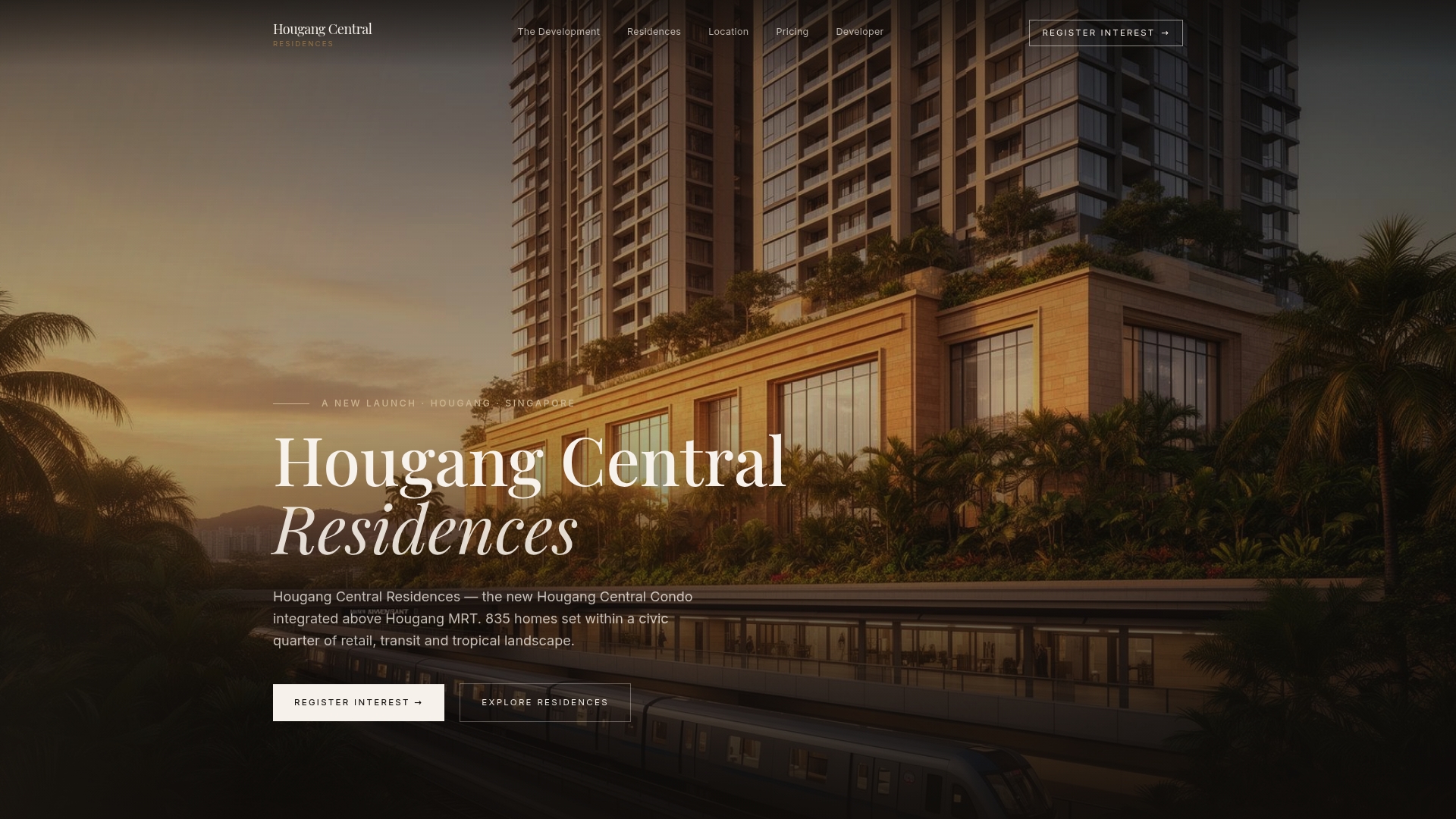
Hougang Central Residences has 835 residences, from 1-bedroom plus study to 5-bedroom penthouses, so a buyer's confirmed budget has a real range of layouts to match. A young professional who wants direct MRT access may be best served by a smaller type. A family may prefer a 3-bedroom or larger. An investor may want a type that suits a particular holding period.
The development sits above Hougang MRT, with an integrated retail mall and bus interchange, and is close to the future Cross Island Line interchange. It also offers smart-home systems and premium European fittings. These are the reasons buyers choose it, and an IPA in hand lets you focus on them and not on whether the numbers work.
Get the IPA first, then visit the showflat with a number you trust.
Simon
See the units that fit your IPA
Once your IPA gives you a figure, match it to the homes. Our pricing page lists pricing from S$2,800 per sq ft, and the residences page shows every type from 1-bedroom plus study to the 5-bedroom penthouse.
If you want to see layouts, the floor plan page shows each unit type. For timing, check the launch date and latest updates. You can register your interest through the Hougang Central Residences site.
FAQ
Is a bank IPA the same as a loan approval?
No. An IPA is an indicative, non-binding assessment based on the information you provide. The bank's final approval comes after it verifies your documents, the valuation of the property and your finances. The amount can differ from the IPA.
Does getting an IPA cost anything?
Banks do not generally need you to commit to anything to request one, and the IPA commits neither side. Maybank notes that the HDB portal's IPA service is complimentary. Check your lender's own terms for a private property IPA.
Can applying to several banks hurt my credit?
It can. Maybank warns that multiple IPA applications may affect your credit scores. Choose the lenders you really want to compare and apply to them close together.
How long is an IPA valid?
DBS says it is typically 30 days. Other institutions may offer longer periods, so check the date on your letter. If it lapses, you may need to refresh your documents and apply again.
Do I need an IPA before booking a new launch unit?
It is strongly advised. HSBC recommends getting one before you pay an option fee, and DBS explains that a loan rejection after exercising the option can cost you that fee. For a new launch, ask the sales team about the booking amount and timeline so you can plan the IPA around them.
Sources
- UOB Singapore: Private Home Loan
- ABS: Home Loans (October 2025)
- Maybank: FAQs on HDB Home Loan
- MoneySense: How home loans work
- HSBC Singapore: Home Loans FAQ
- DBS: Homebuying made simple
- MAS: Macroprudential Policies in Singapore
- ABS: Housing Loans (August 2026)
- SingSaver: How to get mortgage preapproval
- DBS: Home loan required documents
- Cashew: Documents for a mortgage
- PropertyNet: Singapore Cooling Measures 2026
- AI New Launch: Repricing vs Refinancing