
The maximum loan-to-value ratio in Singapore is 75% if you have no outstanding housing loan, 45% for a second loan, and 35% for a third or subsequent, with even lower caps kicking in if your loan tenure runs past 30 years or beyond age 65. Before you calculate anything else, check two things today: how many outstanding housing loans you currently have, and what loan tenure you're planning to request.
TL;DR:
- The actual approved loan amount may be lower than the LTV cap due to TDSR and MSR limits, with the former restricting total debt payments to 55% of income.
- Extending the loan tenure beyond 30 years or past age 65 triggers a lower LTV ceiling, often increasing upfront cash requirements unexpectedly.
- Confirm your outstanding housing loans and planned loan tenure with your bank beforehand, as these directly influence your effective borrowing capacity.
- Buying a second property significantly reduces your LTV from 75% to 45%, requiring a larger cash and CPF downpayment, often exceeding $500,000 with stamp duties.
- LTV limits are fixed by regulation, but actual approval depends on your credit history, income stability, and complete debt obligations, which can adjust your lending ceiling downward.
Table of Contents
- What Are the Current Loan to Value Limits in Singapore?
- Why Your Approved Loan Might Be Smaller Than the LTV Cap Suggests
- Cash and CPF Planning: Two Worked Examples
- How to Check Your Own Numbers Before You Talk to a Bank
- How Hougang Central Residences Supports Buyers Working Through LTV Rules
- What Happens If You Exceed the LTV Limit
- How LTV Limits Have Shifted With Market Conditions
- Does Your Credit Score Change What You Can Borrow?
- The Real Skill Isn't Knowing the LTV Table, It's Timing It
- Request a Payment Illustration for Hougang Central Residences
- Sources
- FAQ
What Are the Current Loan to Value Limits in Singapore?
The Monetary Authority of Singapore sets the ceiling on how much a bank or HDB can lend against a property's value, and that ceiling shifts depending on how many housing loans you already have running.
For applications tied to an Option to Purchase signed on or after July 6, 2018, MAS caps LTV at 75% for buyers with no outstanding housing loan, 45% for those with one outstanding loan, and 35% for those with two or more outstanding.
The downpayment portion correlates with the LTV tier. First-time buyers may have a small cash downpayment, supplemented by CPF, while repeat buyers face higher minimum cash requirements that CPF cannot replace.
A few details trip people up:
- Non-individual borrowers, such as companies or entities, face a lower flat LTV regardless of outstanding loans.
- HDB concessionary loans follow a separate set of rules from bank loans and are generally more conservative on tenure, capping at 25 years before the reduced LTV applies, versus 30 years for private bank loans.
- The "number of outstanding loans" counts loans still active at the time of application, not loans you intend to close soon. Signing an Option to Purchase to sell your current home does not remove that loan from the count until it's actually discharged.
Why Your Approved Loan Might Be Smaller Than the LTV Cap Suggests
LTV tells you the maximum the bank is legally allowed to lend. It does not tell you what the bank will actually approve, and that gap catches a lot of buyers off guard.
Two other checks sit on top of LTV: the Total Debt Servicing Ratio (TDSR) and, for HDB flats and executive condominiums, the Mortgage Servicing Ratio (MSR). TDSR caps total monthly debt obligations, including the new mortgage, at 55% of gross monthly income, while MSR caps mortgage payments specifically at 30% of income. MoneySense notes that lenders routinely apply their own affordability checks on top of the statutory caps, so treat the MAS table as a ceiling, never a promise.

The tenure and age rule creates a genuine trap. Stretching your loan tenure to lower monthly repayments sounds sensible, until that extension crosses the 30-year mark or runs past your 65th birthday and drops you into the reduced LTV tier automatically. A buyer chasing a smaller monthly bill can end up needing a much larger upfront cash sum instead.
Common adjustments to watch for:
- Banks often discount variable income, bonuses, and rental income by 30% before counting it toward TDSR.
- Existing guarantor obligations count against your TDSR even if you're not the primary borrower.
- Joint applications average both incomes but also average both ages, which can shift the tenure calculation.
Pro Tip: Ask your bank to run the TDSR and LTV numbers together before you commit to an Option to Purchase. A property that clears the LTV cap on paper can still fail the affordability check once your other debts are added in.
Cash and CPF Planning: Two Worked Examples
Numbers make this concrete. Here's how the tiers actually play out for a first-time buyer versus someone purchasing a second property while still holding a loan on the first.
-
First housing loan, no existing mortgage. On a $1,200,000 condo, a 75% LTV gives you a loan of $900,000, leaving $300,000 to cover through cash and CPF. The minimum cash portion at 5% is $60,000, with the remaining $240,000 payable via CPF Ordinary Account savings, which the CPF home purchase planner can map against your current balance.
-
Second property, first loan still outstanding. The same $1,200,000 purchase now falls into the 45% LTV tier, cutting the loan to $540,000 and pushing the downpayment to $660,000. Minimum cash alone at 25% is $300,000, before Additional Buyer's Stamp Duty. ABSD for a Singapore citizen's second residential property currently sits at 20%, adding $240,000 in stamp duty on top. The combined upfront cash and duty burden on that second purchase can easily exceed $500,000, a figure that surprises many upgraders who budgeted based on the first-property scenario alone.
For buyers caught in that gap between selling one property and closing on the next, a bridging loan can cover the shortfall temporarily, while some developers offer deferred payment structures that ease the timing pressure without changing the underlying LTV math.
How to Check Your Own Numbers Before You Talk to a Bank
Run your own figures before a banker runs them for you. MAS publishes the full LTV and tenure explainer with worked scenarios, and the CPF home purchase planner shows exactly how much of your Ordinary Account balance can go toward downpayment and monthly servicing.
Gather these before any meeting:
- Statements for every outstanding housing loan, including ones you plan to sell soon but haven't discharged.
- Your latest CPF Ordinary Account balance and contribution history.
- Payslips or income statements covering the past 12 months, plus any rental income documentation.
- A list of existing debt obligations: car loans, personal loans, credit card balances.
Ask your bank directly which LTV tier applies to you, whether your requested tenure triggers the reduced tier, and what your TDSR-adjusted loan amount looks like once existing debts are factored in.
How Hougang Central Residences Supports Buyers Working Through LTV Rules
Understanding your LTV tier is only half the planning work. The other half is mapping that tier against a real payment schedule, and that's where buyer-facing resources matter.
Hougang Central Residences' own guides walk through condo downpayment planning and progressive payment schedules so buyers can see, month by month, how a lower LTV tier affects near-term cash needs during construction. For upgraders weighing a sell-first or buy-first strategy, these resources lay out the tradeoffs in plain terms rather than glossing over the cash timing risk. None of this replaces a conversation with your bank, but it gives you a clearer starting point before that conversation happens.
What Happens If You Exceed the LTV Limit
There's no scenario where a bank simply lends above the MAS-prescribed LTV cap. The limit is a hard regulatory ceiling, not a negotiating position, so "exceeding" it in practice means one of two things happens instead.
Either the loan application gets rejected outright because the requested amount breaches the tier you fall into, or the bank approves a smaller loan than you expected and asks you to cover the difference in cash. The second scenario is far more common than outright rejection.
The practical fallout tends to hit at the worst possible moment: after you've paid the option fee, sometimes after you've already given notice on a rental or sold another asset expecting the funds to land. Missing the shortfall can mean forfeiting your option fee entirely if you can't complete the purchase within the exercise period.
The fix is procedural, not financial. Confirm your outstanding loan count and tenure situation with your bank before signing anything, not after. A five-minute phone call to a loan officer, or a run through the MAS explainer and CPF planner, costs nothing and prevents a five-figure mistake.
How LTV Limits Have Shifted With Market Conditions
MAS has adjusted LTV and related cooling measures multiple times over the past decade, always in response to price momentum or leverage concerns rather than on a fixed schedule. MAS frames these adjustments as macroprudential policy, aimed specifically at discouraging excessive borrowing during periods when property prices are climbing faster than incomes.
The tiered structure itself, lower LTV for each additional outstanding loan, exists precisely to cool speculative multi-property borrowing without shutting first-time buyers out of the market. That's a deliberate design choice, not an accident: someone buying their first home gets the most generous tier, while someone accumulating a third property faces the tightest one.
On the public housing side, HDB has issued its own measures alongside MAS adjustments, sometimes tightening loan terms for resale flats while expanding support for first-time buyers in the same announcement. That combination, tighter for repeat buyers, looser for first-timers, has been the consistent pattern across several rounds of cooling measures.
Because these thresholds can move, the numbers in this article reflect the framework as it currently stands. Always cross-check the current MAS explainer before finalizing a purchase decision, since a rule that applied a year ago may have shifted by a percentage point or two.

Does Your Credit Score Change What You Can Borrow?
LTV sets the ceiling. Your credit history and income profile decide whether you actually reach it.
Singapore banks pull credit bureau reports as a standard part of mortgage underwriting, and a poor repayment history on credit cards or personal loans can lead to a smaller loan approval even when your LTV tier technically allows more. This isn't a formal LTV reduction. It's a risk-based lending decision layered on top of the regulatory maximum, and it operates independently of the tier system MAS sets.
Income stability matters just as much. Salaried employees with consistent payslips generally get smoother approvals at the full LTV tier they qualify for. Self-employed buyers or those with variable commission income often face haircuts on how much of that income the bank counts toward TDSR, which indirectly shrinks the loan even though the LTV percentage itself doesn't change.
The practical takeaway: two buyers in the identical LTV tier, same number of outstanding loans, same tenure, can walk away with different approved loan amounts purely because of credit history and income documentation. If your credit report has blemishes or your income is irregular, budget for the lower end of your LTV tier rather than assuming the maximum, and clear any outstanding delinquencies well before you start house hunting.
The Real Skill Isn't Knowing the LTV Table, It's Timing It
Most guidance on this topic stops at reciting the MAS percentages, and that's genuinely the easy part. The table takes five minutes to read. What separates buyers who budget correctly from those who get blindsided at exercise deadline is timing: knowing exactly when an existing loan counts against you, and refusing to assume a sale will close before it legally has.
The conventional advice to "extend your tenure to lower monthly payments" deserves more scrutiny than it usually gets. It's sound advice for cash flow and terrible advice for anyone sitting near the 30-year or age-65 threshold, where that same move drops the LTV tier and demands far more cash upfront. Nobody frames it as a tradeoff. It should be framed as one every time.
If there's one priority to act on first, it's this: confirm your outstanding loan count with your bank in writing before you sign an Option to Purchase, not after. Every other calculation, TDSR, MSR, ABSD, downpayment, flows from that single number. Get it wrong and every subsequent budget you build is wrong with it.
— Simon
Request a Payment Illustration for Hougang Central Residences
Once you know which LTV tier applies to you, the next useful step is seeing exactly how that tier maps onto a real unit and a real payment schedule, rather than a hypothetical one.
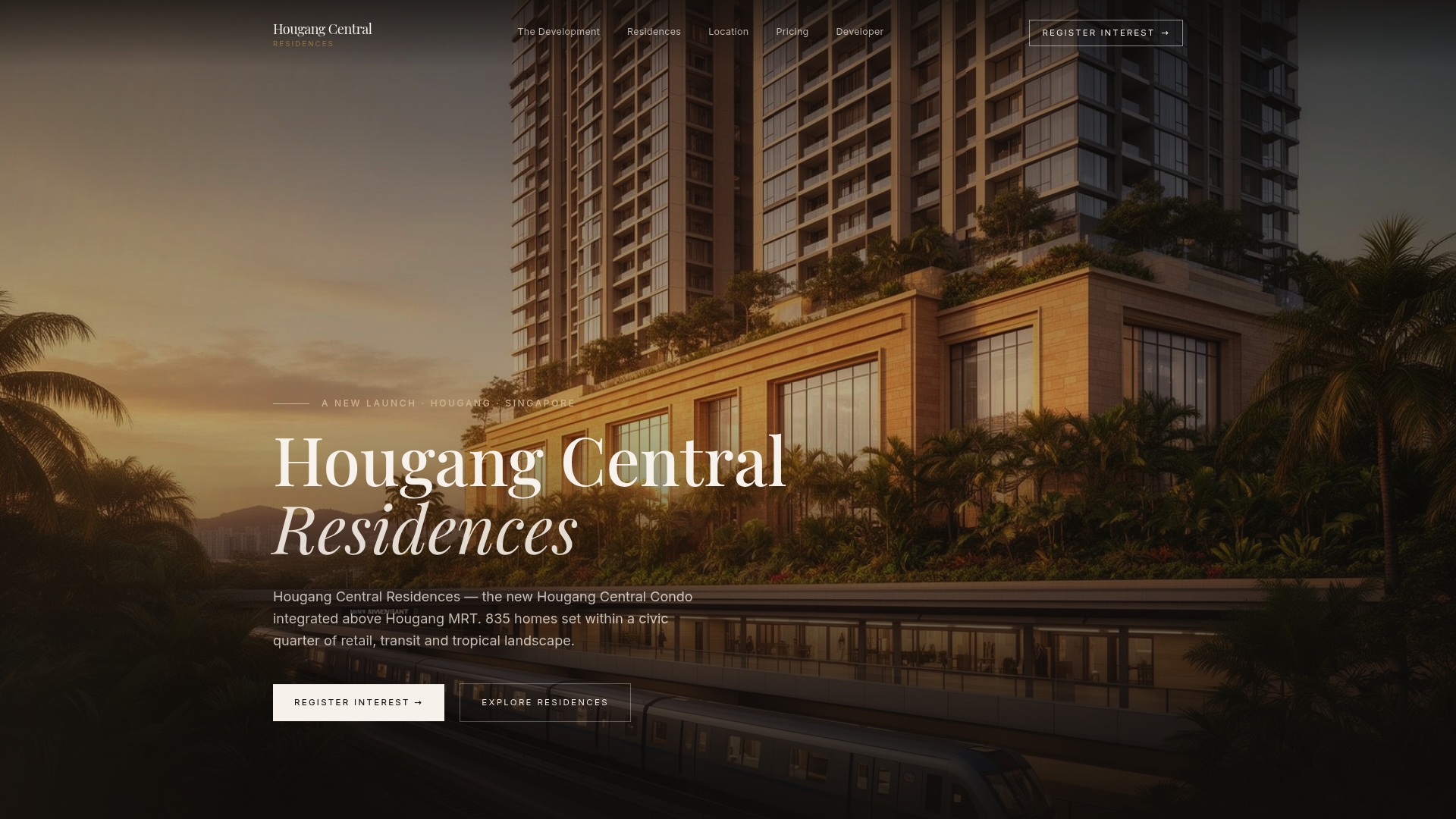
Hougang Central Residences offers a tailored payment illustration that shows your likely downpayment split, progressive payment milestones, and estimated monthly commitments based on the unit type and financing tier you fall into. This isn't a generic brochure figure. The e-brochure also includes a sample progressive payment schedule you can compare against your bank's TDSR-adjusted loan offer before committing to anything.
Request your personalized payment illustration or book a showflat visit through the official Hougang Central Residences page to see how the numbers apply to a specific unit you're considering.
Sources
Verify every figure in this article directly against the primary source before you finalize a purchase decision.
- Loan Tenure and Loan-to-Value Limits — MAS
- Buying a property: How much can you afford? — MoneySense
- Home purchase planner — CPF
This article is general information, not a substitute for advice from a qualified financial advisor. Consult a qualified financial professional about your own circumstances before acting on anything here.
FAQ
What Is the Maximum Loan-to-Value Ratio in Singapore?
The maximum is 75% for buyers with no outstanding housing loan, dropping to 45% with one outstanding loan and 35% with two or more, with lower figures applying if tenure or age thresholds are crossed.
What Is a Loan to Value Limit?
A loan-to-value limit is the maximum percentage of a property's price or valuation, whichever is lower, that a bank or HDB is permitted to lend, with the remainder covered through cash and CPF.
How Much Can I Borrow Under the LTV Rules?
Your borrowing cap depends on your outstanding loan count and requested tenure, but the LTV cap is a ceiling, not a guarantee: TDSR and MSR checks often reduce your actual approved loan below that ceiling.
Does HDB Use the Same LTV Rules as Bank Loans?
No. HDB concessionary loans follow their own tenure threshold, capping at 25 years before the reduced LTV applies, compared to 30 years for private bank loans, so check HDB's own notices for the current specifics.