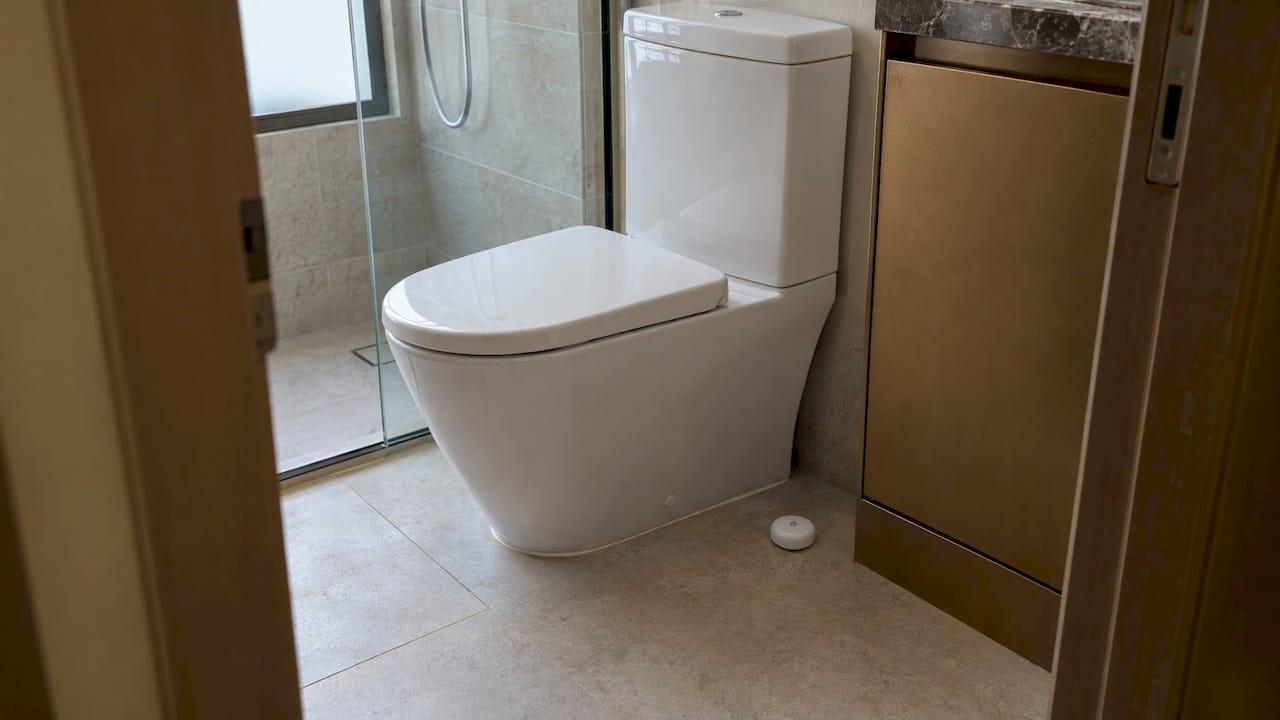
A smart water leak detector is a small connected sensor that notices water where it should not be and sends an alert to your phone. For a condo, the practical answer is a few point sensors (kitchen, bathrooms, water heater, washing machine) on a hub that sounds its own alarm, ideally with an automatic shut-off valve, plus PUB's free meter tools for leaks you cannot see. Basic sensors start at S$14.90, so the cost is small next to a flooded floor and a neighbor's ceiling. If you are choosing a new home, it also pays to know which smart-home features come with the unit. Hougang Central Residences, for one, was designed around smart-home systems.
TL;DR
- Point sensors under sinks, beside toilets and near the water heater catch pooling water in seconds. Flow monitors and shut-off valves handle hidden leaks and emergencies.
- Look for a loud built-in siren, a waterproof rating, long battery life and a hub that works with the phone ecosystem you already use.
- In a condo you control your own unit, not the shared supply, so alerts should also reach someone who can act when you are away.
- PUB's smart water meter, the meter-dial test and a PUB-licensed plumber cover leaks that a sensor on the floor will never see.
- A water filter treats water quality. It does not detect leaks, so it is a separate decision.
Table of Contents
- What a smart water leak detector actually does
- Why condos need a slightly different plan
- Where to place sensors in a condo unit
- What to check before you buy
- What it costs
- Sensors cannot see everything: use PUB's tools too
- A sensible setup in three layers
- What about a water filter?
- Why a new smart-home condo makes this easier
- Our view
- See the homes
- FAQ
- Sources
What a smart water leak detector actually does
There are three kinds of device, and they solve different problems. Point-based sensors sit under sinks, washing machines or water heaters and raise an alarm when water pools. Flow-based monitors sit on the supply line and analyze usage patterns to find hidden leaks. Automatic shut-off systems add a motorized valve that closes the supply.

Most point sensors work the same way. Two metal probes are separated by non-conductive material, and when water touches both, the circuit closes and an alert triggers. That makes them quick and precise for one location, but blind to anything not on the floor next to them.
What makes a sensor "smart" rather than a battery-powered beeper is the connection. It joins your home network or a hub, pushes an alert to your phone, can pair with a valve to close the supply, and builds a history that shows a pattern forming. A plain alarm only helps if someone is home to hear it.
No device prevents a pipe from failing. Chubb's risk team notes that leak detection cannot prevent the causes of water loss, but it can reduce the severity of damage through quicker detection and response. That is the right way to think about the purchase: minutes saved, not leaks avoided.
Why condos need a slightly different plan
In a landed house you own the main valve. In a condo, the supply into your unit is part of a building system you share with neighbors above, below and beside you. Chubb points out that condo owners have less control over shared water supply and shut-off valves, so it recommends that sensor alerts go to your phone and that secondary notifications reach on-site staff who can act quickly.
In practice this means three things for a Singapore owner:
- Choose a sensor with its own siren. If you are overseas and the Wi-Fi is down, a loud alarm still lets a neighbor or a caretaker know something is wrong.
- Tell someone who can reach your unit. A family member, a trusted neighbor or your tenant should know what the alarm sounds like and where your main isolation valve is.
- Check your management corporation's rules before changing anything on the supply. Anything that touches the pipework is a bigger step than placing a sensor on the floor. Our condo renovation rules checklist explains what usually needs approval.
Where to place sensors in a condo unit
Sensors only detect water that reaches them, so placement is the whole game. Chubb's condo guide lists the locations where point-of-leak sensors belong: kitchen sinks and all water-using appliances, bathrooms (larger ones may need more than one), washing machines, the heating or cooling unit, and any sump pump. Adapted to a typical Singapore apartment, a sensible layout looks like this:
| Location | Why it matters |
|---|---|
| Under the kitchen sink | Supply hoses and traps are the most common slow drip points |
| Behind or beside the washing machine or dishwasher | Connecting hoses fail under pressure and during long cycles |
| Next to each toilet base | Cistern and supply-line leaks start at floor level |
| Under the basin in every bathroom | Catches trap and tap-connector leaks |
| Beside the water heater | Tank and valve leaks run onto the floor |
| Near the aircon drain pan or utility corner | Blocked drains overflow quietly |
A two-bedroom unit with two bathrooms therefore needs roughly six sensors. Put them flat on the floor at the lowest point, not on a shelf, because the probes must sit in the water.
The toilet deserves special attention. In PUB's smart water meter trials at Punggol and Yuhua, about 10% of 800 households had leaks, mostly at the water cisterns, and many went unnoticed until a higher-than-usual bill arrived. A sensor beside each toilet turns that wait into an alert.
What to check before you buy
When comparing models, a short list of features does most of the work.
Alarm and notifications
A built-in siren plus an app push notification is the combination to look for. The siren works when your phone is silent or the internet is down, and the push works when you are at the office.
Waterproof rating and probe design
Sensors live on wet floors. An IP67 rating means the unit can be briefly submerged. The Aqara T1, for example, is IP67 rated and triggers at 0.5 mm of standing water.
Connectivity and the hub
Zigbee sensors are small, cheap and long-lasting, but they need a hub to send phone notifications and sound alarms. The Aqara T1, for instance, needs an Aqara hub for push notifications. IKEA's BADRING sensor works the same way: it beeps on contact with water and, when connected to the DIRIGERA hub (sold separately), sends a smartphone notification. Wi-Fi sensors skip the hub but rely on your router, so a stable home network matters. If you are setting up a whole unit, our guide to wired backhaul and mesh Wi-Fi for condos shows how to keep devices in far corners connected.
Battery life
A coin cell that lasts around two years, like the CR2032 in the Aqara T1, means you replace it on a schedule rather than discover it is flat when the water arrives. Put a reminder in your calendar.
Ecosystem and automation
If you already use Apple Home, Alexa or Google Home, check the sensor supports it. The Aqara T1 can pair with a valve controller to shut off water automatically and works with Apple Home, Alexa, Google Home, IFTTT and Matter through a hub.
Warranty
Local warranty support is worth checking. One Singapore retailer lists a 24-month carry-in warranty for the T1 model.
What it costs
Point sensors are one of the cheapest smart-home upgrades. Published Singapore prices include:
- IKEA BADRING: S$14.90, with the hub sold separately.
- Aqara Water Leak Sensor T1: S$28 to S$30, GST included at one retailer, and S$28 to S$33 at another.
For reference, Chubb says individual point-of-leak sensors in the United States average US$40 to US$100 each, and some need additional components. Prices change, so confirm on the retailer's page before buying. Remember to budget for a hub, and for a valve controller if you want automatic shut-off.
A six-sensor setup at the Singapore prices above, plus a hub, is a modest outlay. The comparison that matters is with the cost of repairing a ceiling, flooring and cabinetry, and with the disruption of dealing with a neighbor's claim.

Sensors cannot see everything: use PUB's tools too
A sensor tells you about water on the floor. A leak inside a wall, a slab or a running cistern may never touch it. For those, Singapore's national water agency gives residents several free methods.
PUB's smart water meter
PUB installs smart water meters at no cost to customers. Through the MySmartWaterMeter web portal you can view usage monthly, daily or hourly, set usage targets and receive leak and high-usage notifications. Availability depends on whether your building has been fitted, so check PUB's page for the current rollout.
The meter-dial test
PUB's building guidance says to check for a leak during off-peak periods: close all fittings, isolate and fully fill water tanks, then watch whether the water meter dial moves. Movement means water is going somewhere. PUB also lists the other signs of a leak: wet patches, constant flow in drains in dry weather, pumps running for long periods, and a meter dial that runs through the night.
In a condo, the meter that matters for your unit is the one serving it, and the common-area tanks belong to the management corporation. If the dial moves after you have shut every tap and appliance in your own unit, note the time and the reading and report it.
When to call a plumber
Staining, mould, a musty smell or a meter that keeps moving after you have isolated everything visible suggests a concealed leak. Call a PUB-licensed plumber. PUB's Plumbing Works page lists the simple jobs an unlicensed handyman may do, such as replacing a tap, showerhead or washing machine hose. Anything beyond that, including work on concealed pipes, should go to a licensed plumber. Also tell your management office, since a leak can affect the unit below.
A sensible setup in three layers
Putting this together, most condo owners are well served by three layers:
- Point sensors with sirens in every wet area, on a hub with push alerts.
- A shut-off valve on the unit's supply, where your building's rules and a licensed plumber allow, linked to those sensors.
- Meter checks: PUB's smart meter notifications where available, and a dial test whenever a bill jumps or before a long trip.
It is also worth pairing the setup with an alert contact. Give a neighbor or caretaker the key and the alarm details, as Chubb's guidance on notifying on-site staff suggests.
What about a water filter?
Readers sometimes search for a water filter for a condo alongside leak sensors. They are separate purchases. A leak detector protects the unit from damage; a filter changes how the water tastes or what particles it carries. Neither does the other's job, so budget for them separately, and if you add an under-sink filter, put a leak sensor beside it, because a new connection under the sink is another place a hose can fail.
Why a new smart-home condo makes this easier
Retrofitting sensors into an older unit means stick-on devices, a hub and a Wi-Fi network that was not planned for them. A new unit built around connected systems starts from a better place: wiring, network and home controls are planned together. Our guide to smart-home features new condos should have lists what to ask for, and our piece on smart bathroom features covers the wettest room in the home. After you collect your keys, our defect inspection checklist shows how to test plumbing and fittings while the defects liability period is running. For households with older members, our notes on elderly-friendly condo features explain why early leak alerts matter when someone may not notice a wet floor.
Our view
We think leak protection should be part of how a home is planned, not an afterthought bought online once something goes wrong.
At Hougang Central Residences, the 835 homes sit above Hougang MRT, with a retail mall and bus interchange below, and each unit is designed with smart-home systems and premium European fittings. Families, young professionals and retirees all share one worry about a home they travel from every day: what happens when nobody is in? A connected home answers that with alerts, automation and history rather than hope.
When you view a unit, ask how the smart-home system is set up, where a sensor would sit in the kitchen and bathrooms, and how the network reaches every corner. Those are the questions that decide whether protection works on the day you need it.
Simon
See the homes
Hougang Central Residences offers 1-bedroom plus study units up to 5-bedroom penthouses, with prices from S$2,800 per sq ft. You can see the unit types and the pricing page, then register your interest for the showflat from the Hougang Central Residences site.

The floor plans help you picture where sensors would go in each layout.
FAQ
Is there a device that detects water leaks?
Yes. Point sensors detect pooling water under sinks, toilets and heaters and alert your phone or sound a siren. Flow monitors on the supply line spot hidden leaks from abnormal usage. A motorized valve can close the supply when either detects a problem.
How can I tell if I have a leak using a meter?
Close every tap and appliance, then watch the dial. If it keeps moving, water is going somewhere. PUB recommends this test during off-peak periods, and its smart water meter portal also sends leak and high-usage notifications where your home has one.
Do I need a hub for a smart leak sensor?
Often yes. Zigbee sensors such as the Aqara T1 and IKEA's BADRING need a hub to send phone notifications. Choose a sensor with its own siren so it still alerts people nearby if the network is down.
How much does a leak sensor cost in Singapore?
Published retail prices run from S$14.90 for IKEA's BADRING sensor to around S$28 to S$33 for the Aqara T1, depending on the retailer. Hubs and valve controllers are extra, so check current prices before you buy.
Does a leak detector replace a plumber?
No. A detector warns you early. Finding and fixing a concealed leak is a job for a PUB-licensed plumber, and you should also inform your management office.
Sources
- Best Smart Leak Detection Systems
- Understanding Water Leak Detection Systems
- Smart Water Leak Sensors 101
- Protect your condo or co-op from water damage (Chubb)
- PUB press release on smart water meter installation
- Aqara Water Leak Sensor T1, Aqara Singapore
- Aqara Water Leak Sensor T1, HomeSmart Singapore
- BADRING water leakage sensor, IKEA Singapore
- Smart Water Meter, PUB
- Water Efficiency guide, PUB
- Find and Fix Water Leaks in Your Building, PUB
- Plumbing Works, PUB