
TL;DR:
- A 1-bedroom condo investment focuses on generating rental income or appreciation at lower upfront costs than larger units.
- Net rental yield, after deducting expenses like HOA fees, taxes, and vacancy costs, determines actual profitability.
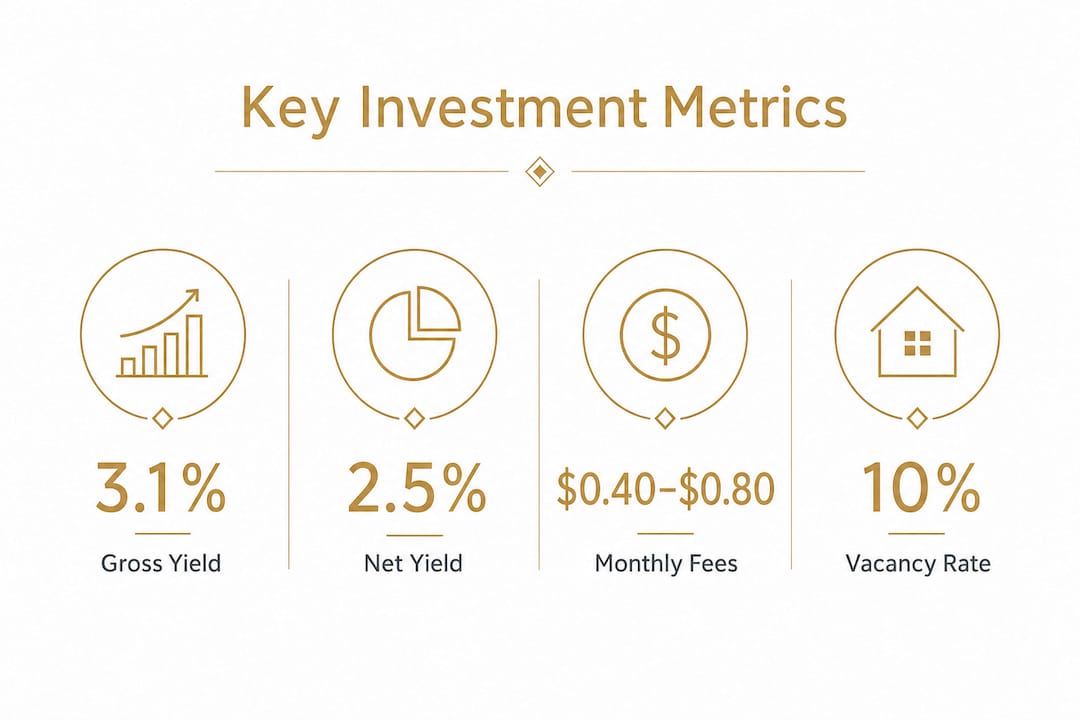
A 1-bedroom condo investment is defined as the purchase of a single-bedroom condominium unit with the primary goal of generating rental income or capital appreciation. This asset class sits at the entry level of private real estate investing, offering lower upfront costs than larger units while targeting a broad pool of renters. Gross rental yields on Singapore private homes average approximately 3.1%, with shoebox units generally delivering higher percentage yields. That benchmark matters because it sets a realistic ceiling before you subtract holding costs, taxes, and fees.
What are the key financial metrics for 1-bedroom condo investments?
Net rental yield is the number that actually determines whether a 1-bedroom condo investment pays off. Gross yield tells you what rent looks like as a percentage of purchase price. Net yield tells you what you keep after every cost is paid.

Gross yield vs. net yield
Gross rental yield is calculated by dividing annual rent by the purchase price. Net yield subtracts mortgage interest, property tax, maintenance fees, insurance, and vacancy losses from that figure. Net yield can fall from a gross 3.6% to near 2% after all expenses in the Singapore market. That gap is wide enough to turn a seemingly profitable unit into a cash-flow-negative asset.
Typical holding costs to model
Monthly maintenance fees typically range from $0.40 to over $0.80 per square foot, covering insurance, amenity upkeep, and reserve funds. On a 500-square-foot unit, that translates to $200–$400 per month before any mortgage payment. Singapore investors must also factor in the Additional Buyer's Stamp Duty (ABSD), which adds a significant lump-sum cost at purchase and directly reduces your effective yield in the early years.
| Cost Item | Estimated Impact |
|---|---|
| Gross rental yield | ~3.1% average (Singapore private homes) |
| Maintenance fees | $0.40–$0.80 per sq ft per month |
| ABSD (Singapore) | Lump-sum at purchase; reduces early-year yield |
| Vacancy allowance | Typically 1–2 months per year in modeling |
| Net yield (after costs) | Can drop to ~2% from gross 3.6% |
Condo association fees can increase unpredictably, which directly threatens cash flow stability. Budget for fee increases of 5–10% every few years as a conservative assumption.
Pro Tip: Stress-test your yield calculation by modeling a 10% vacancy rate and a 1% increase in mortgage interest. If the investment still produces positive cash flow under those conditions, the unit is worth pursuing.
How does location affect the investment performance of 1-bedroom condos?
Location is the single most powerful variable in any condo investment strategy. Real estate professionals consistently identify geographic location as the key driver of investment success over unit size. A well-located 1-bedroom unit near transit and employment centers will outperform a larger unit in a poorly connected neighborhood.
What tenant profiles drive demand for small units?
Strong rental demand for 1-bedroom units comes primarily from single professionals and expatriates who prioritize location over space. This tenant profile is highly stable because their housing decisions are tied to job proximity, not lifestyle preferences. Understanding this helps you select buildings that match where these renters actually want to live.
Key location factors to evaluate before buying:
- MRT or transit proximity. Units within a 5-minute walk of a major transit hub command rent premiums and fill faster. Hougang-central-residences sits directly above the Hougang MRT station, which is a textbook example of transit-integrated positioning.
- Employment node access. Proximity to business districts, hospitals, or universities creates a steady tenant pipeline.
- Neighborhood supply pipeline. A surge of new condo completions in the same area compresses rents. Check Urban Redevelopment Authority (URA) data for upcoming supply before committing.
- Price per square foot premiums. Shoebox units trade at PSF premiums in prime locations, which can limit capital appreciation upside even as rents hold steady.
- Oversupply risk. Avoid developments surrounded by a high concentration of similar-sized units. Oversupply is the fastest way to push vacancy rates above your modeled assumptions.
The integrated retail and lifestyle component of a development also affects tenant appeal. Renters pay more for buildings where daily errands require minimal travel.
What are the risks and challenges unique to investing in 1-bedroom condos?
The yield trap is the most common mistake investors make with small condo units. A headline gross yield of 4% looks attractive. After ABSD, maintenance fees, property tax, and one month of vacancy, that figure can drop below 2%. Focusing only on gross yields without modeling costs is how investors end up holding underperforming assets for years.
HOA financial health: the hidden risk
A healthy HOA reserve fund is typically at least 70% funded. Reserve funds below that threshold signal a high probability of special assessments, which are unexpected bills that can run into tens of thousands of dollars. Special assessments directly erode your projected returns and are impossible to predict without reviewing the HOA's financials.
Additional risks investors must prepare for:
- Rising association fees. Condo owners pay monthly fees that can increase without warning if the HOA mismanages funds or faces unexpected repairs.
- Flat rental growth. In markets with rising supply, rent growth can stagnate for several years, leaving you with the same income against rising costs.
- Subletting restrictions. Most condo buildings allow subletting from day one, unlike co-op buildings. Still, review the bylaws carefully. Some buildings impose minimum lease terms or cap the percentage of rented units.
- Management quality. Poor building management leads to deferred maintenance, which reduces tenant satisfaction and rental rates over time.
- Slower appreciation. Condos appreciate more slowly than single-family homes on average. Rental income is your primary return driver, not price growth.
Pro Tip: Request the last three years of HOA meeting minutes before signing any purchase agreement. Minutes reveal upcoming repairs, litigation, and fee increases that financial statements alone will not show.
How to effectively evaluate and select a 1-bedroom condo for investment?
A disciplined due diligence process separates profitable condo investments from expensive mistakes. The goal is to verify every assumption in your financial model before you commit capital.
Due diligence checklist
- Review HOA documents. Reviewing at least two years of HOA meeting minutes and reserve studies uncovers hidden financial or maintenance risks not visible in surface-level data.
- Calculate net rental yield. Build a spreadsheet that includes mortgage interest, property tax, maintenance fees, insurance, and a vacancy allowance. Never rely on the gross figure alone.
- Assess reserve fund health. Confirm the reserve fund is at least 70% funded. If it is not, price in the risk of a special assessment within your first three years of ownership.
- Evaluate building management. Ask current owners about responsiveness to maintenance requests and the frequency of fee increases. Poor management is a leading indicator of future problems.
- Model multiple scenarios. Run your numbers at 90% occupancy, at 80% occupancy, and with a 1% higher interest rate. If the investment breaks even under the worst scenario, it is worth considering.
Comparing unit types by investment profile
| Criteria | 1-bedroom unit | 2-bedroom unit |
|---|---|---|
| Entry cost | Lower | Higher |
| Gross yield potential | Higher (PSF premium) | Lower |
| Tenant pool | Singles, expatriates | Couples, small families |
| Capital appreciation | Slower (PSF cap) | Moderate |
| Vacancy risk | Lower near transit | Moderate |
Understanding unit size impact on rental demand helps you match the unit type to the tenant profile in your target location. The 1-bedroom unit wins on yield potential. The 2-bedroom unit wins on appreciation and tenant stability.
Key Takeaways
A 1-bedroom condo investment succeeds when net yield modeling, location quality, and HOA financial health are all verified before purchase.
| Point | Details |
|---|---|
| Net yield over gross yield | Model all costs including ABSD, fees, and vacancy before committing to any unit. |
| Location drives performance | Transit proximity and employment access determine tenant demand and rent stability. |
| HOA health is non-negotiable | Reserve funds below 70% funded signal high special assessment risk. |
| Stress-test your numbers | Run scenarios at higher vacancy and interest rates to confirm cash flow resilience. |
| Condos favor cash flow | Appreciation lags single-family homes, so rental income must carry the investment. |
What I've learned from watching investors get this wrong
Most investors who underperform with 1-bedroom condos make the same mistake: they buy on gross yield and manage on hope. I have watched buyers get excited about a 4% headline yield, skip the HOA document review, and then face a $15,000 special assessment in year two. That single event wiped out two years of rental income.
The investors who do well treat location as the anchor for every other decision. They will accept a slightly lower gross yield for a unit that sits above a transit hub or within walking distance of a major employment center. That location premium pays back through lower vacancy, faster re-leasing, and steadier rent growth over time.
My strongest recommendation is to engage a property advisor who specializes in investment analysis, not sales. The difference is significant. A sales-focused agent shows you the best-case scenario. An investment-focused advisor stress-tests your assumptions and tells you when to walk away. Patience in selection is worth more than speed to market.
— Simon
Hougang-central-residences: a transit-integrated investment worth examining
Investors who want a 1-bedroom condo with genuine location credentials should look at what Hougang-central-residences offers. The development sits directly above the Hougang MRT station, placing it in the category of transit-integrated properties that consistently attract the single-professional and expatriate tenant profiles most likely to sign and renew leases.

Hougang-central-residences features 835 residences across unit sizes from 1-bedroom to 5-bedroom, with premium European fittings and smart-home systems built in. The proximity to future MRT interchanges adds a long-term location advantage that supports both rental demand and resale value. Visit Hougang Central Residences to review available 1-bedroom units and request investment-specific pricing details.
FAQ
What is a 1-bedroom condo investment?
A 1-bedroom condo investment is the purchase of a single-bedroom condominium unit to generate rental income or capital appreciation. It is considered an entry-level private real estate investment with lower upfront costs than larger unit types.
What gross rental yield can I expect from a 1-bedroom condo in Singapore?
Gross rental yields on Singapore private homes average approximately 3.1%, with smaller shoebox units typically delivering yields at the higher end of that range. Net yield after all costs can fall significantly lower, often to around 2%.
How do HOA fees affect my condo investment returns?
HOA fees cover insurance, amenities, and reserve fund contributions, and they can increase unpredictably. A reserve fund below 70% funded raises the risk of special assessments that can cost tens of thousands of dollars and directly reduce your net returns.
Can I rent out a 1-bedroom condo immediately after purchase?
Most condo buildings allow subletting from day one, unlike co-op buildings that often impose owner-occupancy requirements. Always review the specific building's bylaws for minimum lease terms or rental caps before purchasing.
What documents should I review before buying a condo for investment?
Review at least two years of HOA meeting minutes, the most recent reserve study, the HOA budget, and the building bylaws. These documents reveal upcoming repairs, litigation risks, and financial liabilities that are not visible in a standard property listing.