
TL;DR:
- Buying a condo builds equity and stability over time, while leasing offers more flexibility and lower upfront costs. Families must evaluate their financial situation, duration of stay, and community needs to choose the best option. Verifying HOA health and understanding lease restrictions are essential before making a decision.
Choosing between leasing and purchasing a condo is one of the most consequential financial decisions a family makes. In the condo lease vs purchase family equation, leasing means paying rent to occupy a unit you do not own, while purchasing means acquiring title to the property and building equity over time. Both paths carry real trade-offs in upfront cost, monthly cash flow, lifestyle flexibility, and long-term wealth. The right answer depends on your family's financial health, how long you plan to stay, and what kind of community experience you want your children to grow up in.
What are the financial implications for families leasing versus purchasing a condo?
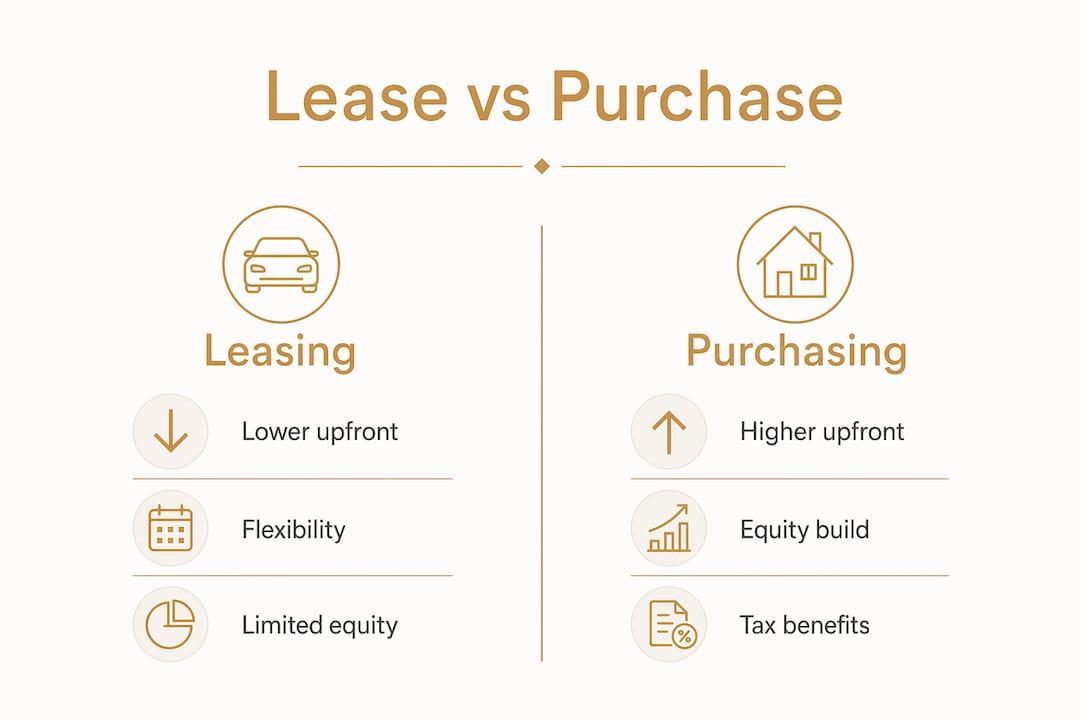
The upfront cost gap between leasing and buying is significant. Purchasing a condo typically requires a down payment of 10%–20% of the purchase price, plus closing costs. Leasing requires a security deposit, usually one to two months' rent, and sometimes an application fee. That difference in cash outlay can be tens of thousands of dollars, which matters enormously for families managing school fees, childcare, and emergency savings.
Monthly costs tell a more complicated story. A mortgage payment covers principal and interest, but condo owners also pay HOA fees ranging $100 to $1,000 monthly depending on building size and location. Renters pay a fixed monthly rent, and some utilities may be included. On paper, leasing can look cheaper month to month, but that calculation ignores the equity a buyer builds with every mortgage payment.
Maintenance responsibilities split differently too. Owners absorb repair costs inside their unit and share in HOA special assessments for major building repairs. Families leasing a condo hand that responsibility to the landlord, though maintenance responsiveness varies widely since condo landlords are private individuals, not professional property managers. A leaky faucet fixed in 24 hours in a managed apartment building could take a week in a leased condo unit.
Purchasing also unlocks tax benefits unavailable to renters. Mortgage interest and property tax deductions reduce taxable income for qualifying buyers. Renters receive no equivalent benefit. Over a 10-year horizon, those deductions compound into meaningful savings.
Pro Tip: Before comparing monthly rent to a mortgage payment, add HOA fees, property taxes, and a 1% annual maintenance reserve to the ownership side. That total is the real cost of buying.
Lenders apply stricter scrutiny to condo purchases than to single-family homes. Mortgage underwriting for condos examines owner-occupancy rates, HOA delinquency levels, vacancy rates, and overall building condition before approving a loan. A building with too many renters or a financially stressed HOA can disqualify buyers entirely, regardless of personal credit strength. Families should verify a building's financial health before falling in love with a unit.
Leasing carries its own financial risks. Condo lease terms tend to be stricter than standard apartment leases, often requiring longer commitments and limiting renewal options. Many buildings cap the percentage of units that can be rented at any time. If that cap is reached, your landlord may not be able to renew your lease even if you want to stay.
How does leasing or purchasing a condo affect family lifestyle?
Condo living delivers a quality of life that standard apartment rentals rarely match. Leased condo units typically feature higher-end interior finishes, better appliances, and shared amenities like 24-hour concierge service, rooftop decks, and pools. For families, those amenities translate directly into daily convenience and weekend activities without leaving the building.
Community atmosphere differs sharply between leased and owned units. Owner-occupied buildings tend to have lower turnover, which builds stable neighbor relationships over years. Rental-heavy buildings see more frequent moves, which can affect the sense of belonging your children develop. Young families are often surprised to find vibrant communities with play areas, splash pads, and family-friendly programming inside urban condos, shifting the old preference for suburban homes.

Flexibility is the clearest lifestyle advantage of leasing. A family whose job situation may change, or who is not yet sure about a neighborhood, benefits from a one or two-year lease rather than a 30-year mortgage. Purchasing locks you in. Selling a condo takes months and costs 5%–6% of the sale price in agent commissions and closing fees. Leasing lets you move with far less friction.
Customization runs the other direction. Owners can repaint walls, renovate kitchens, and install child-safe fixtures without asking permission. Renters work within landlord rules, which often prohibit permanent modifications. For families who want a home that reflects their tastes and grows with their children, ownership provides that freedom.
- Assess amenities for children. Look for buildings with dedicated play areas, pools, and safe common spaces before signing anything.
- Check community turnover. Ask the building manager what percentage of units are owner-occupied. Higher owner-occupancy means more stable neighbors.
- Evaluate noise and privacy. Visit the unit at different times of day. Condo walls vary in soundproofing quality.
- Review pet and guest policies. Many condo buildings restrict pets or limit overnight guests, which affects family life directly.
- Confirm school proximity. Urban condo locations often sit near transit hubs, which can mean shorter commutes to preferred schools.
Pro Tip: Ask the building manager for the owner-occupancy ratio before you lease or buy. Buildings with 70% or more owner-occupied units consistently show stronger community cohesion and better-maintained common areas.
What are the long-term investment values and risks?
Purchasing a condo builds equity. Every mortgage payment reduces the loan balance and increases your ownership stake. Leasing builds no equity at all. Over a decade, a purchased condo in a growing urban market can appreciate substantially, turning the initial down payment into a significant asset. That wealth-building effect is the core financial argument for buying.
Real estate markets do not move in one direction, though. Condo values can fall, and owners bear that loss entirely. Families who purchase near a market peak and need to sell within five years often recover less than they paid. Leasing insulates families from that downside. If values drop, renters simply move on at lease end.
| Factor | Leasing | Purchasing |
|---|---|---|
| Upfront cost | Low (deposit + fees) | High (down payment + closing costs) |
| Monthly cost predictability | Fixed rent term | Variable (rates, HOA changes) |
| Equity building | None | Yes, over time |
| Flexibility to move | High | Low (selling takes months) |
| Maintenance control | Landlord-dependent | Owner-controlled |
| Market risk exposure | None | Full |
Ownership costs extend beyond the mortgage. Property taxes, HOA special assessments for roof replacements or elevator repairs, and insurance add to the annual bill. Families should budget for these costs explicitly, not treat them as surprises. A building with an underfunded HOA reserve is a financial liability, not just an inconvenience.
Lease termination risk is real and underappreciated. A landlord who decides to sell the unit or move in a family member can end your lease with legal notice. For a family with children in a local school, that disruption carries costs far beyond the financial. Ownership eliminates that specific risk entirely.
What practical steps should families take to decide?
A structured process prevents costly mistakes on either side of the condo rental vs purchase decision.
- Run a full budget analysis. Calculate total monthly ownership costs including mortgage, HOA fees, property taxes, and a maintenance reserve. Compare that number to the total lease cost including any utilities not covered.
- Define your time horizon. Purchasing makes stronger financial sense when you plan to stay at least five to seven years. Shorter timelines favor leasing.
- Research the local condo market. Study price trends, average days on market, and rental vacancy rates in your target neighborhoods. A market with rising rents and low vacancy favors buying.
- Evaluate specific buildings carefully. Request HOA financial statements and meeting minutes. Look for deferred maintenance, pending special assessments, and owner-occupancy ratios.
- Consult a real estate attorney and a financial advisor. Condo purchases involve HOA governing documents, CC&Rs (covenants, conditions, and restrictions), and mortgage underwriting rules that require professional review.
- Plan for contingencies. Consider what happens if your family grows, your income changes, or your employer relocates you. Build those scenarios into your decision before committing.
Pro Tip: Request the last two years of HOA meeting minutes before purchasing. They reveal pending repairs, neighbor disputes, and financial stress that no listing description will mention.
Family-friendly condo living in a well-located urban building addresses most of these decision factors at once. Buildings designed with families in mind tend to have stable owner-occupancy, well-funded HOAs, and amenities that make the daily routine easier.
Key Takeaways
Purchasing a condo builds long-term equity and stability, while leasing offers flexibility and lower upfront costs. Families must weigh both sides against their financial position and how long they plan to stay.
| Point | Details |
|---|---|
| Upfront cost gap | Buying requires a 10%–20% down payment; leasing needs only a security deposit. |
| Equity vs. flexibility | Ownership builds wealth over time; leasing lets families move without selling costs. |
| HOA scrutiny matters | Lenders and buyers both need to verify HOA financial health before committing. |
| Lease terms carry risk | Condo leases are stricter than apartment leases and can limit renewal options. |
| Time horizon is decisive | Families staying fewer than five years typically benefit more from leasing than buying. |
What I've learned watching families make this call
Families consistently underestimate two things: how much they will value community stability, and how quickly their space needs change. I've watched families lease a beautiful two-bedroom condo, love the building, and then scramble to find a larger unit when a second child arrives, only to discover the building has no available units and the landlord won't extend the lease anyway.
The financial math matters, but it rarely tells the whole story. A family that purchases in a building with a strong owner-occupancy rate and well-funded HOA tends to feel settled in a way that renters in the same building simply do not. That intangible sense of permanence affects children's friendships, school consistency, and parents' stress levels in ways that no spreadsheet captures.
The mistake I see most often is treating the decision as purely financial. Urban condo communities with family-oriented amenities deliver a quality of life that changes the calculation entirely. A family that leases in the right building, with the right amenities and neighbors, may find that the lifestyle benefit justifies the premium rent and the lack of equity. A family that buys in the wrong building, with a financially stressed HOA and high tenant turnover, will regret the purchase no matter how good the price looked.
My honest advice: visit the building on a Saturday morning. Watch who is in the lobby, the pool, and the play area. That observation tells you more about whether the building fits your family than any financial model.
— Simon
Hougang-central-residences: condo living built for families
Families weighing the condo rental vs purchase decision deserve a building that works for both paths. Hougang-central-residences sits directly above Hougang MRT station in Singapore, offering 835 residences ranging from one-bedroom units to spacious five-bedroom homes designed for growing families.

The building features tropical landscaped areas, premium European fittings, and smart-home systems that make daily life easier. Its location connects residents to public transport, retail, and schools without a car. Whether you are considering leasing or buying a condo in Singapore's urban core, Hougang-central-residences offers the amenities, community stability, and location that families consistently prioritize. Explore available units and pricing directly on the Hougang-central-residences website.
FAQ
Is leasing or buying a condo better for families?
Buying is better for families who plan to stay five or more years and want to build equity. Leasing suits families who need flexibility or are not yet ready for the financial commitment of ownership.
What are the main costs of leasing a condo vs. buying one?
Leasing requires a security deposit and monthly rent. Buying requires a down payment of 10%–20%, closing costs, monthly mortgage payments, and HOA fees of $100–$1,000 monthly.
Do leased condos offer good amenities for children?
Yes. Leased condo units frequently include pools, concierge service, rooftop decks, and community spaces that standard apartment buildings rarely provide.
Can a landlord end my condo lease early?
Yes. Condo landlords can terminate a lease if they decide to sell or occupy the unit. Condo lease terms are often stricter than standard apartment leases, with limited renewal guarantees.
What should families check before buying a condo?
Families should review HOA financial statements, owner-occupancy ratios, and pending special assessments. Mortgage lenders also scrutinize HOA delinquency rates and building condition before approving a condo loan.