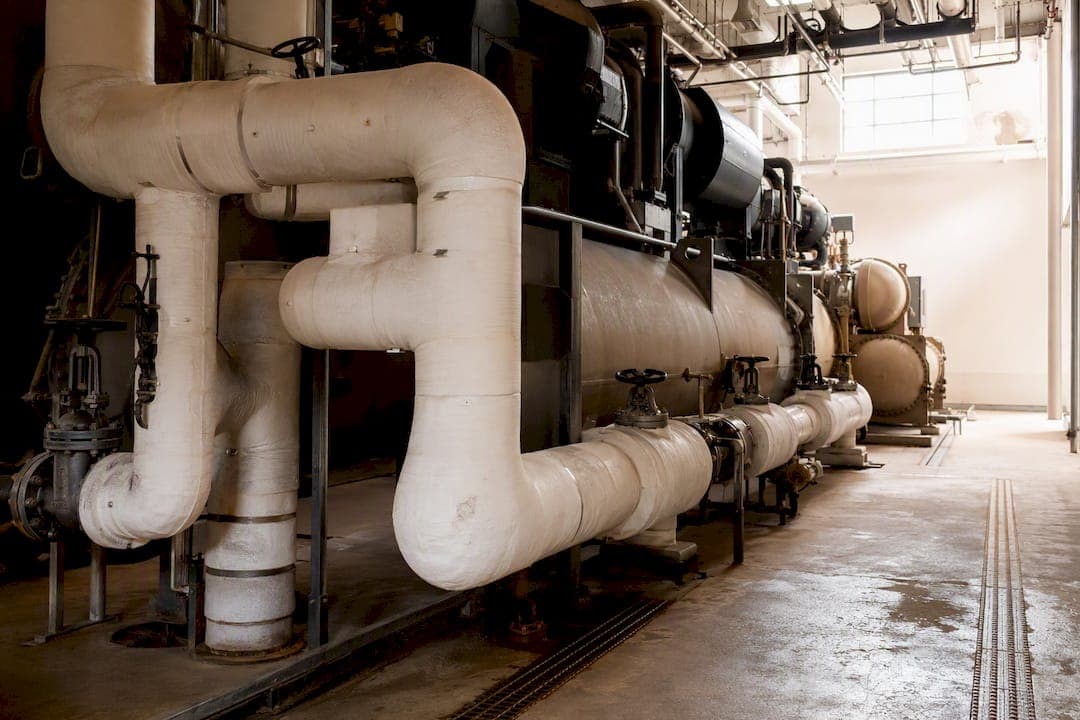
A centralized cooling system supplies chilled water from a shared plant to in-suite fan coil units, replacing outdoor condensers and shifting many service and maintenance costs to the building. Instead of a compressor humming on your balcony, cold water runs through insulated pipes to a small unit inside your ceiling or wall, which blows cool air into your rooms.
What does this mean for you as a resident or buyer?
- No condenser box outside your window or on your balcony
- A quieter unit indoors, since the noisy compressor work happens at a central plant
- Billing tied to chilled-water usage (measured in kWrh) or split through common charges, not a simple electricity meter
One published example puts the residential chilled-water usage rate at 10.00 cents per kWrh, excluding GST, which gives you a real number to compare against before you sign anything. Before you commit to a unit, ask for the rate schedule and the operations and maintenance service-level agreement in writing.
Key Takeaways
Centralized cooling works because it moves noisy, inefficient equipment out of individual units and into a professionally managed shared plant, but that trade shifts real questions about billing and control onto the buyer to resolve before purchase.
| Point | Details |
|---|---|
| Get the rate schedule | Ask for the published chilled-water usage rate and a sample bill before signing. |
| Clarify the pipe system | Confirm 2-pipe or 4-pipe design to understand how much scheduling flexibility your unit has. |
| Know the maintenance split | Central plant and distribution fall to the MCST; filters and fan electricity fall to you. |
| Check retrofit rules | Ask in writing whether supplemental condensers or FCU modifications are allowed. |
| Review O&M contract terms | Request the contractor name, service-level targets, and any recorded downtime history. |
Table of Contents
- How Centralized Cooling Actually Works
- Key Terms You'll See on Spec Sheets and MCST Notices
- What You Gain and What You Give Up
- How Billing and Costs Actually Work
- Who Pays for What: Maintenance Responsibilities
- What to Ask Before You Buy
- Notes From Living With and Designing Around Centralized Cooling
- What Actually Matters When You're Comparing Projects
- Sources
- FAQ
How Centralized Cooling Actually Works
Centralized cooling starts far from your living room, at a plant that chills water and sends it through the building on a loop.
- Central chiller plant. Large chillers cool water to a set temperature, often using electricity, and increasingly with free-cooling techniques, seawater, or river water where the geography allows it. SP Group describes district cooling as a centralized energy solution applied to townships and large mixed-use developments, not just single buildings.
- Insulated distribution network. Chilled water travels through pipes wrapped in insulation to limit heat gain, arriving at each building through an energy transfer station or substation that measures how much cooling that building consumes.
- In-suite fan coil unit. Inside your unit, a fan coil unit (FCU) receives chilled water through a valve controlled by your thermostat. Warm room air passes over a coil carrying that cold water, and a fan pushes the cooled air back into your space while the warmed water returns to the plant to be chilled again.
This loop repeats continuously, and the ASHRAE district cooling guide frames it as three linked parts: the plant, the distribution network, and the customer interconnection. Get any one of those three wrong during design, and comfort suffers building-wide, which is exactly why buyers should care about plant design, not just the unit inside their own walls.
Key Terms You'll See on Spec Sheets and MCST Notices
Developer brochures and management notices throw around terms that sound technical but map to simple ideas once decoded.
- Chiller: the central machine that cools water before it's pumped out to buildings.
- Fan coil unit (FCU): the in-suite box that blows cooled air using chilled water and a fan.
- Energy transfer station (ETS) or substation: the equipment that transfers cooling from the district loop into a specific building's internal piping.
- kWrh: a unit of cooling energy consumed, the basis most chilled-water bills use.
- Chilled-water usage rate: the price per kWrh you're charged, similar in concept to a per-unit electricity tariff.
- 2-pipe vs 4-pipe system: a 2-pipe system carries either cooling or heating at any one time across the whole building, so a schedule change affects everyone at once; a 4-pipe system runs separate supply and return lines for heating and cooling, letting different units run in different modes simultaneously.
Pro Tip: Ask specifically whether your building runs 2-pipe or 4-pipe distribution. In a tropical climate this rarely limits you in practice, but it tells you how much operational flexibility the system was designed with, and that detail often predicts how responsive management will be to your unit's temperature complaints.
What You Gain and What You Give Up
The trade-offs run in both directions, and buyers who only hear the sales pitch usually miss the second half.
On the benefit side:
- Central plants run at higher efficiency than dozens of small individual compressors, and district cooling networks reduce urban waste heat compared with scattered wall units doing the same job.
- Your in-suite unit runs quieter since the compressor noise stays at the plant, not outside your bedroom window.
- No condenser box means cleaner balcony sightliness and less external clutter across the facade, something architects increasingly design around.
- Review literature notes that pairing district cooling with renewable sources or thermal storage can lower lifecycle operating costs versus conventional split-unit setups.
On the trade-off side:
- You lose the ability to just install your own aircon brand or run a unit whenever you please without regard to the building schedule.
- Rooftop or basement plant equipment takes up common space, and some buyers notice the visual footprint of chiller plant rooms more than they expected.
- Your comfort depends heavily on how well the MCST manages operations. A poorly maintained plant affects every resident at once, not just one household.
How Billing and Costs Actually Work
Chilled-water billing splits into two components buyers often confuse.
- Metered chilled-water usage. Many projects measure your actual consumption in kWrh through a meter at your unit or substation, then bill you at a published rate. The MyTengah chilled-water usage rate lists 10.00 cents per kWrh, excluding GST, for one residential rollout, which gives a concrete benchmark. That figure isn't universal across every project, but it shows what a transparent, published rate looks like versus a vague apportioned charge.
- Apportioned common charges. Some developments instead fold central plant costs into monthly maintenance fees, spreading the cost across all units regardless of individual usage. This method is simpler to budget for but tells you nothing about whether your own habits are driving the bill up.
A rough worked example: if your household uses around 300 kWrh of cooling in a month at 10.00 cents per kWrh, that's $30 before GST, separate from whatever electricity your FCU's fan draws to circulate air, which shows up on your regular power bill. You still pay for minor in-suite parts like filters out of pocket. Ask for a sample bill at the showflat stage so you're comparing real numbers, not marketing language.
Who Pays for What: Maintenance Responsibilities
The general split in most condo setups puts the big-ticket infrastructure on the MCST and the small stuff on you.
- MCST or developer covers: the central chiller plant, distribution piping, pumps, and the energy transfer station serving the building.
- Owner covers: FCU filter cleaning, fan electricity, and minor in-suite parts, since the fan coil unit is often treated functionally as a common-element installation even though day-to-day upkeep falls to the resident.
- Ask for: the O&M contractor's name, the service-level targets in the contract, and any recorded downtime history before you commit to a purchase.
Pro Tip: Never add a supplemental condenser or modify your FCU without written management approval. Unauthorized changes can throw off the building's water balance and pressure, and you may end up liable for repairs to a system that affects every other unit on your riser.
What to Ask Before You Buy
Bring this list to the showflat or your first meeting with the sales team.
- Request the current chilled-water usage rate schedule and at least one sample bill from an occupied unit.
- Ask for the O&M contract terms: who the contractor is, what service-level agreement covers response times, and who to call in an emergency.
- Confirm whether the rate is fixed for a term or subject to periodic review, and who approves any increase.
- Ask directly whether you're allowed to install a supplemental split unit, and under what conditions.
- Check the warranty coverage on the in-suite FCU itself, separate from any warranty on the central plant.
- Ask whether the plant uses thermal storage or any renewable-adjacent cooling source, since that tends to reduce cost volatility over time.
For buyers comparing unit sizes, it's worth reviewing how different unit sizes handle cooling load before assuming a bigger layout automatically means a bigger bill.
Notes From Living With and Designing Around Centralized Cooling
Centralized cooling changes how a home actually feels, not just how the bill is calculated. The absence of a compressor rattling outside your window is the first thing most residents notice, especially at night. Smart-home thermostat integration has also become standard in newer launches, letting residents adjust their FCU remotely rather than walking to a wall panel, a detail worth checking against any smart-home features checklist you're using to compare projects.
Rooftop plant design deserves more attention from buyers than it usually gets. A well-screened, well-maintained plant room barely registers in daily life. A poorly planned one becomes a recurring source of noise complaints or visual clutter that shows up in every resale listing photo.
New condo developments increasingly design FCU controls to feel like a normal thermostat experience, but the real differentiator is how the developer handles resident expectations upfront, before the first noise complaint ever reaches the MCST.
What Actually Matters When You're Comparing Projects
The conventional advice tells buyers to just ask "does this condo have centralized cooling?" as a yes or no checkbox. That question misses the point entirely. Two projects can both offer centralized cooling and deliver completely different ownership experiences, because the real variables are the rate schedule, the O&M contract, and how clearly those terms are documented before you sign.
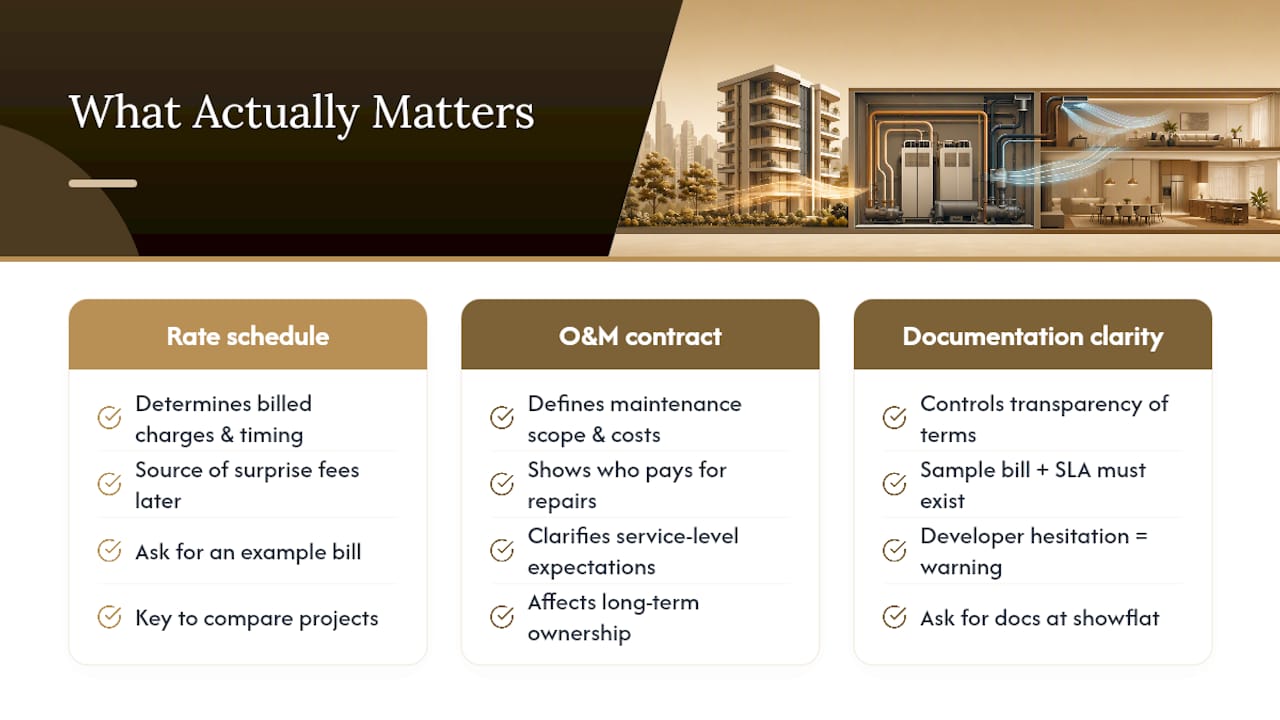
My honest read, after going through how these systems get designed and billed: the plant technology itself is rarely where things go wrong. Chillers and distribution networks are mature engineering. What goes wrong is vague paperwork. A buyer who accepts "maintenance fees cover it" without seeing a rate schedule or sample bill is the one who gets surprised eighteen months later.
Prioritize the documents over the marketing language. Ask for the rate schedule, the O&M service-level agreement, and a sample bill at the showflat stage, and treat a developer's hesitation to provide those as information in itself. A project willing to hand over that paperwork upfront is telling you something about how it will handle disputes later. Hougang Central Residences treats that transparency as part of the buying process, not an afterthought you chase down after you've already paid the booking fee.
Sources
- Centralised Cooling System — Chilled Water Usage Rate (MyTengah)
- District Cooling & Heating - SP Group
- Cooling cities differently: the role of district cooling networks — Engie
- A Centralized Cooling System As An Alternative To Conventional Air Conditioning — IJRASET (2024)
FAQ
What Does a Centralized Cooling System Cost Per Year at Projects Like Tengah?
Costs depend on your actual usage, but one published example lists the residential chilled-water usage rate at 10.00 cents per kWrh, excluding GST. A household using roughly 300 kWrh a month would pay around $30 before GST, plus separate electricity for the fan coil unit's fan.
What Are the Disadvantages of Centralized Air Conditioning?
The main trade-offs are less individual control over scheduling in 2-pipe systems, dependence on the MCST's plant maintenance quality, and restrictions on installing your own supplemental units. Plant equipment also takes up common building space that some residents notice visually.
What Is the Centralized Cooling System Used in HDB Flats?
HDB has rolled out centralized cooling systems in select new towns, where rooftop chillers pipe chilled water directly to flats without individual condensers, as described in official HDB project announcements. Residents access it as an opt-in feature tied to specific developments.
What's the Difference Between Centralized AC and a Normal Split Unit?
A normal split-unit system has its own compressor and condenser outside each unit, cooling only that space. A centralized system delivers pre-chilled water from a shared plant to an in-suite fan coil unit, eliminating the outdoor condenser and shifting most heavy maintenance to building management.