TL;DR:
- Rooftop amenities in condos provide outdoor spaces that boost property value, wellness, and community engagement. They generate rent premiums, shorten lease times, and add significant unit worth, especially with features like pools and green roofs. Proper design, maintenance, and accessibility are key for maximizing usability and resident satisfaction.
Rooftop facilities in condos are defined as exclusive, elevated common areas that provide residents with outdoor wellness, social, and recreational spaces unavailable at street level. The role of rooftop facilities in condos goes well beyond aesthetics. These spaces deliver measurable property value gains, support physical and mental wellness, and create the kind of community interaction that ground-floor amenities rarely achieve. Buildings with green roof amenities command rents about 16% higher than comparable buildings without them. That single figure tells you rooftop amenities are no longer optional extras. They are a core part of what makes urban condo living worth the premium.
How do rooftop facilities increase condo property value?

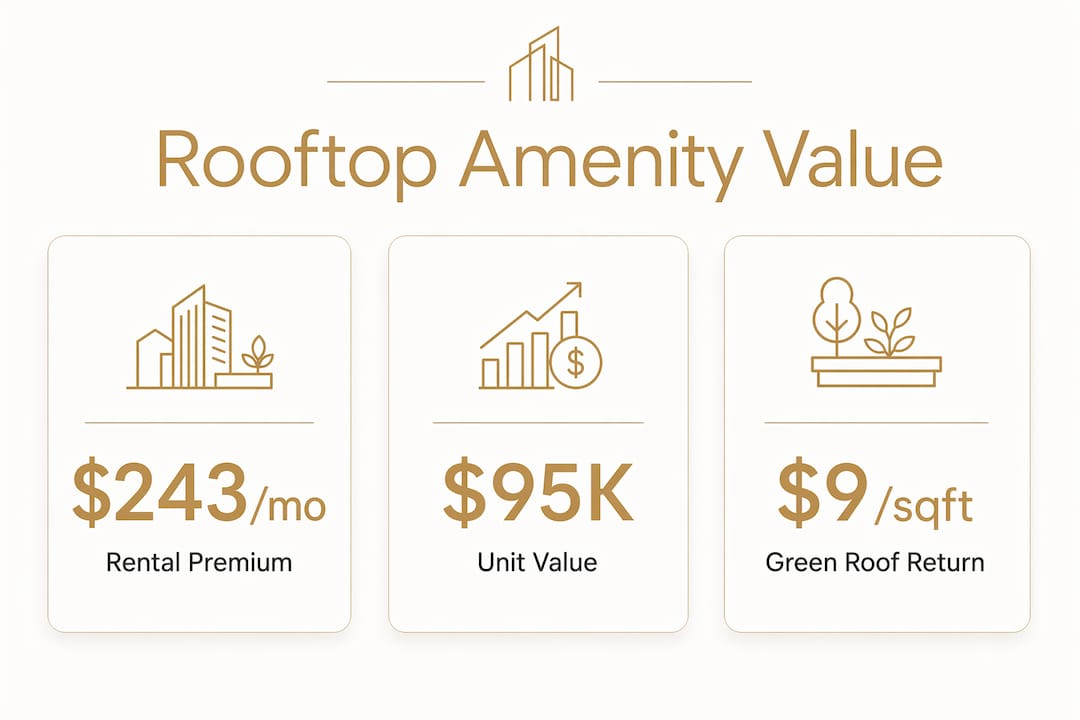
Rooftop amenities produce real, quantifiable returns for both owners and renters. In Toronto, rooftop pools add about $243 monthly to one-bedroom rental prices. When buildings combine pools with year-round outdoor amenities, that premium climbs to $287 monthly. Buildings with rooftop pools also lease 24 days faster and maintain higher occupancy rates. That speed matters in competitive urban markets where vacancy directly cuts revenue.
The value premium extends beyond rent. In New York City markets, green roof amenity spaces translate to approximately $95,030 in added unit value per residence as of Q1 2026. That figure reflects buyer willingness to pay for outdoor access, privacy, and the lifestyle signal that a well-designed rooftop sends. Buyers in dense cities treat rooftop access as a substitute for private outdoor space they cannot afford separately.
The table below summarizes how specific rooftop amenity types affect rental premiums and occupancy.
| Amenity type | Rental premium impact | Occupancy effect |
|---|---|---|
| Rooftop pool | +$243/month (1-bedroom) | Leases 24 days faster |
| Year-round outdoor amenities | +$287/month | Higher retention rates |
| Green roof amenity space | ~$95,030 added unit value | Reduced vacancy |
| Rooftop coworking lounge | Replaces external coworking costs | Supports remote worker retention |
Pro Tip: When evaluating a condo purchase or investment, ask the listing agent for occupancy data and average lease-up time. Buildings with well-maintained rooftop amenities consistently outperform those without on both metrics.
Rooftop gardens also deliver environmental returns that indirectly protect property values. Green roofs manage stormwater, support biodiversity, and reduce the urban heat island effect. Cities increasingly reward buildings that meet these standards through tax incentives and faster permit approvals. That regulatory tailwind adds another layer of financial upside for buyers who factor it in early.
What design features make rooftop facilities actually usable?
The best rooftop spaces are built around flexibility, not spectacle. Multi-functional rooftop amenities that combine BBQ stations, fitness zones, coworking areas, and relaxation seating maximize daily usability and justify ongoing maintenance costs. A rooftop that serves only one purpose sits empty most of the time. One that supports a morning workout, a midday work session, and an evening dinner party earns its keep every day.
Durability is the design factor most buyers overlook. Rooftops built with simplicity and maintainability in mind consistently outperform complex, high-maintenance features that fall into disrepair within 3–5 years. Modular seating, integrated BBQ zones, and covered lounges age well. Elaborate water features, custom lighting rigs, and statement sculptures often do not. When a complex feature breaks and the association delays repairs, the entire rooftop experience degrades for every resident.
Popular rooftop features that balance appeal with practicality include:
- Covered dining and lounge areas that extend usability through rain and intense sun
- Integrated BBQ stations with durable materials like stainless steel and concrete
- Modular seating configurations that residents can rearrange for events or privacy
- Fitness zones with weather-resistant equipment and non-slip flooring
- Fire pits that extend evening use into cooler months
- Rooftop coworking spaces with high-speed connectivity, which remote workers use daily as a cost-effective alternative to external coworking memberships
Year-round usability depends on covered zones and wind protection. Open rooftops in temperate climates sit unused for months. Pergolas, retractable awnings, and glass windbreaks extend the functional season significantly. The most successful rooftop facilities are planned early with builders and contractors to prioritize constructability and realistic resident use, not just visual impact in marketing renders.
Pro Tip: During a condo tour, visit the rooftop at the time of day you would actually use it. Check whether the furniture is clean, the equipment works, and the space feels genuinely maintained. A neglected rooftop at viewing time will only get worse after you move in.
Accessibility and legal requirements for rooftop common areas
Accessibility in rooftop common areas is governed by two federal frameworks: the Americans with Disabilities Act (ADA) and the Fair Housing Act (FHA). Condominium associations bear responsibility for common-area compliance under both laws. Residents typically cover costs for unit-level modifications, but shared rooftop spaces fall under the association's obligation. That distinction matters when you need to assess condo accessibility and mobility needs before committing to a purchase.
Getting approval for accessibility modifications in rooftop areas follows a specific process. Incomplete documentation is the primary reason boards reject or delay requests. A complete application package speeds up approval significantly. The steps below reflect what federal law and association governance require:
- Submit a written reasonable accommodation request to the board or property manager, citing FHA protections.
- Provide professional engineering drawings that show the proposed modification in relation to existing rooftop infrastructure.
- Include an insurance certificate covering the modification and any liability during installation.
- Attach a restoration plan that commits to returning the space to its original condition if you vacate.
- Document the disability-related need through a letter from a licensed medical or rehabilitation professional.
Comprehensive documentation packets that include engineering specs, insurance certificates, and restoration plans reduce approval times significantly. Boards that receive complete files have less legal exposure and fewer reasons to delay. Associations must consider reasonable accommodation requests under federal law. Refusal without documented justification exposes the association to legal liability.
Buyers with mobility needs should request the building's accessibility modification policy before signing any agreement. A building that has handled prior requests well will have a clear, documented process. One that has not may create friction when you need modifications most.
How to assess rooftop amenities when choosing a condo
Exclusivity drives satisfaction with rooftop facilities more than size or feature count. Buildings under 250 units with curated rooftop amenities deliver a better resident experience than large high-rises where hundreds of residents compete for the same space. A smaller building with a well-maintained rooftop terrace and BBQ area will feel more premium than a tower with an elaborate rooftop that is always crowded or poorly kept.
When you visit a condo, evaluate the rooftop against your actual lifestyle. Ask yourself whether the features match how you live day to day. A community amenities checklist helps you compare buildings systematically rather than reacting to marketing. The questions below cut through the presentation and reveal real usability:
- How many units share this rooftop space, and what are the peak-hour crowd levels?
- What is the maintenance schedule, and who manages repairs when equipment breaks?
- Are there booking systems for high-demand areas like BBQ stations or event spaces?
- Does the rooftop have covered areas for year-round use?
- Is high-speed internet available for remote work use?
- Are there accessibility features like ramps, wide pathways, and accessible seating?
- What do current residents say about actual usage versus what was advertised?
Remote workers and social residents gain the most from rooftop amenities when those spaces support both focused work and community interaction. If you work from home, a rooftop coworking lounge with reliable connectivity is worth more than a pool you will use twice a year. Match the amenity to the habit, not the marketing photo. You can also review gym and amenity analysis to understand how different facility types affect property premiums before you decide.
Key Takeaways
Rooftop facilities in condos deliver the strongest lifestyle and financial returns when they combine exclusivity, practical design, and consistent maintenance.
| Point | Details |
|---|---|
| Property value impact | Green roof amenities add approximately $95,030 per unit in value in markets like New York City. |
| Rental premium | Rooftop pools add up to $287 monthly in rent premiums and reduce lease-up time by 24 days. |
| Design durability | Simple, maintainable features outperform complex ones that degrade within 3–5 years. |
| Accessibility compliance | Associations must meet ADA and FHA standards; complete documentation speeds board approvals. |
| Exclusivity over size | Buildings under 250 units with curated rooftop spaces deliver better resident satisfaction than large towers. |
Why rooftop facilities have become non-negotiable in urban condo living
I have spent years watching rooftop amenities shift from marketing checkboxes to genuine lifestyle infrastructure. The change accelerated after 2020, when urban residents realized that access to outdoor space directly affects mental health, productivity, and social connection. Buildings that invested in quality rooftop design before that shift now command measurable premiums. Those that treated rooftops as afterthoughts are scrambling to retrofit.
The misconception I hear most often is that bigger and more elaborate equals better. It does not. The rooftop spaces residents actually use are the ones that feel personal, well-maintained, and appropriately scaled. A 30-unit building with a clean terrace, a working BBQ, and a few comfortable chairs beats a 500-unit tower with a rooftop "resort" that nobody manages properly.
My honest advice to any buyer: ignore the renders and visit the rooftop twice. Once during a weekday morning and once on a weekend evening. Those two visits will tell you more about real usability than any brochure. Ask a current resident what they actually use. The answer is almost always simpler than what the developer advertised.
Rooftop facilities work best when they serve the community that lives there, not the community the developer imagined. Prioritize management quality and maintenance records over feature lists. That is the standard I apply, and it has never led me wrong.
— Simon
Rooftop living at Hougang-central-residences
Hougang-central-residences puts the principles covered in this article into practice. The development sits above Hougang MRT station and offers 835 residences across unit types from 1-bedroom to 5-bedroom homes, with tropical landscaped areas designed for genuine daily use rather than visual effect.
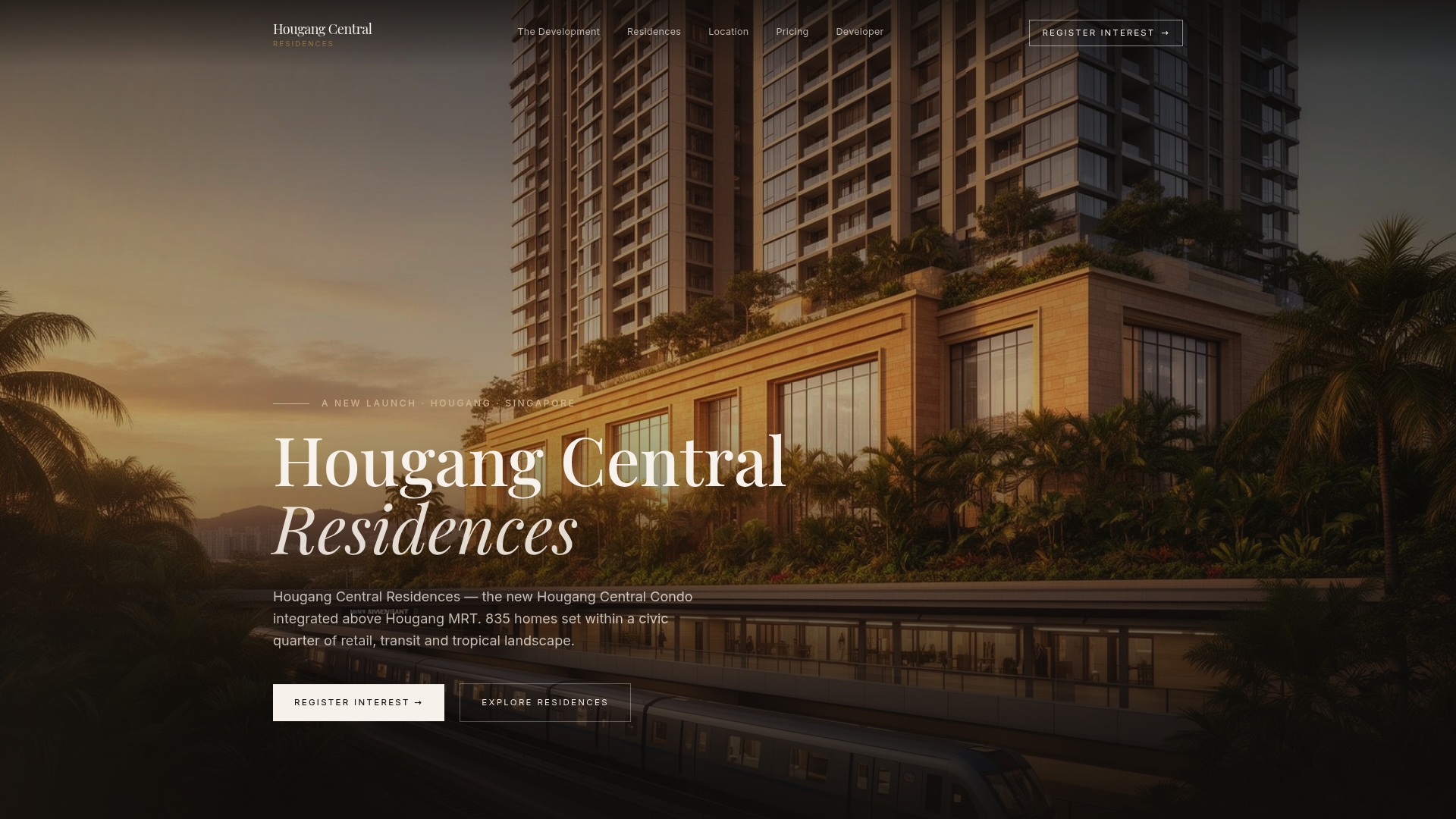
The rooftop and communal facilities at Hougang-central-residences reflect the design priorities that matter most: appropriate scale, consistent maintenance, and spaces that support both social connection and personal wellness. For buyers who want to see how these amenities translate into everyday living, the Hougang Central Residences website provides full details on available unit types, facility specifications, and location advantages. The combination of transit access, curated amenities, and thoughtful design makes it a strong candidate for urban buyers who take rooftop living seriously.
FAQ
What are rooftop amenities in condos?
Rooftop amenities in condos are shared outdoor facilities located on the building's top level, typically including pools, BBQ stations, fitness zones, gardens, and coworking lounges. They provide residents with exclusive outdoor access that enhances wellness, social interaction, and daily convenience.
How much value do rooftop facilities add to a condo?
Rooftop amenities add measurable value. Green roof spaces add approximately $95,030 per unit in markets like New York City, and rooftop pools increase monthly rents by up to $287 in cities like Toronto.
What should I check when assessing rooftop amenities?
Check the number of units sharing the space, the maintenance schedule, whether covered areas extend year-round use, and whether current residents actually use the facilities. Buildings under 250 units with curated rooftop spaces consistently deliver better experiences than large towers.
Who is responsible for rooftop accessibility in a condo?
Condominium associations are responsible for common-area accessibility compliance under the ADA and FHA. Residents typically cover costs for unit-level modifications, but shared rooftop spaces fall under the association's legal obligation.
Are rooftop coworking spaces worth the amenity fee?
Rooftop coworking lounges with high-speed connectivity deliver strong value for remote workers by replacing external coworking membership costs. For residents who work from home regularly, this amenity often provides better daily return than luxury features like pools or spas.