
A leasehold condo means you own your individual unit outright, with a deed in your name, but you lease the land beneath the building from a separate landowner for a fixed term. That term typically runs 40 to 99 years from the original execution date. When the lease expires, ownership of the property reverts to the landowner unless you extend the lease or the unit owners collectively purchase the land. This is the core distinction from fee simple (freehold) ownership, where you own both the unit and the land beneath it permanently.
Here is what that means in practice for a leasehold condo buyer:
- You hold a deed to your unit, but not to the land it sits on.
- You pay ground rent to the landowner on top of your regular HOA fees.
- Your ownership has an expiration date tied to the ground lease term.
- Lease covenants govern what you can and cannot do with your unit.
- When the lease ends, the building and all improvements revert to the landowner unless action is taken.
Most condominiums in the United States are fee simple, meaning the buyer owns the unit and the underlying land outright. Leasehold condos are a smaller subset, concentrated in markets like Hawaii, New York City, and certain resort communities where landowners prefer to retain the land rather than sell it.
How leasehold condos actually work day to day
The ground lease is the governing document. It sets the term, the ground rent amount, any escalation clauses, restrictions on alterations, and the conditions under which the lease can be renewed or assigned. Reviewing it carefully before purchase is not optional. Bringing the full ground lease to legal counsel before closing is the single most important step a buyer can take, because cost escalations and renewal terms buried in that document shape your long-term costs more than the purchase price does.
Financially, leasehold owners carry two recurring obligations that freehold owners do not. Ground rent and HOA fees stack on top of each other, and ground rent can escalate over time if the lease includes adjustment clauses tied to inflation or land value. Your lease covenants also restrict what you can do inside the unit, from renovation scope to subletting rights, often more tightly than a standard freehold condo's HOA rules.

On the legal side, the distinction between owning a unit and owning the land creates a split-title structure. The freeholder retains ultimate ownership of the land and can enforce lease terms. If a leaseholder violates the covenants, the freeholder has legal remedies, including, in serious cases, forfeiture of the lease. Day-to-day management of the building typically still falls to the HOA or a property manager, but the landowner's rights run underneath all of it.

Pro Tip: Before signing anything, ask the seller for the full ground lease document, not just a summary. Pay specific attention to the ground rent escalation schedule and the renewal rights section. These two clauses determine whether the property stays affordable and financeable over time. EchoPM's lease documentation resources offer a useful framework for understanding what to look for.
Pros and cons of buying a leasehold condo
Leasehold condos often carry lower purchase prices than comparable freehold units in the same building or neighborhood. That lower entry cost is the primary draw, and in high-demand markets, it can open doors that freehold pricing closes. Prime-area leasehold condos can achieve competitive or better short-term appreciation than freehold units precisely because of that lower starting price and strong rental demand.
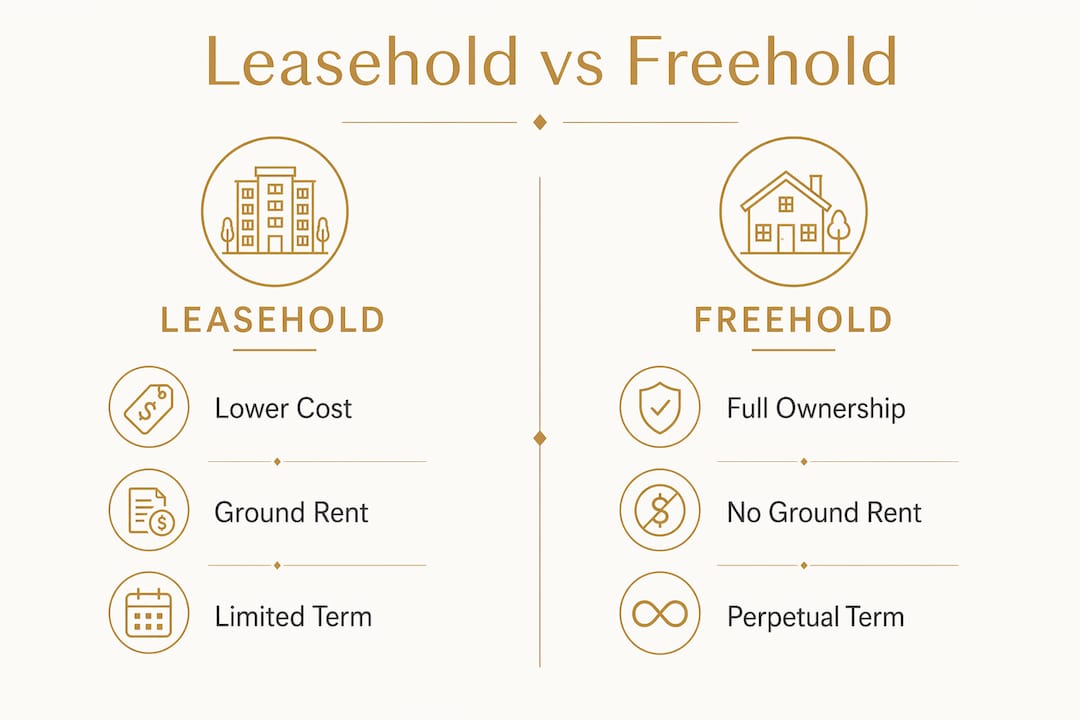
The risks, though, are real and compound over time. Leasehold property value tends to decrease as the lease term shortens, which narrows your buyer pool on resale and makes mortgage approvals harder as the years tick down. A unit with 80 years left on its lease is a very different asset from one with 35 years remaining.
The stability of the landowner also matters. Leasehold agreements owned by public or state entities tend to carry lower eviction and lease-security risk than those controlled by private landlords, whose priorities can shift. That distinction rarely appears in listing descriptions but belongs in every buyer's due diligence checklist.
| Factor | Leasehold condo | Freehold condo |
|---|---|---|
| Entry cost | Generally lower | Generally higher |
| Land ownership | Leased from freeholder | Owned outright |
| Ownership duration | Fixed term (typically 40–99 years) | Perpetual |
| Monthly costs | HOA fees plus ground rent | HOA fees only |
| Resale value trend | Depreciates as lease shortens | Typically stable or appreciates |
| Mortgage access | More restricted, lender scrutiny required | Standard lending terms |
| Lease expiration risk | Yes, unless extended or freehold purchased | None |
| Investment upside | Competitive short-term in prime locations | Stronger long-term |
Legal mechanisms now exist to extend leases or collectively purchase the freehold, which reduces the expiration risk considerably. But these processes take time, cost money, and require cooperation among unit owners. They are not guaranteed.
For a deeper look at how leasehold ownership factors into investment decisions, the condo lease vs purchase guide breaks down the rights and trade-offs in plain terms.
Legal and financial considerations for US leasehold condo buyers
Mortgage financing is where leasehold status creates the most friction. Lenders require close scrutiny of remaining lease terms before approving loans, and shorter leases increase risk enough to trigger higher down payment requirements or outright denials. Most conventional lenders want the lease term to extend at least 10 to 15 years beyond the loan maturity date. A 30-year mortgage on a condo with 40 years left on its ground lease will face serious underwriting challenges.
Key legal and financial points every buyer should address before closing:
- Ground rent escalation clauses: Some leases tie rent increases to the Consumer Price Index or periodic land appraisals. Know exactly what you will owe in 10, 20, and 30 years.
- Renewal rights: Does the lease give you the right to renew, or is renewal at the landowner's discretion? The answer changes the risk profile entirely.
- Assignment and subletting: Lease covenants may restrict your ability to rent the unit or sell it freely, affecting both income potential and resale.
- Lease expiration: At expiration, the building and improvements revert to the landowner. Extension or collective freehold purchase are the two main remedies, but neither is automatic.
- Property taxes: Leasehold condo owners pay property taxes on their unit interest, though the structure of that assessment can differ by state. In some jurisdictions, the landowner pays taxes on the land separately.
- State and local regulation: Leasehold condo rules vary by state. Hawaii has some of the most established leasehold condo law in the country, with specific statutory protections for leaseholders. New York and Florida have their own regulatory frameworks. Always check the rules in the specific state where you are buying.
The 10 questions to ask before signing a lease from EchoPM covers the practical due diligence checklist that applies directly to ground lease review.
Leasehold vs. freehold condos: a side-by-side comparison
The table below captures the structural differences that matter most for buyers weighing these two ownership types in the US market.
| Category | Leasehold condo | Freehold (fee simple) condo |
|---|---|---|
| Ownership rights | Unit only, for lease term | Unit and land, permanently |
| Land ownership | Leased from freeholder | Owned outright |
| Lease duration | Typically 40–99 years | Unlimited (perpetual) |
| Financial obligations | HOA fees plus ground rent | HOA fees only |
| Mortgage access | Lender scrutiny; shorter leases may be denied | Standard terms |
| Resale risk | Narrows as lease shortens | Generally stable buyer pool |
| Lease expiration risk | Yes | None |
| Entry cost | Lower in most markets | Higher |
| Long-term value | Depreciates without extension | Typically appreciates |
| Regulatory complexity | Higher; varies by state | Lower |
The freehold vs. leasehold condo investment comparison ultimately comes down to time horizon and market. For a short-term hold in a prime location, leasehold can pencil out well. For a long-term family home or a generational asset, freehold ownership carries far fewer structural risks. Buyers considering a 1-bedroom condo investment should pay particular attention to lease term length, since a shorter remaining term compresses both the resale window and the financing options.
Key Takeaways
A leasehold condo gives you deeded ownership of your unit but not the land beneath it, making lease term length and ground rent terms the two most critical factors in any purchase decision.
| Point | Details |
|---|---|
| Leasehold condo definition | You own the unit via deed but lease the land for a fixed term, typically 40–99 years. |
| Ground rent obligation | Leasehold owners pay ground rent on top of HOA fees, and escalation clauses can raise costs over time. |
| Mortgage risk | Lenders scrutinize remaining lease terms closely; shorter leases can trigger higher down payments or loan denials. |
| Value depreciation | Leasehold property value tends to decrease as the lease term shortens, narrowing the resale buyer pool. |
| Lease extension options | Legal mechanisms exist to extend leases or collectively purchase the freehold, but neither is automatic or free. |
FAQ
What does leasehold condo mean in simple terms?
A leasehold condo means you own your individual unit with a deed, but you lease the land under the building from a separate landowner for a set number of years, typically 40–99 years. When the lease ends, the property reverts to the landowner unless the lease is extended or the freehold is purchased.
Is it smart to buy a leasehold property?
It can be, particularly in prime locations where lower entry costs and strong rental demand support short-term appreciation. The key risks are lease term length, ground rent escalation, and the financing challenges that come as the lease shortens, so due diligence on the ground lease is non-negotiable.
What is the main downside of a leasehold condo?
The biggest downside is value depreciation as the lease term shortens, which also makes the unit harder to finance and harder to sell. Ground rent adds a recurring cost that freehold owners do not carry, and lease covenants can restrict how you use or alter the unit.
Is a leasehold apartment a good investment?
In high-demand markets, leasehold condos in prime locations can deliver competitive short-term returns because of their lower purchase prices. Long-term, freehold ownership carries fewer structural risks, so leasehold works best for buyers with a clear exit strategy and a lease term long enough to support conventional financing.