
TL;DR:
- Condo living offers families lower costs, built-in community, and convenient amenities that support daily routines. Well-designed units with flexible layouts and safety features enhance livability, while shared spaces foster social bonds and reduce maintenance responsibilities. Choosing the right concrete building in a family-oriented community maximizes safety, noise insulation, and overall quality of life.
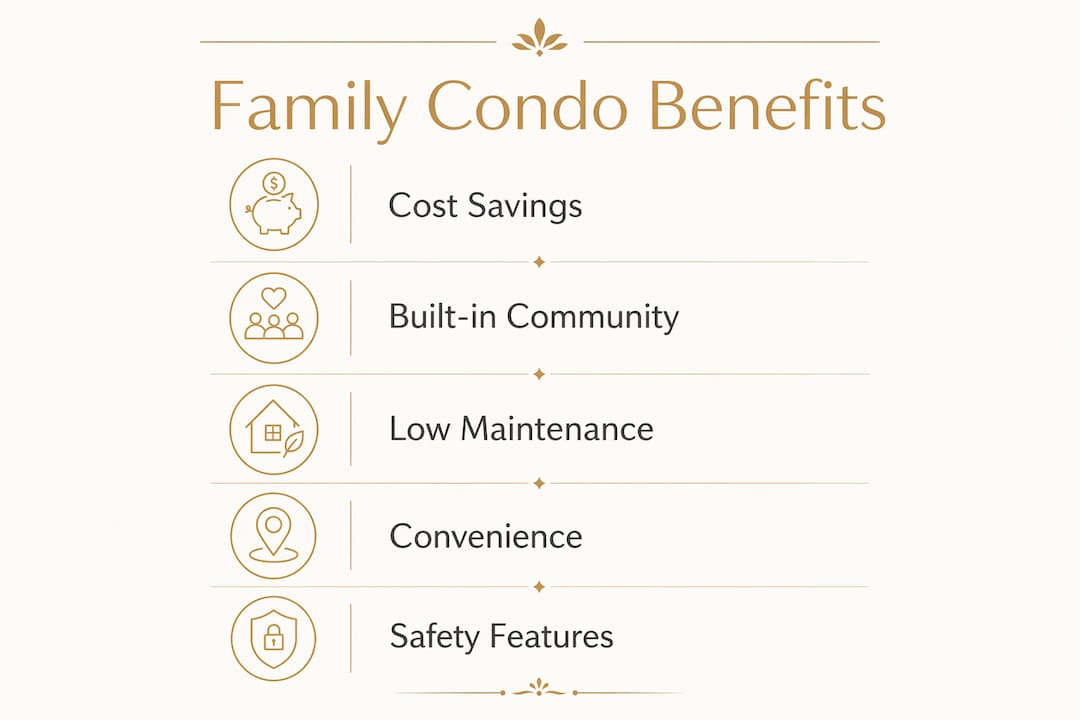
Condo living is defined as a residential model where families own individual units within a shared building, gaining access to communal facilities and professional property management. Why condo living suits families comes down to three factors: lower costs than detached homes, built-in community, and amenities that support daily family routines. Expert realtor Cynthia Hu confirms that builders now respond to family demand by adding larger units and dedicated kids' areas, making condos a genuinely competitive option for parents. Families in cities like Toronto choosing a 2-bedroom-plus-den condo can save up to $66,000 annually compared to a detached home in the same area. That figure alone reframes the conversation.
Why condo living suits families: layout and design
Modern condos are built with families in mind, not just singles or couples. Builders now offer multi-bedroom configurations, flexible living spaces, and storage solutions that make a smaller footprint feel genuinely livable. A standard family-oriented 2-bedroom unit runs about 40.20 square meters, designed specifically to maximize every usable corner. That kind of layout efficiency means a well-planned condo can function as comfortably as a much larger suburban home.
Flexible design features make the biggest difference for families day to day. Here is what to look for in a family-ready condo layout:
- Multi-bedroom configurations: Units with 2, 3, or more bedrooms give children their own space and parents a private retreat.
- Convertible rooms: A den or study can serve as a nursery, homework room, or guest space depending on the family's stage of life.
- Vertical storage: Built-in shelving, loft beds, and under-stair storage maximize floor area without sacrificing function.
- Open-plan living areas: Combined kitchen and living spaces let parents supervise children while cooking or working.
- Safety-adapted features: Window safety locks and balcony precautions are critical in vertical living to prevent accidents that simply do not exist in ground-floor homes.
Safety in a condo requires a different mindset than in a detached house. Balcony furniture placement matters. Climbable chairs or tables near railings create fall risks that parents must eliminate. Window locks are non-negotiable on upper floors. These are not complex fixes, but they require deliberate attention when you first move in.
Pro Tip: Walk every room with a child's-eye view before signing a lease or purchase agreement. Crouch down to their height and identify grab points, climbable surfaces, and unsecured windows. You will catch hazards that a standard adult walkthrough misses.

What community and social advantages do condos offer families?
The perception that condo living isolates families is outdated. Shared common spaces actively promote social interaction among neighbors of all ages, and children benefit most from that daily contact. Kids learn social skills naturally through community engagement in ways that suburban cul-de-sacs rarely replicate. When a child has consistent access to a shared pool, a playground, or a common lawn, they build friendships with neighbors organically.
For parents, the social benefits are equally real. Shared amenities create natural meeting points where parents connect, exchange recommendations for schools and pediatricians, and build informal support networks. That kind of neighbor relationship is harder to form when every family retreats behind a private fence. Condo communities tend to produce tighter social bonds precisely because the shared spaces force regular, low-stakes interaction.
"Young families are increasingly forming genuine communities within condo buildings. The shared pool, the playground, the lobby. These become the neighborhood. Children grow up knowing their neighbors the way previous generations knew their streets."
Large condo developments with 400 or more units often include on-site daycares and mini-marts, which reduce the number of daily errands parents need to run. That convenience compounds over time. Fewer car trips, less time spent driving, and more time available for actual family activities add up to a meaningfully different quality of life.
The social advantages of condo living for families include:
- Shared pools and play areas where children meet peers daily
- Common lounges and BBQ areas that encourage parent gatherings
- On-site daycares that reduce morning logistics
- Building events and notice boards that connect neighbors
- A built-in sense of collective responsibility for shared spaces
How does condo living reduce maintenance and increase convenience?
Condo living removes the largest time drains of homeownership from a family's schedule. The homeowners association (HOA) handles exterior maintenance, landscaping, and in many climates, snow removal. Parents do not spend weekends fixing gutters or mowing lawns. That recovered time goes directly back to family life.
The financial case is equally strong. Urban condo units trade for 15–20% less than detached homes in the same neighborhood. That gap translates into lower mortgage payments, reduced property taxes, and more capital available for education savings or family experiences. The $66,000 annual savings figure cited earlier is not a rounding error. It reflects a genuine structural difference in the cost of urban homeownership.
Proximity to services amplifies the convenience advantage further. Consider what changes when your building sits above or beside a transit hub, a grocery store, and a medical clinic:
- School runs become shorter. Urban condos typically sit closer to public schools and transit routes than suburban developments.
- Errands collapse into minutes. A grocery run that takes 45 minutes by car takes 10 minutes on foot when the store is in your building's retail podium.
- Medical access improves. Large developments often include clinics or pharmacies on-site, reducing the friction of routine health appointments.
- Commutes shrink. Parents working in city centers spend less time in transit, which means more time at home with children.
- Emergency logistics simplify. When a child gets sick at school, a parent who lives nearby can respond faster than one commuting from the suburbs.
Parents consistently report that reduced maintenance and strong amenities free more family time and lower daily stress. The math is simple: fewer obligations outside the home means more presence inside it.
What should families consider when choosing a family-friendly condo?
Building construction type is the first filter families should apply. Concrete construction provides far better soundproofing than wood-frame buildings. Concrete condos reduce noise from active children and neighbors, which protects both family rest and neighbor relations. A wood-frame building with thin walls will amplify every toddler tantrum and midnight feeding. Concrete absorbs it.
Community culture matters as much as physical features. A building filled with retirees who expect silence at 7:00 PM is a poor fit for a family with young children, regardless of how good the pool looks. Effective community culture directly impacts a family's quality of life in ways that no floor plan can fix. Visit the building at different times of day. Talk to current residents. Check the building's rules on noise and common area use before committing.
Amenity quality beats amenity quantity every time. A well-maintained pool and playground deliver real value. A neglected gym and a broken-down splash pad do not. Poorly maintained facilities offer minimal value to residents, regardless of how impressive they look in a brochure. Ask the building manager how often facilities are serviced and when they were last upgraded.
| Evaluation factor | What to look for |
|---|---|
| Construction type | Concrete frame for superior sound insulation |
| Community culture | Family-tolerant noise policies and active resident community |
| Amenity condition | Well-maintained pool, playground, and common areas |
| Proximity to schools | Walking distance or direct transit to quality public schools |
| Safety features | Window locks, secure balconies, controlled building access |
Proximity to quality public parks and schools is the external factor families most often underestimate. A smaller unit becomes far more livable when a well-maintained park sits two blocks away. Children need outdoor space to run, and a nearby park extends the effective living area of any condo unit significantly.
Pro Tip: Request the building's last two years of AGM (annual general meeting) minutes before buying. Those documents reveal maintenance disputes, fee increases, and neighbor conflicts that no sales agent will volunteer.
Key Takeaways
Condo living suits families because it combines lower costs, built-in community, professional maintenance, and proximity to urban services in a package that detached homes cannot match at the same price point.
| Point | Details |
|---|---|
| Cost advantage is real | Urban condos cost 15–20% less than detached homes, freeing significant family budget. |
| Layout efficiency matters | Well-designed 2-bedroom-plus units with flexible spaces work for most family stages. |
| Community builds itself | Shared amenities create natural social networks for both children and parents. |
| Maintenance burden drops | HOA management removes exterior upkeep, returning time to family life. |
| Building selection is critical | Concrete construction, good culture, and maintained amenities determine actual livability. |
What I've learned after years of watching families choose condos
Most families I have observed make the same mistake: they fixate on square footage and ignore building culture. A 1,200-square-foot unit in a poorly managed building with thin walls and hostile neighbors will grind a family down within a year. A 900-square-foot unit in a concrete building with a great pool, a friendly community, and a park across the street will feel like more than enough.
The families who thrive in condos are the ones who treat the shared spaces as extensions of their home. They use the pool regularly. They know their neighbors by name. They show up to building events. That mindset shift, from "my unit" to "my building," is what separates families who love condo life from those who resent it.
Vertical living also rewards planning. Storage systems, furniture that doubles as storage, and a clear system for managing gear (strollers, bikes, sports equipment) make the difference between a unit that feels cramped and one that feels organized. None of that requires a large budget. It requires thinking ahead.
The financial case for condos is strong, but the lifestyle case is stronger. Families who choose the right building, in the right location, with the right community around them consistently report that they would not trade it for a suburban house. The commute savings alone are worth it.
— Simon
Hougang-central-residences: built for families who want it all
Hougang-central-residences sits directly above Hougang MRT station in Singapore, placing 835 residences at the intersection of transit, retail, and community living. Units range from 1-bedroom to spacious 5-bedroom homes, covering every family configuration from young couples to multi-generational households.

The development features tropical landscaped areas, premium European fittings, and smart-home systems that simplify daily routines. Future MRT interchange access adds long-term connectivity that protects both lifestyle and property value. For families weighing the benefits of condo living, Hougang-central-residences offers a concrete example of what a family-oriented urban condo looks like when the design gets it right. Explore the full range of unit types and facilities to see whether it fits your family's next chapter.
FAQ
Why do urban families choose condos over houses?
Urban families choose condos primarily for cost savings and convenience. Condo units trade for 15–20% less than detached homes in the same area, and proximity to transit and services reduces daily logistics significantly.
What condo facilities matter most for family lifestyle?
Well-maintained pools, playgrounds, and on-site services like daycares and mini-marts deliver the most practical value for families. Amenity quality matters more than the total number of features available.
Are condos safe enough for young children?
Condos are safe for young children when families apply condo-specific child-proofing, including window safety locks and removing climbable furniture from balconies. Concrete construction also reduces noise conflicts with neighbors.
How does condo living save families money?
Families in cities like Toronto choosing a 2-bedroom-plus-den condo can save up to $66,000 annually compared to a detached home. HOA management of exterior maintenance also eliminates costs and time that homeowners typically absorb themselves.
What makes a condo building family-friendly?
A family-friendly condo building combines concrete construction for soundproofing, a community culture that tolerates children, well-maintained amenities, and proximity to quality schools and parks. Building culture is as important as any physical feature.