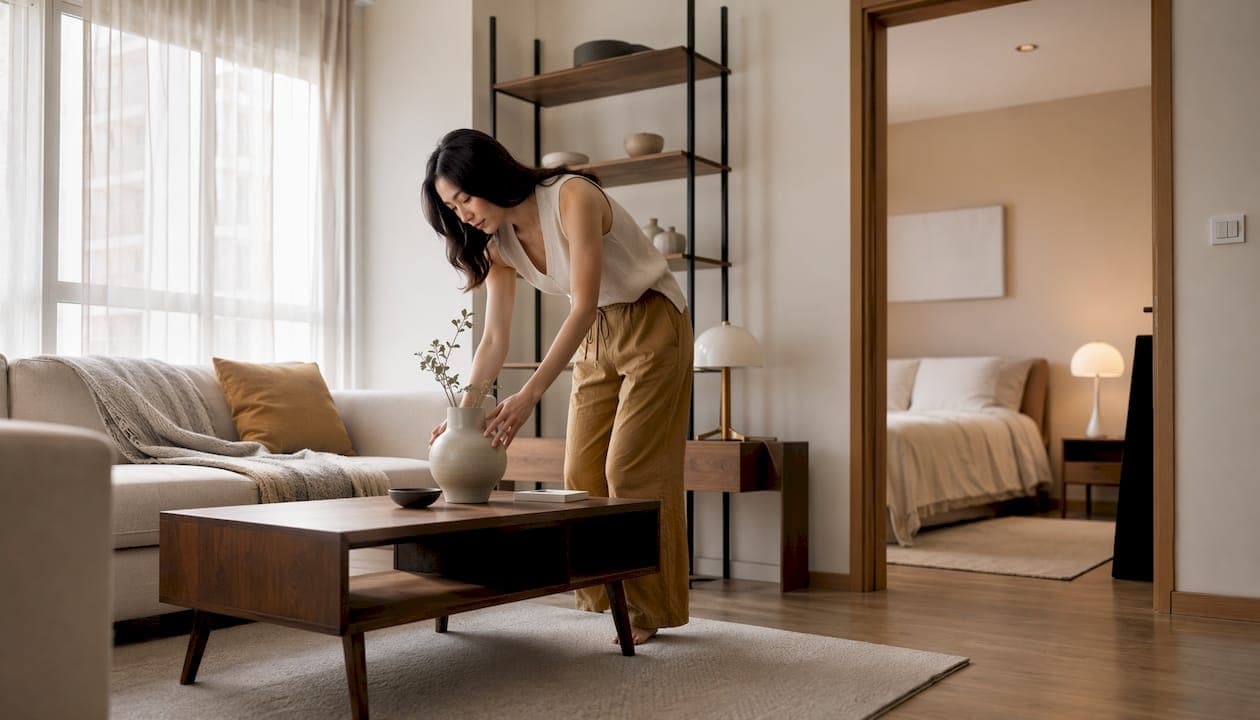
The single thing separating a studio from a one-bedroom condo is a wall and a door. A studio combines your living area, sleeping space, and kitchen into one open room, with only the bathroom enclosed. A one-bedroom condo gives you a fully separate bedroom, shut off from the rest of the unit by walls and a door. That physical boundary changes everything: your privacy, your rent, how you work from home, and whether overnight guests feel comfortable.
Here is what that difference actually means in practice:
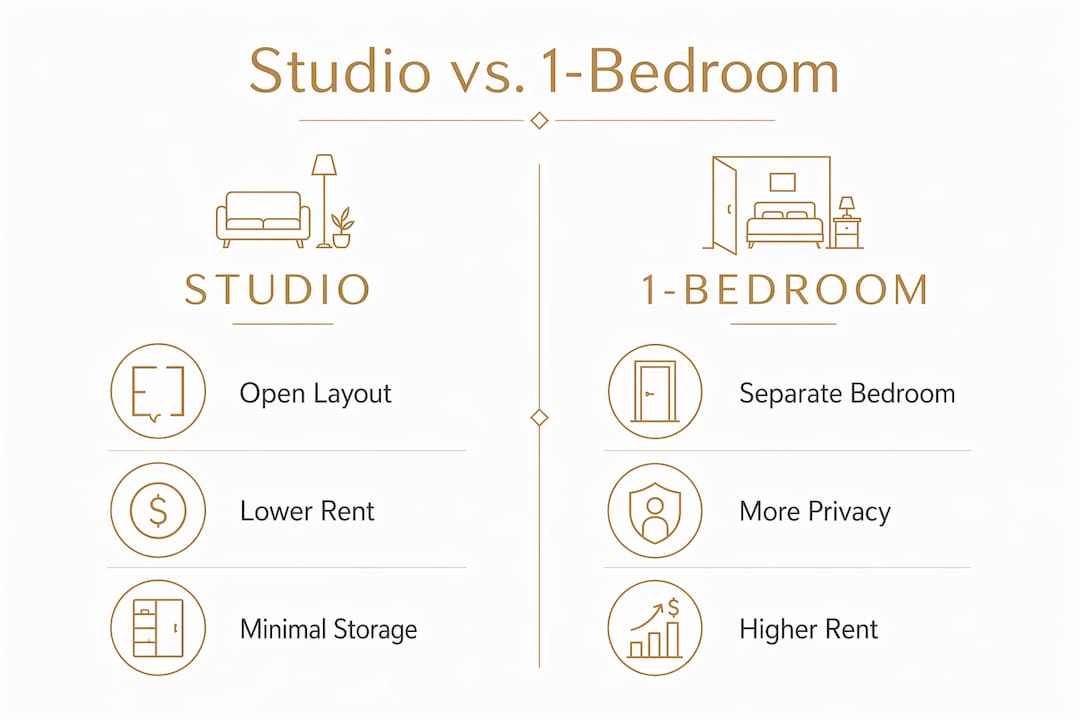
- Privacy: Studios offer minimal privacy since your bed shares the same open space as your couch and kitchen. One-bedrooms give you a room you can close off completely.
- Size: Studios typically run 400–600 square feet; one-bedrooms are generally larger, with more defined zones.
- Price: Studios cost less in rent, utilities, and furnishings. One-bedrooms carry a higher monthly cost across the board.
- Lifestyle fit: Studios suit minimalists, solo renters, and frequent travelers. One-bedrooms work better for couples, remote workers, and anyone who hosts guests regularly.
Table of Contents
- What exactly is a studio condo?
- What does a 1-bedroom condo actually look like?
- How do studios and 1-bedrooms compare on size, price, and privacy?
- Which condo type actually fits your lifestyle?
- How to decide between a studio and a 1-bedroom condo
- What real estate experts say about choosing between these two
- Hougang-central-residences offers thoughtfully sized units for every stage of life
- FAQ
- Key Takeaways
What exactly is a studio condo?
A studio condo is a single-room dwelling where your living area, sleeping space, and kitchen all share the same open floor plan. The bathroom is the only room with a door. That is it. No walls dividing your bed from your couch, no separate space to retreat to when a friend comes over.
Studios are generally compact, with size varying by city; in places like New York or San Francisco, studios tend to be smaller. In mid-size cities, you get more room for the same price.
A few layout variations are worth knowing:
- Standard studio: Fully open plan, no separation between sleeping and living zones.
- Alcove studio: A recessed nook or L-shaped layout that creates a partial sleeping area without walls or a door. It feels more private, but it is still technically a studio.
- Convertible studio: A larger open space that can be divided with furniture, shelving, or a room divider.
The open layout has real advantages: less to clean, lower utility bills, and a naturally minimalist lifestyle. The tradeoff is that cooking smells travel everywhere, noise has nowhere to go, and your bed is always visible when someone walks in.
What does a 1-bedroom condo actually look like?
A one-bedroom condo has a separate, enclosed bedroom with walls and a door, fully distinct from the living room and kitchen. You walk into a living area, and the bedroom is behind a closed door. That is the defining feature.
Typical one-bedroom layouts include:
- A living room for entertaining or relaxing
- A separate kitchen, often with a dining area or breakfast bar
- A private bedroom with a closet
- One or more bathrooms
Size-wise, one-bedrooms are generally larger than studios, giving you more room to move, store things, and set up a dedicated workspace. The extra square footage also means more furniture to buy and more space to heat and cool.
The practical upside goes beyond square footage. When a guest stays over, you close the bedroom door and your private space stays private. If you work from home, you can set up a desk in the living room and physically separate your work life from your sleep space. That kind of functional zone separation is something no amount of clever furniture arrangement fully replicates in a studio.

How do studios and 1-bedrooms compare on size, price, and privacy?
| Factor | Studio Condo | 1-Bedroom Condo |
|---|---|---|
| Typical size | Generally smaller and compact | Generally larger, more defined zones |
| Monthly rent | Lower | Higher |
| Utilities | Lower (less space to heat/cool) | Higher |
| Furnishing cost | Lower | Higher (more rooms to fill) |
| Privacy level | Low (open-concept sleeping and living) | High (enclosed bedroom with door) |
| Guest comfort | Cramped for overnight stays | Comfortable; guests use living room |
A few points the table does not fully capture:
- Rent gap: One-bedrooms cost more in rent, and that difference compounds. Higher utilities and furnishing costs add up over a lease term.
- Nighttime privacy: The advantage of a closed bedroom door matters most at night. In a studio, your sleep space is exposed to anyone in the unit. In a one-bedroom, you close the door.
- Storage: Studios often have limited closet space, which forces creative solutions. One-bedrooms typically offer more built-in storage.
- Zone definition: Studios require furniture or screens to create any sense of separate zones. One-bedrooms have that separation built into the architecture.
Which condo type actually fits your lifestyle?
The right choice depends less on square footage and more on how you actually live day to day.
Studios tend to work well for:
- Solo renters who spend most of their time outside the home
- Minimalists who own less and prefer low-maintenance spaces
- Frequent travelers who want a simple, low-cost home base
- Budget-conscious renters prioritizing location over space
One-bedrooms tend to work better for:
- Couples who need personal space and the ability to retreat
- Remote workers who need a physical boundary between work and rest
- People who host guests regularly, including overnight visitors
- Anyone with significant storage needs or a growing collection of belongings
The remote work angle is worth pausing on. Creating mental separation between work and home is genuinely harder in a studio. You can use a room divider or face your desk toward a wall, but your bed is still three feet away. A one-bedroom lets you close a door on your workday. For some people, that matters enormously. For others, it is a non-issue.
Pro Tip: Before signing a lease, spend a few minutes imagining a typical Tuesday evening in the space. Where do you cook, eat, relax, and sleep? If all of those happen in the same sightline, you are in a studio. If that bothers you even slightly, go with the one-bedroom.

Cleaning and maintenance also differ more than most renters expect. A studio takes 20–30 minutes to clean thoroughly. A one-bedroom takes longer, costs more in cleaning supplies, and requires more attention to keep organized. If low-maintenance living appeals to you, that is a real point in the studio's favor.
For young professionals weighing these tradeoffs, an amenities checklist can help you prioritize what actually matters in your daily routine beyond just the floor plan.
How to decide between a studio and a 1-bedroom condo
Work through these questions in order. Your answers will point you toward the right choice.
Step 1: Set your budget ceiling. Calculate the maximum monthly rent you can afford, including utilities and renter's insurance. If a one-bedroom pushes you past that ceiling, the studio wins by default.
Step 2: Assess your privacy needs honestly. Do you work from home? Do you have a partner or a pet? Do you host friends overnight? Each "yes" is a point toward the one-bedroom.
Step 3: Think about storage. Confirm closet count and storage options before committing to a studio. If you own a lot, a studio's limited storage will frustrate you within months.
Step 4: Consider your social habits. Casual hangouts with one or two friends? A studio handles that fine. Regular dinner parties or overnight guests? You need a one-bedroom.
Step 5: Factor in future flexibility. Are you likely to get a roommate, a partner, or a pet in the next 12–18 months? A one-bedroom gives you room to grow. A studio does not.
Key decision factors at a glance:
- Budget (rent + utilities + furnishings)
- Privacy needs (solo vs. couple, work-from-home frequency)
- Hosting habits (casual vs. overnight guests)
- Storage requirements (closets, gear, furniture)
- Future living plans (relationship changes, pets, remote work shifts)
If you are weighing the investment angle alongside lifestyle fit, the 1-bedroom condo investment case is worth reading before you decide.
What real estate experts say about choosing between these two
The most consistent expert insight on this topic is straightforward: square footage matters less than physical separation. A door and walls do more for your quality of life than an extra 100 square feet of open space.
Expert tips worth keeping in mind:
- Verify the floor plan before touring. Alcove studios can mimic partial separation, but they are not one-bedrooms. Confirm what you are actually getting.
- Check storage before you sign. Studios often have one small closet. If you need more, budget for off-unit storage or built-in solutions.
- Test nighttime privacy mentally. Imagine a guest sleeping on your couch while you try to sleep in your bed three feet away. If that scenario bothers you, you need a one-bedroom.
- Ask about alcove dimensions. If a studio listing mentions an alcove, measure it. Some are large enough to feel genuinely separate; others are barely a nook.
"The physical presence of a door and walls drives privacy benefits in one-bedroom units more than just square footage. A smaller one-bedroom with a door will feel more private than a larger studio without one." — Zillow
Storage planning is one of the most overlooked parts of this decision. Many renters choose a studio for the lower rent, then spend money on off-site storage units or bulky furniture solutions that eat into those savings. Get the closet count and dimensions before you commit.
Hougang-central-residences offers thoughtfully sized units for every stage of life
If you have worked through the studio versus one-bedroom question and landed on wanting a well-designed one-bedroom with real separation, smart-home features, and a location that removes daily friction, Hougang-central-residences is worth a close look.

Hougang-central-residences sits directly above the Hougang MRT station in Singapore, with 835 residences ranging from 1-bedroom units to spacious 5-bedroom homes. Every unit comes with premium European fittings and smart-home systems, and the development is surrounded by tropical landscaped areas that give the property a calm, residential feel despite its transit-connected location. For buyers who want the privacy of a separate bedroom without sacrificing convenience or design quality, the 1-bedroom units here deliver both. Explore available units and see which floor plan fits your life.
FAQ
What is the main difference between a studio and a 1-bedroom condo?
The defining difference is a separate, enclosed bedroom. A studio combines living, sleeping, and kitchen areas into one open room, while a one-bedroom has a distinct bedroom with walls and a door.
Is a 1-bedroom condo better than a studio?
It depends on your priorities. One-bedrooms offer more privacy and space, which suits couples, remote workers, and frequent hosts. Studios cost less and suit minimalists or solo renters who spend little time at home.
What are the main disadvantages of living in a studio?
Limited privacy, minimal storage, and the challenge of separating work from rest are the most common drawbacks. Cooking smells and noise also travel freely through the open space.
Is a studio apartment the same as a 1-bedroom?
No. A studio has no separate bedroom; the sleeping area shares the same open space as the living room and kitchen. A one-bedroom has a fully enclosed bedroom with a door, which is the key distinction.
Key Takeaways
The presence of an enclosed bedroom with walls and a door is the single factor that separates a one-bedroom condo from a studio, and it shapes everything from rent to daily privacy.
| Point | Details |
|---|---|
| The defining difference | Studios have one open room; one-bedrooms have a separate, enclosed bedroom with walls and a door. |
| Size and cost | Studios are generally smaller and cost less in rent, utilities, and furnishings than one-bedrooms. |
| Privacy advantage | A closed bedroom door matters most at night and for remote workers who need mental separation from their workspace. |
| Storage planning | Studios often have limited closet space; confirm storage options before signing to avoid costly workarounds. |
| Hougang-central-residences | Offers 1-bedroom units with smart-home systems and premium fittings above Hougang MRT, suited for buyers who want privacy and transit convenience. |