
Gym facilities in urban condominiums are defined as dedicated fitness amenities that directly shape resident lifestyle, property value, and community engagement. The role of gym facilities in urban condos has shifted from a marketing checkbox to a primary decision factor for buyers and renters. Survey data from Q1 2026 shows 68% of condo residents actively use their building's fitness center. That number confirms gyms are not decorative extras. They are working infrastructure that residents depend on daily.
How gym amenities in condos improve fitness access and convenience
The most direct benefit of an in-building gym is time. Urban residents lose significant hours commuting to external gyms, paying for memberships, and waiting for equipment during peak hours. A well-equipped condo gym removes all three friction points at once.
Condo gyms generally fall into three tiers, each with a different value proposition:
- Checkbox gyms: A treadmill, a stationary bike, and a few dumbbells. These meet the minimum standard but rarely satisfy residents who train more than twice a week.
- Mid-tier gyms: Cardio machines, free weights, a cable station, and basic stretching space. These cover most general fitness needs without requiring an external membership.
- Premium gyms: Full cardio suites, functional training zones, resistance machines, and sometimes yoga or spin studios. Premium gym access can save residents the equivalent of $2,000–$3,000 annually by replacing external memberships entirely.
The convenience factor compounds over time. A resident who trains four days a week saves roughly 30 minutes per session just by skipping the commute. That adds up to over 100 hours per year returned to their schedule.
Pro Tip: Visit the gym at 7 a.m. on a weekday before committing to a unit. Peak morning usage reveals whether the facility can handle real resident demand without crowding.
Most condo gyms function as hospitality fitness amenities rather than specialized training centers. They are built for supplemental workouts, not competitive athletes. Buyers who train for marathons or powerlifting will still need an external facility. For everyone else, a well-stocked mid-tier or premium gym covers the full range of daily fitness needs.
What design and operational factors define a high-quality condo gym?
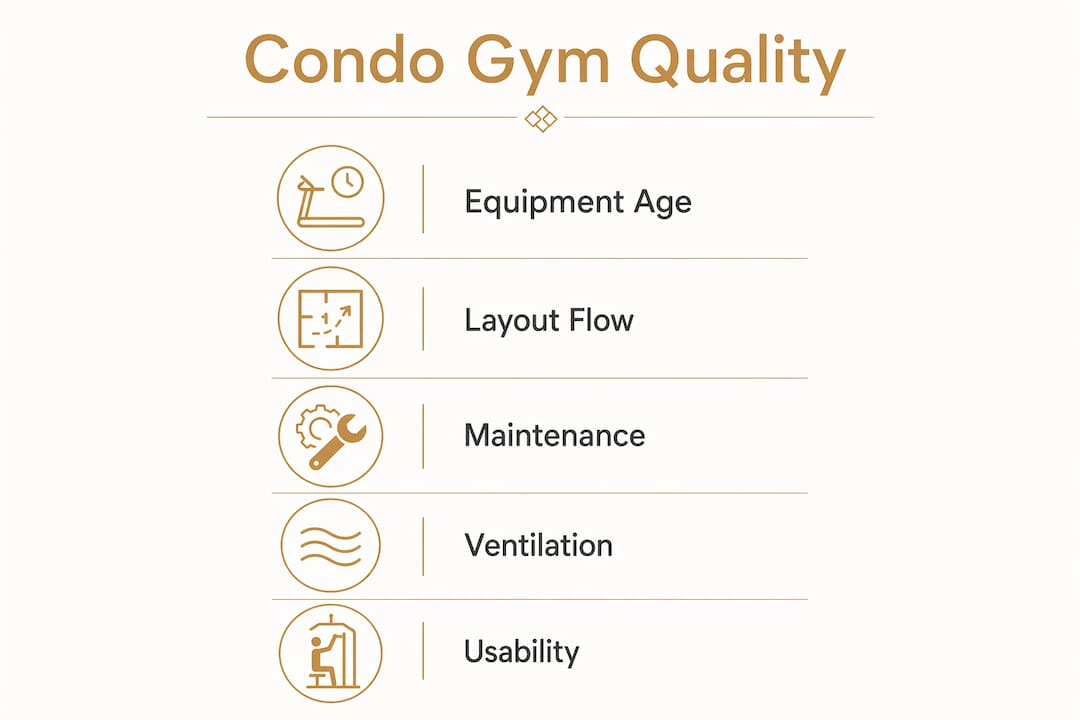
Size matters less than most buyers assume. A 500 sq ft gym with a logical layout outperforms a 1,200 sq ft space with poor equipment flow. Professional design guidelines set the functional range for condo gyms at 500–1,200 sq ft, with wellness-first properties allocating up to 1,700 sq ft. The difference between a good gym and a frustrating one comes down to how the space is organized.
Key design factors that separate quality gyms from mediocre ones:
- Equipment flow: Cardio machines should face natural light or entertainment screens. Free weights need clear floor space around them. Poor flow creates bottlenecks that make even a large gym feel cramped.
- Acoustic treatment: Rubber flooring and sound-absorbing panels reduce noise transfer to neighboring units. Their absence signals a gym that was designed for appearances, not daily use.
- Equipment age and maintenance: Broken or aging cardio equipment signals broader building management issues. Ask to see maintenance logs before you sign anything.
- Ventilation and lighting: Poor air circulation makes a gym unusable in warm climates. Natural light improves both mood and perceived space.
Pro Tip: Ask the building manager how often equipment is serviced and who holds the maintenance contract. A vague answer is a red flag.
Gym usability depends more on thoughtful layout, equipment flow, and maintenance than on size or equipment quantity alone. A fitness ecosystem designed around how residents actually move through the space will always outperform one that looks impressive in a brochure photo.
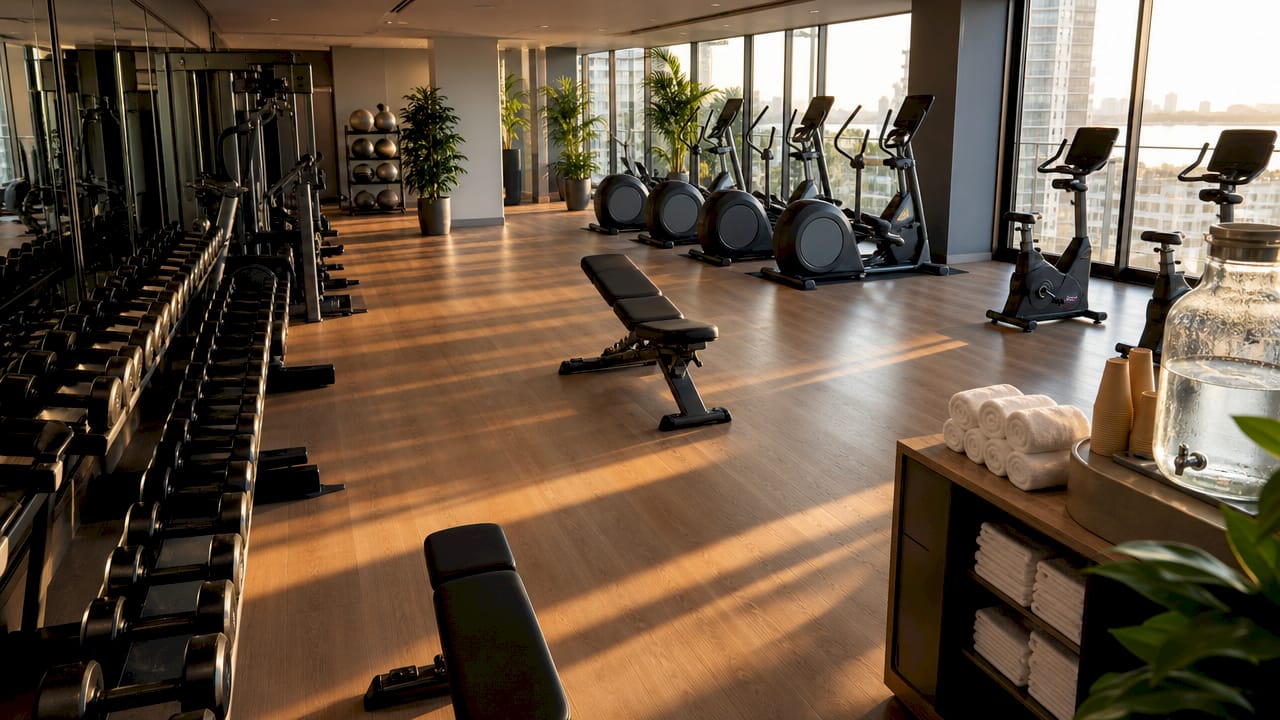
How gym facilities contribute to community building and resident satisfaction
A condo gym does more than support physical fitness. It functions as a social space where residents interact outside the formality of lobby encounters or building meetings. Harvard Health identifies fitness spaces as social "third spaces" that sit between home and work, facilitating community engagement and improving mental health outcomes.
"The gym is where I actually got to know my neighbors. We started working out at the same time, then grabbing coffee after. That kind of connection doesn't happen in an elevator."
This social dimension has measurable consequences for buildings. Residents who feel connected to their community stay longer. Lower turnover reduces vacancy costs for developers and creates a more stable, engaged building culture. A gym that hosts group fitness sessions or yoga classes amplifies this effect by creating shared schedules and shared goals.
Mental health benefits are equally significant. Regular access to exercise facilities reduces stress, improves sleep quality, and builds daily structure. For urban residents managing demanding work schedules, a gym two floors down removes the single biggest barrier to consistent exercise: the effort of getting there.
Wellness amenities have evolved into market differentiators that influence buyer decisions and reflect building management standards. A building that invests in its gym signals that it invests in its residents.
Balancing amenity investment: avoiding overbuilding in gym facilities
Not every gym investment pays off. Developers who build oversized or vanity gyms without understanding actual resident demand create a specific problem: higher maintenance fees that residents resent paying. Over-investing in gym facilities without matching real resident demand leads to diminishing returns and inflated operational costs.
The right approach follows a clear sequence:
- Assess resident demographics first. A building with predominantly young professionals has different fitness needs than one with families or retirees. Equipment selection and space allocation should reflect who actually lives there.
- Match size to building population. A 200-unit building does not need a 2,000 sq ft gym. Oversizing drives up costs without improving the resident experience.
- Prioritize quality over quantity. Ten well-maintained, current-generation machines serve residents better than twenty aging ones spread across a large floor.
- Plan for operational costs upfront. Equipment replacement cycles, cleaning contracts, and HVAC maintenance add up. Buildings that underbudget for operations end up with gyms that deteriorate within five years.
- Review usage data annually. Resident fitness habits change. A gym that served the building well in year one may need reconfiguration by year three as the resident mix evolves.
The goal is a gym that residents actually use, not one that photographs well for marketing materials. Property valuations reflect this distinction. Buildings with well-maintained, appropriately sized gyms command stronger resale prices than those with impressive but underused facilities.
Practical tips for evaluating gym facilities as a condo buyer
Evaluating a condo gym requires more than a quick walkthrough. The gym tells you a great deal about how the building is managed and whether the amenity will actually serve your fitness needs.
- Check equipment age. Cardio machines older than seven years are approaching end-of-life. Look for wear on handles, screens, and belts. Worn equipment signals deferred maintenance.
- Count the machines relative to unit count. A building with 300 units and four treadmills will have serious crowding during peak hours. A rough benchmark is one cardio machine per 20–25 units for mid-tier gyms.
- Look for functional training space. Stretching areas, pull-up bars, and open floor space indicate a gym designed for real workouts, not just machine circuits.
- Test the ventilation. Stand in the gym for five minutes. If it feels stuffy or warm without anyone exercising, it will be unbearable during a busy morning session.
- Ask about group classes. Buildings that offer scheduled fitness classes signal active gym management and a resident community that uses the space.
Match the gym to your actual training style. A mid-tier gym with free weights and cable machines covers most general fitness needs. If you follow a specialized program, verify the gym has the specific equipment you need before signing a lease or purchase agreement.
Key Takeaways
Gym facilities in urban condos are primary lifestyle amenities that directly affect resident satisfaction, community engagement, and property value.
| Point | Details |
|---|---|
| Usage rate is high | 68% of condo residents use their building gym, making it a core active amenity. |
| Design beats size | Thoughtful layout and maintained equipment outperform large, poorly organized spaces. |
| Social value is real | Gyms function as third spaces that build community and support resident mental health. |
| Overbuilding costs residents | Gyms sized beyond actual demand raise fees without improving the resident experience. |
| Equipment condition signals management | Worn or broken gym equipment indicates broader building maintenance problems. |
What I've learned about gym amenities that most buyers overlook
Most buyers walk into a condo gym and count machines. That's the wrong metric. After years of watching how residents actually interact with fitness amenities, the single most predictive factor of gym satisfaction is maintenance consistency, not equipment count or square footage.
I've seen buildings with impressive showroom gyms that were functionally useless within two years because no one budgeted for upkeep. I've also seen compact 600 sq ft gyms that residents loved because the equipment was current, the space was clean, and the layout made sense. The gym reflects the building's management culture more accurately than almost any other amenity.
The social dimension is the most underrated factor. Buyers focused on fitness specs miss the fact that a good gym creates daily touchpoints between neighbors. Those touchpoints build the kind of community that makes residents stay for five years instead of two. For urban buyers weighing condo options, the gym is not just a fitness facility. It's a signal about the quality of life the building actually delivers.
Future-focused gym design in condos will move toward flexible, multi-use wellness spaces rather than fixed equipment rooms. Buildings that plan for this shift now will hold their value longer and attract residents who treat fitness as a lifestyle, not an afterthought.
Fitness-focused living at Hougang-central-residences

Hougang-central-residences brings together the fitness access and community amenities that urban buyers prioritize. Situated directly above Hougang MRT station in Singapore, the development offers 835 residences across unit types from one-bedroom to five-bedroom homes. The building's wellness amenities are designed to serve real resident needs, not just marketing photography. Tropical landscaped areas, premium European fittings, and smart-home systems complement the fitness and lifestyle offerings throughout the property. Buyers who want a condo where the gym actually works, and where the community around it is equally well considered, can explore Hougang Central Residences to learn more about available units and amenities.
FAQ
What percentage of condo residents use the building gym?
68% of condo residents use their building's fitness center, based on Q1 2026 nationwide survey data. This makes the gym one of the most actively used amenities in any residential building.
What is the ideal size for a condo gym?
Functional condo gyms range from 500 to 1,200 sq ft. Wellness-focused properties allocate up to 1,700 sq ft, but size matters less than layout quality and equipment maintenance.
Can a condo gym replace an external gym membership?
A premium condo gym can replace an external membership for most general fitness needs. Residents with specialized training requirements, such as competitive powerlifting or sport-specific conditioning, will still benefit from an external facility.
How do I evaluate gym quality when buying a condo?
Check equipment age, count machines relative to unit numbers, test ventilation, and ask for maintenance records. Broken or aging equipment signals building management problems that extend beyond the gym itself.
Do gym facilities affect condo property values?
Yes. Wellness amenities have become market differentiators that influence buyer decisions and resale prices. Well-maintained, appropriately sized gyms support stronger property valuations over time.