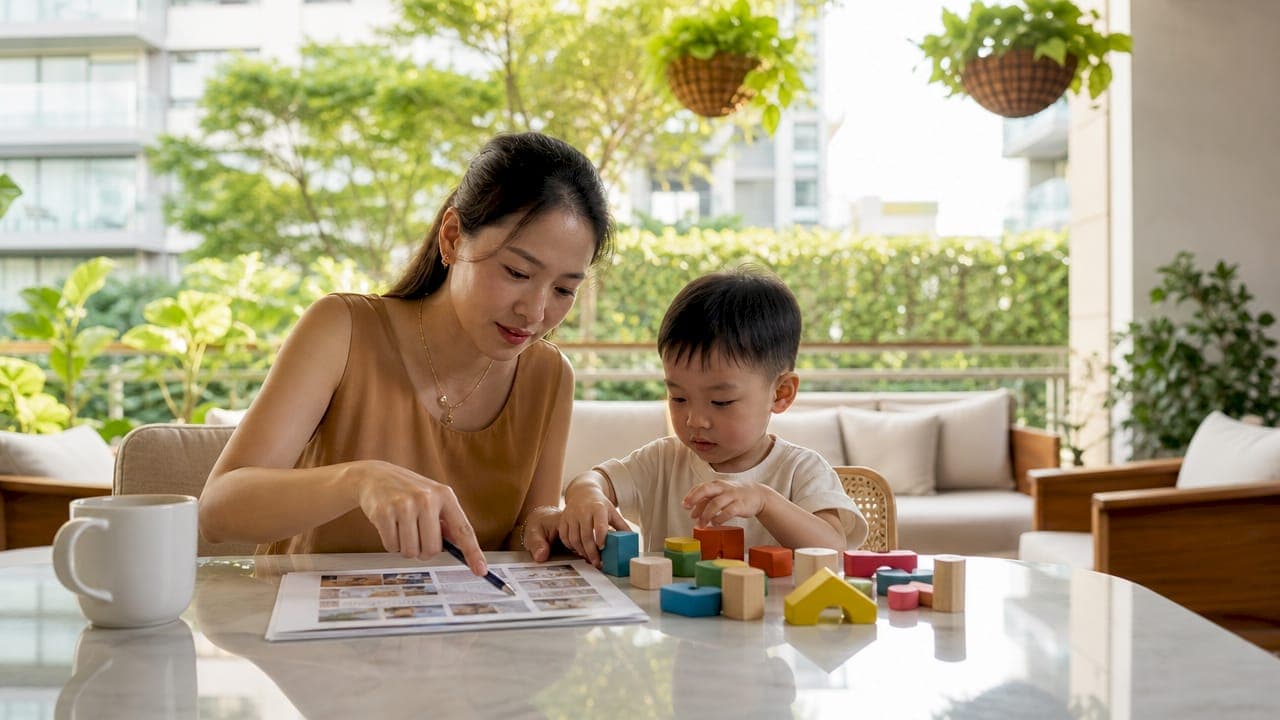
A family amenities condo checklist is a curated set of essential features and facilities that make condominium living safe, convenient, and enjoyable for families with children. Most parents focus on unit size and price, but the facilities outside your front door shape daily life just as much. Tier 1 family-friendly condos achieve 8 to 9 essential amenities, including fenced play areas, indoor activity rooms, and dedicated kids' pools. That standard is worth knowing before you start touring properties. This guide walks you through every category on the checklist, explains what to verify in person, and helps you match amenities to your family's actual lifestyle.
What essential family amenities should a condo have?
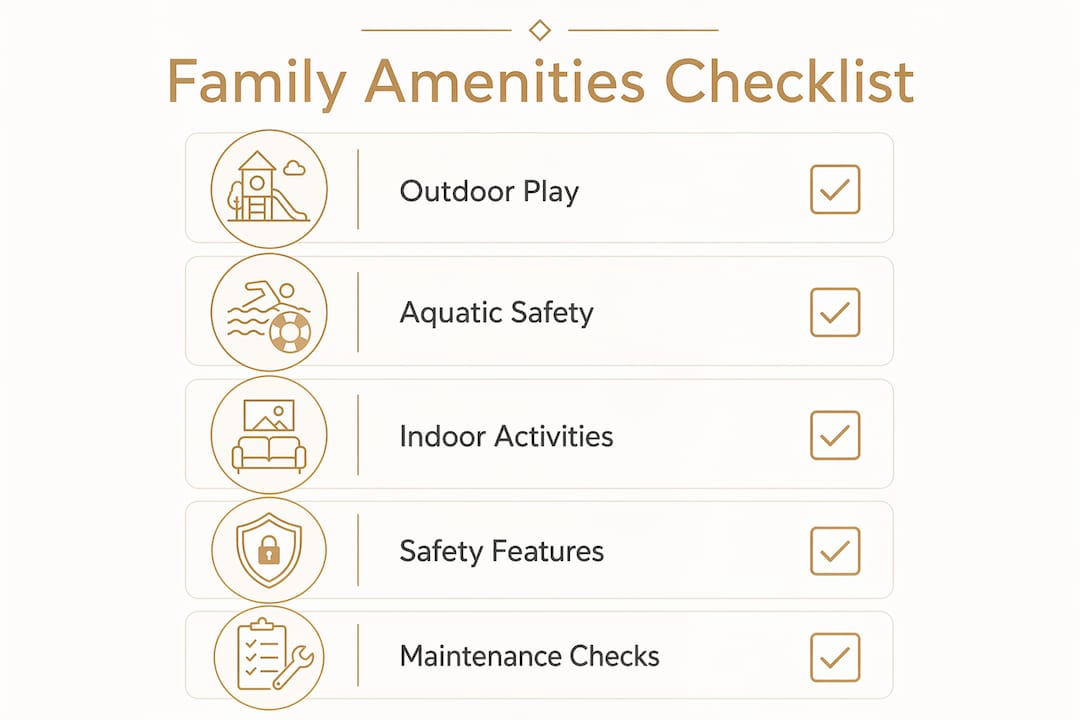
The core of any condo facilities checklist for families covers five categories: outdoor play, aquatic safety, indoor activity, childcare access, and creative learning spaces. Each one addresses a different stage of child development and a different parental need.
Outdoor play areas are the most visible item on any checklist. A well-designed play zone should be fenced, shaded, and surfaced with impact-absorbing turf. A minimum footprint of 600 square feet gives children enough room to run without crowding. Shade structures matter more than most parents realize. Singapore's heat index regularly makes unshaded outdoor play dangerous for children under five.
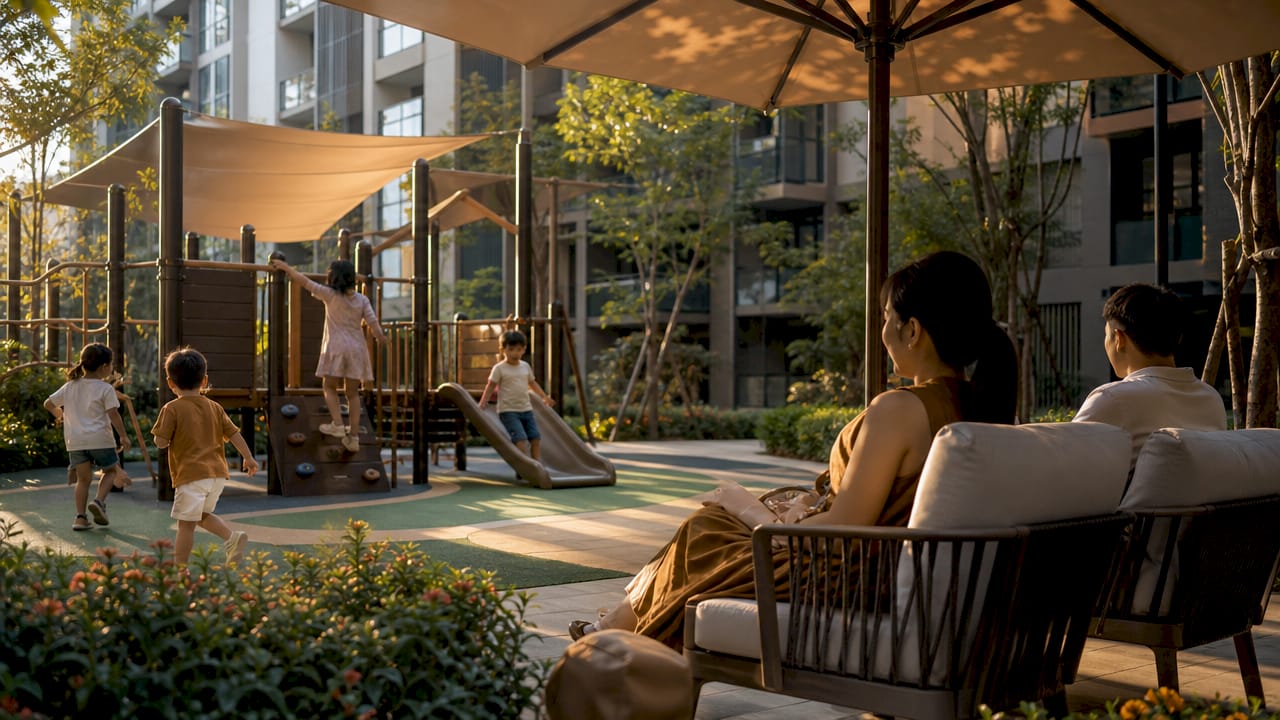
Kids' pools require specific depth standards. A dedicated children's pool should sit between 0.6 and 1.0 meters deep. Anything shallower becomes a wading pool with no real swim development value. Anything deeper creates supervision challenges for parents watching multiple children. Confirm the depth on-site, not from a brochure.
Indoor activity rooms fill the gap on rainy days and during school holidays. A climate-controlled room with age-appropriate equipment keeps children active without sending parents outside in the heat. Family-centric condo design is evolving to include these spaces specifically for dual-income households where structured after-school activity matters.
On-site childcare, art rooms, and music rooms are the amenities that separate Tier 1 developments from the rest. On-site Montessori or daycare removes a daily commute from the family schedule. Art and music rooms support developmental learning without requiring parents to drive across town for enrichment classes.
- Fenced, shaded turf play area (minimum 600 sqft)
- Dedicated kids' pool (0.6–1.0 m depth)
- Climate-controlled indoor activity room
- On-site childcare or Montessori facility
- Art room and music room for school-age children
- Family barbecue pavilions with child-safe grilling zones
- Covered walkways connecting key amenity zones
Pro Tip: Visit the amenities list in the sales kit, then cross-check each item against the actual facility plan. Developers sometimes list a "multipurpose room" that doubles as a function room and a kids' activity space. Those two uses rarely coexist well.
How does floor plan design affect family safety and comfort?
Thoughtful floor plan design reduces parental stress by 22–31% and improves child supervision effectiveness by 35–45%. That is not a minor quality-of-life improvement. It is the difference between a parent who can cook dinner while watching a toddler and one who cannot. The layout of your unit matters as much as the amenities outside it.
The key design principles for families center on sightlines, bedroom proximity, and flexible space allocation.
- Optimized sightlines: An open-plan kitchen and living area lets one parent supervise children in the living zone while preparing meals. Closed-off kitchens eliminate this entirely.
- Bedroom proximity: Child bedrooms placed adjacent to the master bedroom reduce nighttime disruption. The optimum family condo layout places child rooms close to parents and includes a half bathroom near common areas.
- Flexible room sizing: A unit with one large bedroom that can be partitioned later gives growing families more options than a fixed three-bedroom layout with small rooms.
- Low-VOC materials: Stain-resistant, non-toxic finishes reduce cleaning time and support healthier indoor air quality for children. This matters most in bedrooms and play areas where children spend concentrated time.
Hougang-central-residences addresses this directly. Its unit range spans 1-bedroom to 5-bedroom configurations, giving families room to choose a layout that fits their supervision style and growth plans. The tropical landscaped areas also extend the usable living space beyond the unit walls, which reduces the pressure on interior square footage.
What safety and maintenance factors should families verify?
Sustainable condo value depends heavily on consistent maintenance, not just on initial facility quality. A beautifully staged pool in a sales gallery photo tells you nothing about whether that pool is clean, staffed, and safe on a Tuesday afternoon in october.
Here is a practical verification sequence for families evaluating any development:
- Visit during peak hours. Arrive at 5 PM on a weekday. Empty kids' play areas during typical usage times signal poor management or a resident mix that does not include young families. A busy, well-supervised play area tells the opposite story.
- Review AGM minutes. Most buyers overlook AGM minutes and financial statements. Frequent mentions of playground or pool maintenance requests in those minutes signal a community that actually uses and prioritizes family facilities.
- Check the sinking fund. A thin sinking fund means deferred maintenance. Deferred maintenance means broken equipment, closed pools, and special assessments that raise your monthly fees.
- Confirm amenity access rights in writing. Some condos restrict pool and gym access for new owners or short-term guests. Verify your access rights are written into the purchase agreement before signing.
- Inspect the actual condition of play equipment. Rust, cracked surfaces, and missing safety padding are red flags. Ask the management office when the last equipment inspection occurred and who conducted it.
Pro Tip: Ask the management office directly about the sinking fund balance and the last major amenity repair. A confident, detailed answer signals a well-run development. Vague responses or deflection signal the opposite.
How should families prioritize amenities based on their lifestyle?
Not every amenity on the checklist carries equal weight for every family. A family with a toddler and a newborn needs a different set of priorities than a family with two school-age children and a teenager. Matching the checklist to your actual life stage prevents you from paying a premium for facilities you will never use.
Proximity to schools and childcare follows the 1-KM rule. School registration in Singapore ties directly to distance, and families within 1 kilometer of a primary school gain a significant registration advantage. Proximity to pediatric care and childcare centers prevents the logistical burnout that comes from managing school runs across multiple neighborhoods.
- For families with children under 5: Prioritize on-site childcare, a shallow kids' pool, and a fenced outdoor play area. These three features reduce daily logistics the most.
- For families with school-age children: Weight indoor activity rooms, art and music spaces, and proximity to primary schools. After-school programming becomes the daily priority.
- For families with teenagers: Access to public transport, fitness facilities, and outdoor spaces matters more than toddler play zones. A development above an MRT station removes the need for a second car.
- For dual-income households: On-site childcare and covered walkways to retail and transit are non-negotiable. Every minute saved on the school run and grocery trip compounds across a working week.
Access to natural outdoor spaces and a neighborhood ecosystem that supports family routines matter as much as what is inside the building. A development with a strong amenity list but no nearby parks, schools, or medical facilities creates a different kind of stress.
Key Takeaways
A family amenities condo checklist works best when it combines physical facility standards, verified maintenance health, thoughtful unit layout, and proximity to schools and services.
| Point | Details |
|---|---|
| Use a tiered amenity standard | Tier 1 family condos achieve 8–9 core amenities; use this as your minimum benchmark. |
| Verify, do not just view | Visit at peak hours and review AGM minutes to confirm real-world facility quality. |
| Match amenities to life stage | Prioritize based on children's ages, not the longest amenity list in the brochure. |
| Layout shapes daily safety | Open sightlines and adjacent bedrooms reduce supervision stress by up to 45%. |
| Location multiplies amenity value | The 1-KM school rule and transit access determine long-term convenience and property value. |
What most families miss when using a condo checklist
Most families walk into a condo showroom with a mental list of amenities and leave having checked boxes. What they rarely do is think about the community that will actually use those amenities alongside them. A pool is only as good as the management culture that keeps it clean, safe, and accessible.
I have seen families move into developments with impressive facility lists, only to find that the resident mix skews heavily toward single professionals. The kids' pool sits empty. The play area gets used twice a week. The community culture does not support the family routines that made those amenities attractive in the first place.
Long-term condo value for families depends more on community cooperation and upkeep than on the presence of amenities alone. Attend the first AGM after you move in. Get involved in the management committee if you can. The families who shape the maintenance priorities are the ones who actually benefit from them.
The checklist is the starting point. The community is the product you are actually buying.
— Simon
Hougang-central-residences: a family-ready option worth considering
Families who want a development that checks the core boxes without sacrificing location should look at what Hougang-central-residences offers.
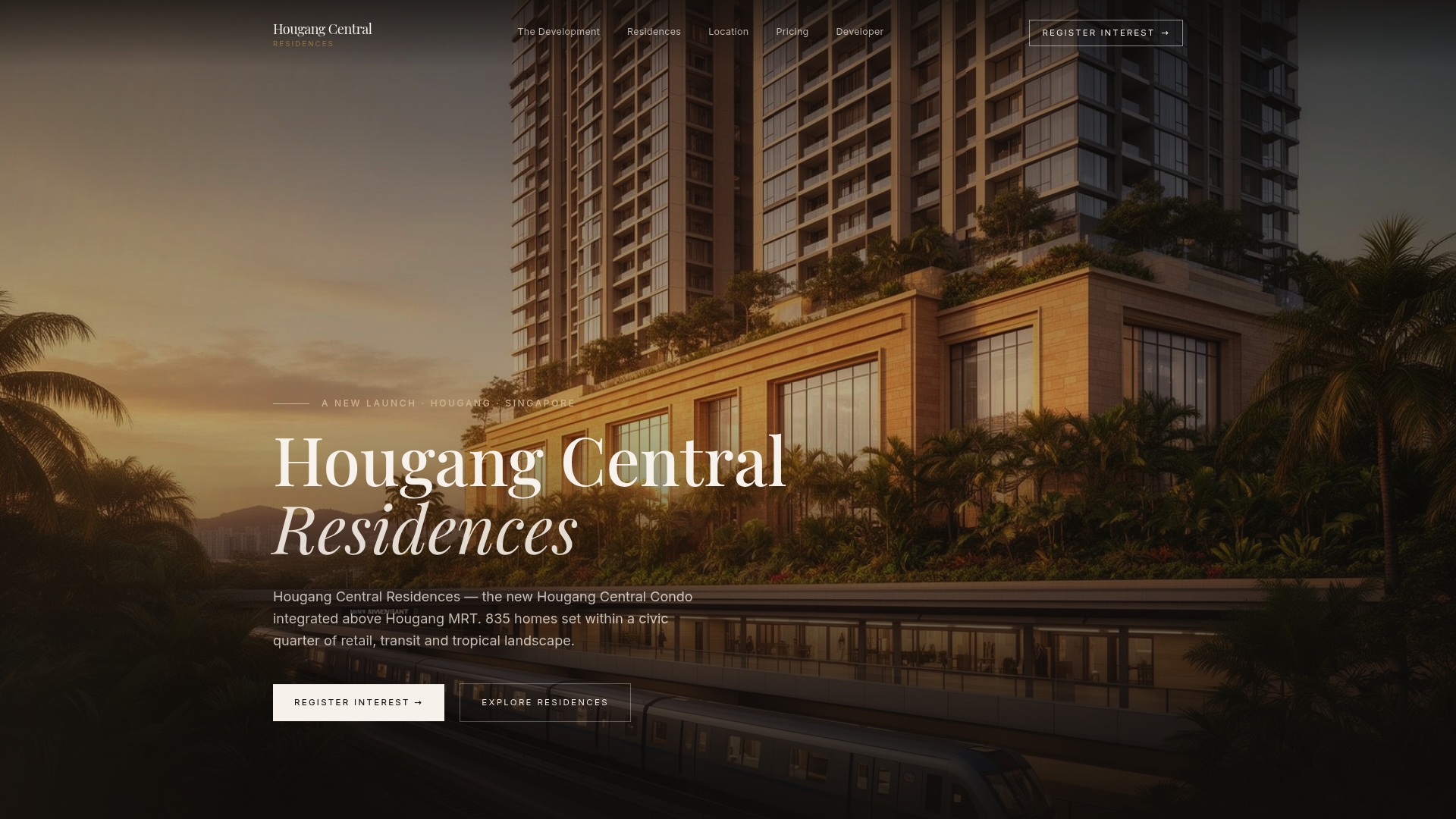
Hougang-central-residences sits directly above Hougang MRT station, which removes the transit logistics that drain dual-income families. The development offers 835 units across 1-bedroom to 5-bedroom configurations, giving families the layout flexibility the checklist demands. Tropical landscaped zones, premium European fittings, and smart-home systems address both the comfort and safety criteria covered in this guide. Its location near future MRT interchanges and established schools makes the 1-KM rule work in residents' favor. For families actively comparing options, the Hougang Central Residences site provides full amenity details and floor plan options.
FAQ
What is a family amenities condo checklist?
A family amenities condo checklist is a structured list of facilities and design features that make a condominium safe and practical for families with children. It covers outdoor play areas, kids' pools, indoor activity rooms, childcare access, and safety standards.
How deep should a kids' pool be in a family condo?
A dedicated children's pool should be between 0.6 and 1.0 meters deep. This range supports supervised swim development while keeping the risk of submersion manageable for parents watching multiple children.
Why do AGM minutes matter when buying a family condo?
AGM minutes reveal how a development's management committee allocates maintenance funds. Frequent mentions of playground or pool repairs signal a family-oriented community that actively maintains child-focused facilities.
What is the 1-KM rule for families choosing a condo?
The 1-KM rule refers to school registration priority in Singapore, where families living within 1 kilometer of a primary school receive a registration advantage. Proximity to childcare and pediatric services within the same radius also reduces daily logistical pressure.
How can families verify amenity quality before purchasing?
Visit the development at 5 PM on a weekday to observe real usage patterns. Review the sinking fund balance, confirm amenity access rights in the purchase agreement, and inspect play equipment condition in person rather than relying on marketing materials.