
TL;DR:
- Shortlisting condos near business hubs requires applying hard filters such as direct transit access and nearby retail. Running two timed test commutes helps verify actual door-to-door travel times, guiding better property choices. A weighted scoring template aids in objectively selecting the best 3-5 properties for follow-up visits.
The fastest way to shortlist condos near business hubs is a three-step filter: apply hard criteria to listings (transit integration, on-site retail, verified commute), run two test commutes, then score each candidate with a compact template. That process produces a 3–5 property shortlist built around daily convenience, rental resilience, and a genuine live-work-play lifestyle rather than a map pin that looks close but commutes terribly.
Three steps to start today: (1) Filter online listings by direct MRT or metro access and on-site or podium retail. (2) Run two door-to-door test commutes for each candidate — one peak-hour transit run and one off-peak walking route. (3) Score each property using the comparison template in Section 6, then pick your top properties for follow-up visits.
Table of Contents
- What criteria should you use to shortlist condos near business hubs?
- How do you actually measure commute time and proximity?
- Which building amenities matter most for buyers near business hubs?
- What does a transit-integrated condo actually cost?
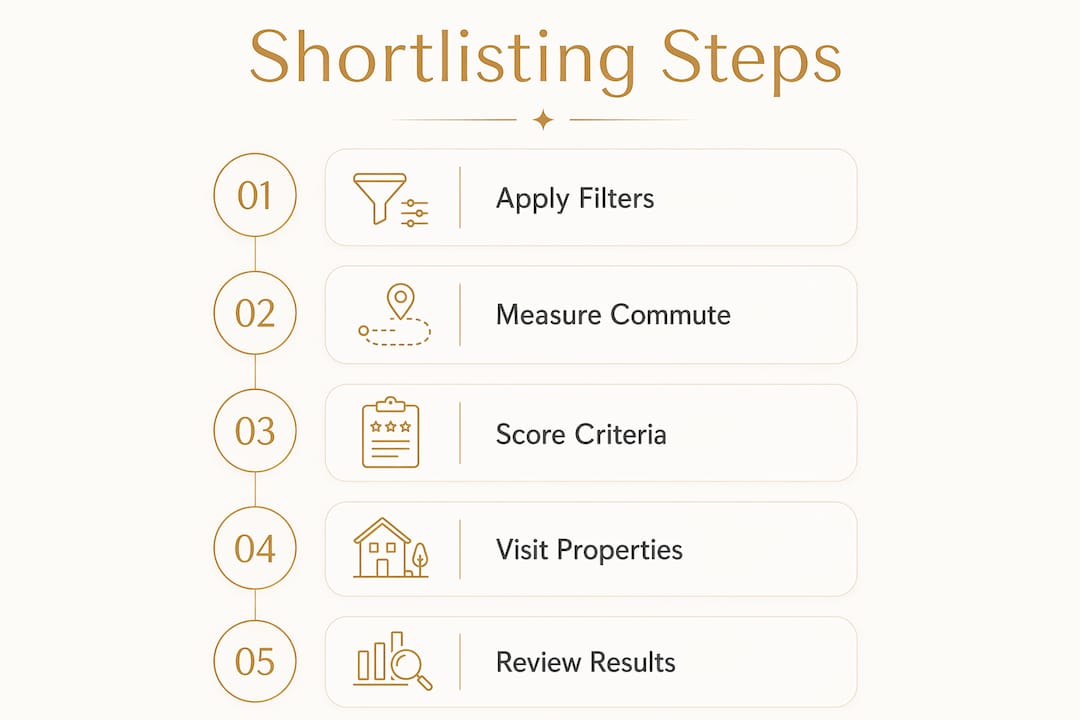
- How do you build a 3–5 property shortlist step by step?
- What should you ask agents and developers before finalizing your shortlist?
- Red flags to spot and negotiation levers to use
- Key Takeaways
- What most guides get wrong about living near a business hub
- Hougang-central-residences: transit-integrated living above the MRT
- FAQ
What criteria should you use to shortlist condos near business hubs?
A shortlist built on the right filters saves weeks of wasted viewings. Split your criteria into two tiers.
Must-haves:
- Direct MRT access or a covered, weather-protected connection to the nearest station
- On-site or podium retail with daily-needs tenants (grocery, pharmacy, café)
- Walking time to the MRT interchange that is suitably short
- Door-to-door transit time to the core business district that is acceptably short during peak hours
- 24/7 concierge and security coverage
- Functioning parcel and visitor management
Nice-to-haves:
- Deeded or bookable private office suites within the building
- Dedicated employer shuttle to a major corporate campus
- Integrated green space or public plaza at the podium level
- Short-term rental flexibility for investor-minded buyers
Integrated transit/retail developments consistently outperform simple proximity in buyer preference because physical connection to employers and retail matters more than a favorable map distance. Treat the 10-minute and 30-minute thresholds as practical starting points, not rigid rules — adjust them to your specific business hub and tolerance for transfers.
How do you actually measure commute time and proximity?
Straight-line distance is nearly useless. A condo 800 meters from your office can take 25 minutes door-to-desk if the last-mile walk is exposed, involves a level change, or requires crossing a major arterial road. Door-to-door minutes are the only metric that reflects real daily experience.

Run two test commutes for every serious candidate.
Commute A — peak-hour transit: Leave the building entrance at 8:00 AM on a weekday. Time each segment: lobby to platform, wait for train, ride, exit, walk to office desk. Note transfer waits and whether covered walkways exist the entire route. Buildings with direct transit node links — steps from a metro mover or rail interchange — compress this time significantly and reduce friction on rainy days.
Commute B — off-peak walking/last-mile: Walk the full last-mile route on a weekend morning. Check for covered paths, elevator and escalator availability, and any construction blocking the route. This reveals what listing descriptions often omit.
Log results in a simple spreadsheet: start time, end time, transfer wait, number of transfers, and any friction points (exposed walkway, broken escalator, no shelter). Use Google Maps transit mode and the local MRT authority's published timetables to cross-check your times. Walk Score gives a useful baseline for neighborhood walkability, and the Transit app surfaces real-time departure data for verification. Project pages frequently call out neighborhood transit access — always validate those claims with your own timed run.
Which building amenities matter most for buyers near business hubs?
The building itself becomes your daily hub when you live near a business district. Residents in dense financial districts often rate concierge services and dedicated common spaces above neighborhood walkability — the building's service model shapes daily life as much as its location.
Core operational features to prioritize:
- 24/7 staffed concierge and security (not just CCTV)
- Dedicated parcel handling with notification
- Managed co-working spaces or bookable focus booths
- On-site property management with responsive maintenance
- Deeded or bookable private office suites where available — these preserve work/life separation without a separate lease
Amenity categories worth weighting:
- Covered retail podium with grocery, pharmacy, and café
- Fitness and wellness spaces accessible without leaving the building
- Dedicated meeting rooms for client calls or small team sessions
The service-model tradeoff is real: full-service buildings (staffed concierge, managed co-working, parcel handling) carry higher HOA fees but dramatically lower your time burden. Limited-service buildings cost less monthly but push maintenance coordination and parcel management onto you.
Pro Tip: For frequent travelers and lock-and-leave buyers, prioritize staffed services and secure parcel handling over extra luxury finishes. A 24/7 lock-and-leave service model is the feature you will miss most if it is absent.
For a deeper look at how to weight these choices, the amenities checklist for young professionals pairs well with the scoring template below.
What does a transit-integrated condo actually cost?
Expect a price premium for direct transit access, mixed-use development, and proximity to a major employer hub. That premium shows up in two places: a higher sale price per square foot and elevated HOA or maintenance fees. Proximity to emerging corporate infrastructure — new exchange headquarters, corporate campuses — tends to lead appreciation and support rental stability over time, which is the investment case for paying that premium.
Recurring costs to budget:
- Monthly HOA or condo fees (higher in full-service buildings)
- Sinking fund contributions for major repairs
- Property taxes (varies by jurisdiction and unit type)
- Utilities for shared amenities
- Any managed-service surcharges for co-working or concierge add-ons
Timeline checklist: Contract to close on a resale unit typically runs several weeks in most U.S. markets once financing is secured. New-launch developer handovers vary widely — confirm the projected completion date in writing and build a buffer. Secure mortgage pre-approval before shortlisting; lenders apply different underwriting rules to units in mixed-use developments, and some restrict loan-to-value ratios when commercial space exceeds a certain share of the building. If you are investor-minded, check whether the building's bylaws permit short-term rental flexibility before you sign — this materially affects income potential and resale appeal.
How do you build a 3–5 property shortlist step by step?
A repeatable process removes bias and keeps your shortlist defensible.
- Apply hard filters to online listings: direct transit access, on-site retail, and commute threshold met on paper.
- Collect candidates into a single spreadsheet with address, asking price, HOA fee, and listing transit claims.
- Run two test commutes for each candidate and log results as described above.
- Visit and score each property using the template below.
- Pick the top 3–5 by weighted score for formal follow-up and due diligence.
| Criterion | Weight | Score (1–5) | Notes |
|---|---|---|---|
| Transit integration | 25% | Direct MRT/metro access, covered walkway | |
| Retail integration | — | On-site daily-needs tenants, hours | |
| Door-to-door commute (minutes) | 25% | Peak-hour timed result | |
| Service model | — | Staffed concierge, parcel, co-working | |
| Price/fee score | — | Sale price + HOA vs. budget | |
| Final weighted score | — | Sum of (score × weight) |
Score each criterion 1–5, multiply by its weight, and sum the column. A property scoring 4+ on transit and commute but 2 on service model may still rank high — the weights let you adjust for your own priorities. During each visit, photograph the last-mile walking route, test the elevator response time, check retail tenant hours, and confirm concierge staffing in person.
What should you ask agents and developers before finalizing your shortlist?
Questions asked early save expensive surprises later.
Ask agents and developers:
- Is MRT/metro access covered and weather-protected the entire route from lobby to platform?
- What is the current retail tenancy mix, and are any units vacant or pending re-tenanting?
- Are any planned works scheduled for the retail podium or transit connection in the next 24 months?
- What are the building's staffing hours for concierge and security?
- Does the building permit short-term rentals, and are there any pending bylaw changes?
Request these documents:
- HOA meeting minutes from the past two years
- Full service charge breakdown (not just the headline monthly fee)
- Developer handover schedule for new launches
- Rental restriction bylaws and any pending amendments
- Fire safety and evacuation plans for high-rise buildings
An answer like "the retail podium is being re-tenanted" or "the covered walkway is under construction for 18 months" changes the calculus entirely. Get any verbal promise about future transit upgrades or retail tenants in writing before you proceed. For a detailed guide on evaluating retail podiums and tenant mix, that resource covers the questions worth pressing on.
Red flags to spot and negotiation levers to use
Red flags:
- Exposed last-mile walk to MRT with no covered alternative
- Retail podium dominated by non-essential or high-turnover tenants
- HOA fees that have increased sharply without documented justification
- No on-site management or concierge during business hours
- Bylaws that restrict all rental activity, limiting future flexibility
Negotiation levers when a property otherwise scores well:
- Request a prorated HOA credit for any upcoming special assessment
- Ask the seller to cover closing costs in lieu of a price reduction
- Negotiate a longer inspection or contingency period to complete due diligence
- Demand written confirmation of any promised retail tenancy agreements before signing
During every viewing, photograph the last-mile route from lobby to MRT entrance, note any construction hoardings, and document the retail tenant list. If an agent makes a verbal claim about a future transit interchange or a new anchor tenant, ask for it in writing the same day.
Key Takeaways
Shortlisting condos near business hubs works best when you measure door-to-door commute minutes, not map distance, and apply a weighted scoring template to remove bias from the final pick.
| Point | Details |
|---|---|
| Measure door-to-door, not distance | Time two test commutes — peak transit and off-peak walking — before scoring any candidate. |
| Use hard filters first | Direct MRT access, on-site retail, and a 30-minute peak commute threshold cut the field fast. |
| Weight the service model | Full-service buildings cost more monthly but deliver the lock-and-leave lifestyle most professionals need. |
| Ask for documents early | HOA minutes, service charge breakdowns, and rental bylaws reveal hidden costs before you commit. |
| Hougang-central-residences | Sits directly above Hougang MRT with on-site retail and smart-home features — a ready-made case study for integrated transit and retail living. |
What most guides get wrong about living near a business hub
The conventional advice is to find a condo "close to" your office and call it done. That framing misses the point entirely. After working through dozens of condo evaluations for professionals and families, the pattern is consistent: the properties that hold value and keep residents happy are the ones where the building itself functions as a daily hub. Protected walkways to transit, a retail podium with genuinely useful tenants, and a staffed concierge are not luxury extras. They are the infrastructure that makes the live-work-play promise real on a Tuesday morning in the rain.
The scoring template matters for a specific reason: without it, buyers consistently over-weight the unit's interior finishes and under-weight commute friction and service model. A beautiful kitchen does not compensate for a 45-minute peak commute or a building where parcels go missing. Run the numbers, time the commutes, and let the weighted score make the call. The property that wins on paper and in person is the one worth pursuing.
Hougang-central-residences: transit-integrated living above the MRT
For buyers who want the shortlist criteria already built into the address, Hougang-central-residences delivers exactly that. The development sits directly above Hougang MRT station, putting residents on the platform in under two minutes from their front door — no exposed walkway, no last-mile guesswork. The retail podium covers daily needs without leaving the building, and 835 units across 1-bedroom to 5-bedroom configurations mean the right size exists for professionals, couples, and families alike.
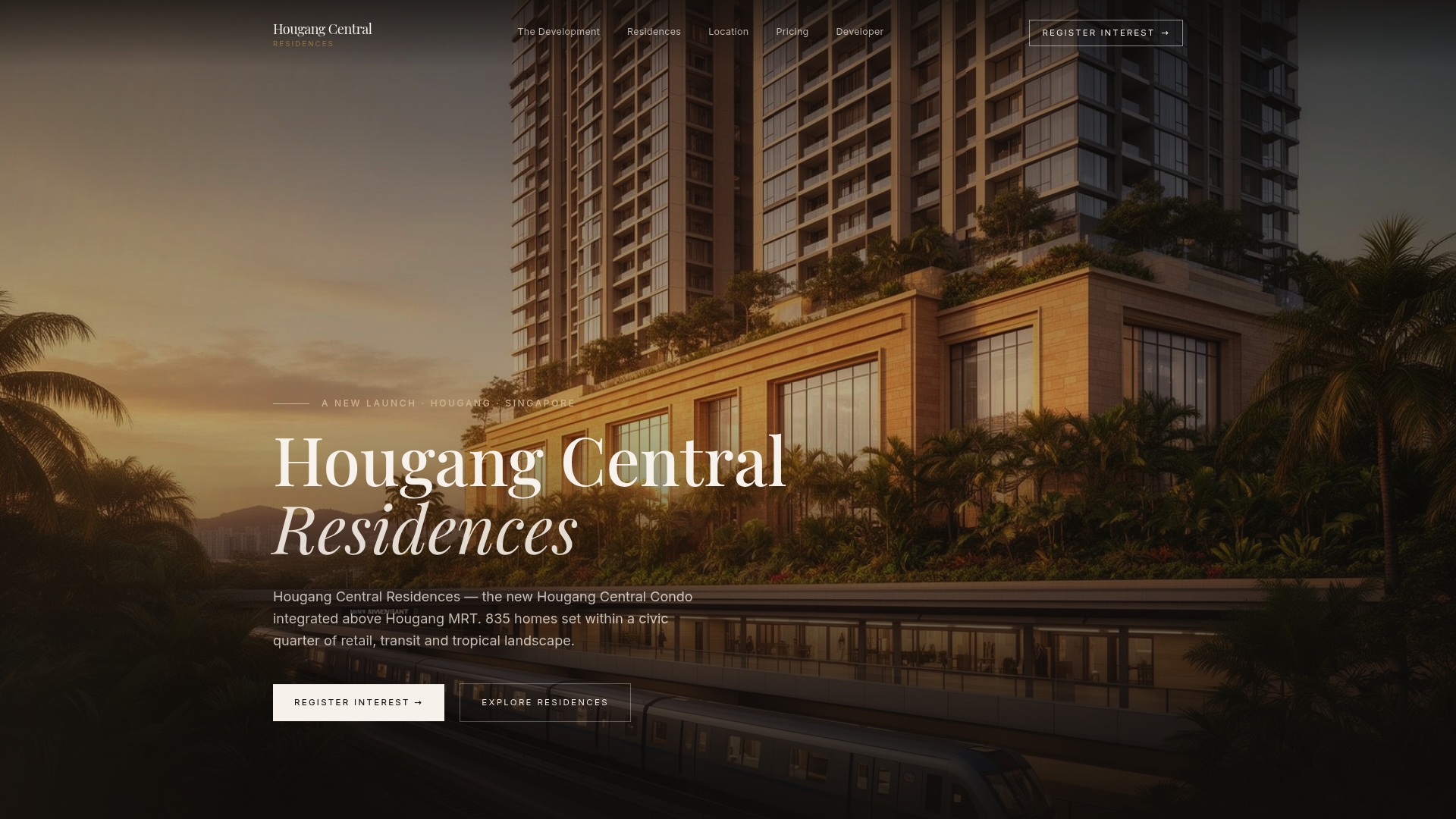
Smart-home systems are standard across units, and the project's position near future MRT interchange upgrades supports long-term connectivity. For buyers who have worked through the scoring template and want a property that checks every hard filter from the start, Hougang Central Residences is worth putting at the top of your shortlist. Browse available unit types and get current pricing directly on the project page.
FAQ
What is the fastest way to shortlist condos near business hubs?
Apply three hard filters — direct transit access, on-site retail, and a verified peak-hour commute under 30 minutes — then score remaining candidates with a weighted template to identify your top 3–5 properties.
How far should a condo be from an MRT station?
A walking time of 10 minutes or less to the MRT interchange is a practical threshold; covered, weather-protected access matters as much as raw distance.
Do transit-integrated condos cost more to buy and own?
Yes — direct transit access and mixed-use retail typically add a premium to the sale price and to monthly HOA fees, but proximity to major employer hubs tends to support stronger long-term appreciation and rental demand.
What documents should I request before finalizing a shortlist?
Request HOA meeting minutes from the past two years, a full service charge breakdown, rental restriction bylaws, and the developer handover schedule for new launches.
Is Hougang-central-residences a good example of a transit-integrated condo?
Yes. Hougang-central-residences sits directly above Hougang MRT station with an on-site retail podium and smart-home features across all 835 units, making it a strong match for buyers prioritizing transit integration and daily convenience.