
"Deferred payment scheme condos" in this guide means the payment arrangements you'll actually meet buying a new‑launch private condo in Singapore, not the abolished Deferred Payment Scheme for Executive Condominiums. The standard framework is the Progressive Payment Scheme (PPS), and any developer talk of "deferred" payments usually means an Interest Absorption Scheme or a pay‑at‑TOP incentive layered on top of it. For most Hougang Central Residences buyers, HDB upgraders included, PPS with a clear cash plan beats chasing an incentive that only shifts when you pay, not how much.
TL;DR:
- Developer incentives like Interest Absorption Schemes and pay-at-TOP options layer on top of the standard PPS but do not alter your legally mandated payment milestones.
- You need 5% in cash at OTP, followed by additional payments aligned with construction milestones, which are certified before disbursement, protecting you from prepaid charges.
- Interest costs during construction are only charged on amounts actually disbursed by the bank, resulting in lower initial payments that increase as the loan funds are drawn down.
- Securing an approval-in-principle from multiple banks beforehand provides a clearer loan ceiling and helps manage how IAS or deferred incentives impact your affordability.
- Always review contract clauses with a lawyer to confirm whether incentives are embedded in the S&P agreement or in side letters, as this affects your ability to renegotiate terms later.
Table of Contents
- How the Progressive Payment Scheme (PPS) Works
- Developer 'Deferred' Offers vs. Standard PPS
- Cash and CPF You Need at Each Early Milestone
- Financing, TDSR, and How Progressive Drawdown Affects Repayments
- Questions to Ask Before Accepting Any Payment Incentive
- How Hougang Central Residences Helps You Plan Payments
- PPS or a Developer Incentive: My Take
- Ready to Discuss Payment Options for Hougang Central Residences?
- Sources
- FAQ
How the Progressive Payment Scheme (PPS) Works
PPS is the legislated payment structure for buying under construction (BUC) private condos in Singapore, and it applies whether or not a developer offers any extra incentive. The Housing Developers (Control and Licensing) Rules set fixed percentages tied to specific construction milestones, so no developer can ask for more than the schedule allows at any given stage.
The standard sequence looks like this:
- 5% on signing the Option to Purchase (OTP) as prescribed by law
- Balance to reach 15% total on signing the Sale and Purchase (S&P) Agreement as per regulatory requirements
- 10% on completion of foundation work as mandated in the payment schedule
- 10% on completion of the reinforced concrete framework according to the payment schedule
- 5% on completion of partition walls following the prescribed schedule
- 5% on completion of roofing per the legislated schedule
- 5% on completion of internal works (doors, wiring, plumbing) as required
- 25% on Temporary Occupation Permit (TOP) stage, as similarly fixed in the regulations
- 15% on Certificate of Statutory Completion (CSC) as mandated by law
Each milestone must be certified by the developer's Qualified Person, typically the project architect or structural engineer, before the developer can issue a payment notice to your lawyer. That certification step is a real buyer protection: a developer legally cannot bill you for the roofing stage before roofing is actually done and signed off, as Youhome's guide to PPS explains.
Funding order generally runs cash first, then CPF Ordinary Account funds, then your bank loan, and here's the detail people miss: interest only accrues on money the bank has actually disbursed, not on your total approved loan. Early in construction your interest cost is small because so little has been drawn down.
Developer 'Deferred' Offers vs. Standard PPS
Marketing language around "deferred payment" almost always refers to one of two developer incentives layered on top of PPS, not a replacement for it. Neither changes your legal payment schedule under the Housing Developers Rules.
- Interest Absorption Scheme (IAS): the developer covers your loan interest during the construction period instead of you paying it out of pocket as each tranche is drawn down.
- Deferred final payment / "pay at TOP": some projects let buyers push a larger share of the price to TOP instead of spreading it across every construction milestone.
What doesn't change under either offer: your S&P obligations, your stamp duty deadlines, and the certified milestone structure itself. Read the contract wording carefully. Some IAS clauses are conditional on the loan being disbursed through a specific panel bank, or they cap the interest the developer will absorb. Availability also varies project to project and is usually priced into the unit somewhere.
Pro Tip: Ask whether the IAS is written into the S&P Agreement itself or sits in a side letter. A side letter is easier for a developer to amend or withdraw than a clause baked into the main contract.
Cash and CPF You Need at Each Early Milestone
The early stages catch buyers off guard, because the biggest liquidity crunch happens before a single brick is laid. You need 5% in cash at OTP, full stop, and the remaining 10% to reach the 15% total must follow within the required window at S&P signing, which can be paid from cash or CPF.

Buyer's Stamp Duty (BSD) and Additional Buyer's Stamp Duty (ABSD), if applicable, are due within 14 days of signing the S&P. Most buyers pay this in cash upfront and seek CPF reimbursement afterward, recognizing processing times may not meet this deadline.
For a representative S$1.5 million unit, the payment percentages translate into payment amounts as per the PPS proportions:
Two practical notes worth flagging:
- CPF disbursement takes time to process, so don't count on it covering an immediate deadline.
- Your lawyer typically sequences cash, then CPF, then bank loan drawdowns per milestone, which keeps you from over‑relying on CPF that hasn't cleared yet.
Financing, TDSR, and How Progressive Drawdown Affects Repayments
Banks issue an Approval‑in‑Principle for your full loan amount upfront, even though the money gets released in stages. Eligibility is assessed against the MAS Total Debt Servicing Ratio (TDSR) framework at that point, factoring in your existing debts and income, not just the mortgage you're taking on.
During construction, interest is charged only on the amount the bank has disbursed, causing monthly repayments to start smaller and increase progressively at each milestone. That changes sharply at TOP and CSC: your loan converts to a fully amortizing mortgage covering principal and interest on the whole disbursed balance, and if interest rates have moved since your AIP, your repayment jumps more than buyers expect.
Under the TDSR Singapore Rules framework, total monthly debt obligations, including the new mortgage, generally cannot exceed a set share of gross monthly income, which is why securing AIP early matters more than most buyers realize: it tells you your actual ceiling before you're locked into an S&P.
- Get AIP from more than one bank before committing, so you can compare how each treats an IAS offer.
- Ask lenders directly whether an IAS from the developer affects how they calculate your loan.
- Map out your refinancing options and any lock‑in period expiry around TOP, since rates and packages shift by then.
If you already carry a mortgage on an existing home, an IAS can genuinely ease the squeeze of servicing two loans during construction. If you don't, standard PPS with transparent pricing is usually the cleaner path.
Questions to Ask Before Accepting Any Payment Incentive
Run through this list with your lawyer before signing anything that mentions an incentive, deferral, or interest absorption.
- Is the incentive written into the S&P Agreement, or only referenced in marketing material or a side letter?
- What exactly triggers each certified milestone payment, and who confirms that certification?
- What are the payment notice timelines, and how many days do you have to pay once notified?
- What penalty interest rate applies if a payment is late, and does it compound?
- Is the IAS unconditional, or tied to using a specific panel bank or loan package?
- Does the incentive change who pays stamp duty, or when it's due?
- Can the developer discontinue or modify the incentive after you've signed?
Appointing your own conveyancing lawyer, rather than defaulting to counsel the developer recommends, gives you an advocate checking these clauses for enforceability rather than someone whose fee ultimately traces back to the same sale, a point PKWA Law's conveyancing practice makes clear to buyers weighing this exact choice.
Pro Tip: Bring the sales team's incentive brochure to your first meeting with your lawyer, not after you've already signed the OTP. Once you've paid the 5%, your leverage to renegotiate terms drops considerably.
How Hougang Central Residences Helps You Plan Payments
Buying above an MRT station changes the calculus for a lot of people weighing PPS timing against monthly cashflow, and Hougang Central Residences was built with exactly that buyer in mind: 835 units, direct MRT access, and a payment conversation that starts well before you sign anything.
Our team walks every prospective buyer through the specific milestone schedule for this project, what any current incentives actually cover, and how the numbers change depending on unit type, from 1‑bedroom‑plus‑study through to the 5‑bedroom penthouses.
A few resources worth reading before your consultation:
- Singapore's progressive payment schedule, explained specifically for Hougang Central buyers
- Condo downpayment guidance covering the cash and CPF mix
- The new‑launch booking process from OTP through S&P signing
Bring your questions on incentives and stamp duty timing directly to the sales team; they can walk through what's currently available and give your lawyer documentation to review.
PPS or a Developer Incentive: My Take
If you're still servicing an existing mortgage, a contractually secure IAS genuinely eases the squeeze during construction, and I'd take it. If you're not, skip the incentive chasing and take standard PPS with a transparent price. The clearest path is usually the boring one: know your milestones, know your numbers, and don't let a marketing term substitute for reading the contract.
— Simon
Ready to Discuss Payment Options for Hougang Central Residences?
Hougang Central Residences gives you a direct path to real numbers instead of generic percentages: a personalized payment plan discussion with the sales team, mapped to the specific unit type and milestone schedule that apply to your purchase.
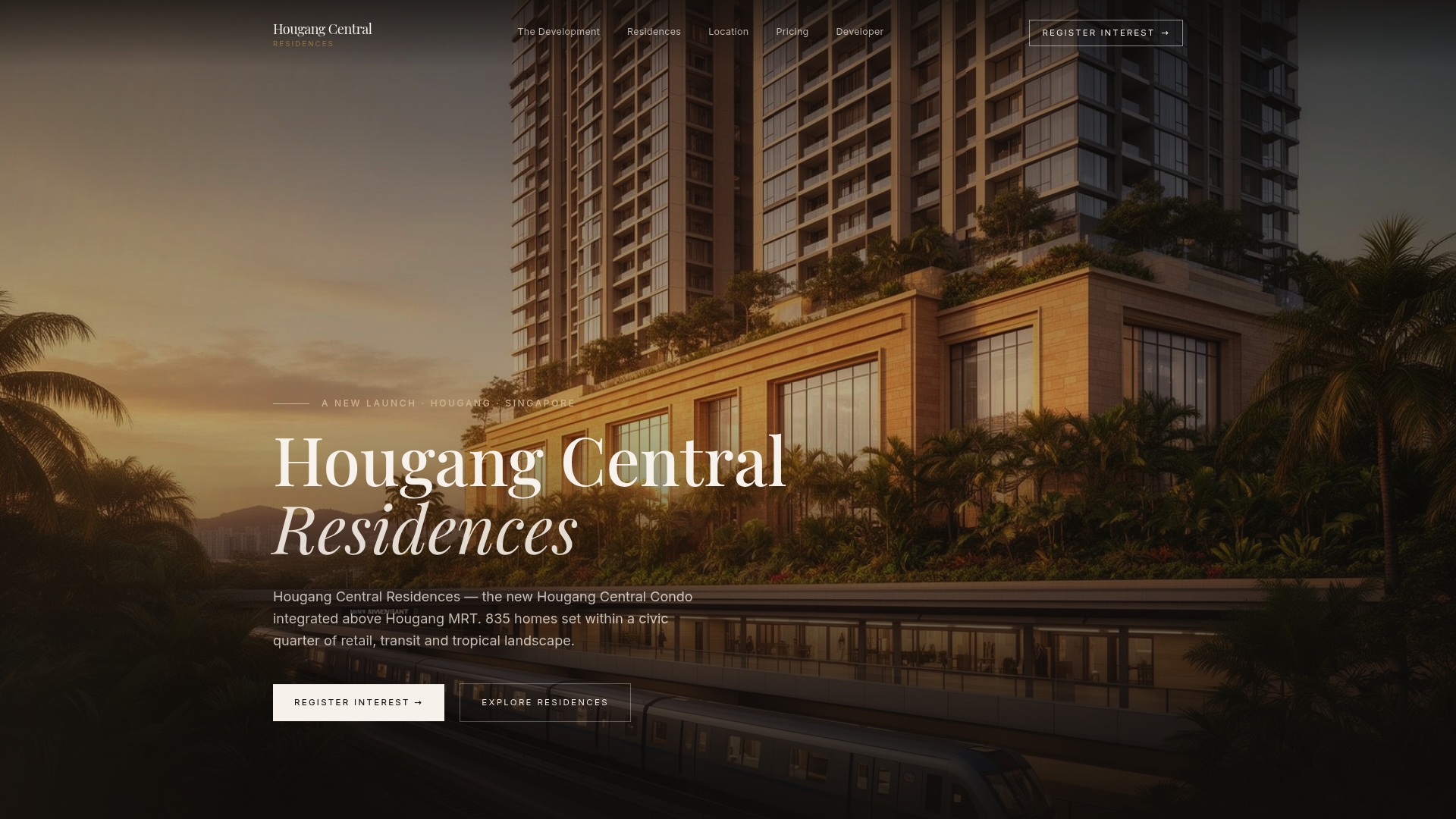
You can request an e‑brochure, book a showflat appointment, or ask the sales team to walk through any current incentive and how it interacts with PPS for your unit. They'll also prepare documentation your own lawyer can review before you commit to anything. Start by visiting the Hougang Central Residences project page to check current availability and arrange a consultation.
This article is general information, not a substitute for advice from a qualified financial advisor. Consult a qualified financial professional about your own circumstances before acting on anything here.
Sources
- Progressive Payment Scheme Singapore (2025): Complete Guide For New Launch Condo Buyers - Ace Mortgage
- Private New Launch Purchase Process Singapore - Timeline, Costs & Financing
- Youhome
- New-condo-launch
FAQ
What Does "Deferred Payment Scheme Condos" Mean Today?
It refers to modern developer incentives like Interest Absorption Scheme offers on top of the standard Progressive Payment Scheme, not the historical Deferred Payment Scheme for private condos that was abolished several years ago.
Does an Interest Absorption Scheme Reduce My Purchase Price?
No, IAS shifts who pays loan interest during construction; it doesn't change the unit price, your S&P obligations, or your stamp duty deadlines.
Can I Use CPF for the OTP Deposit?
Generally no. Most buyers pay the 5% OTP deposit in cash, then use CPF for later milestone payments once funds have cleared.
Do Banks Charge Interest on My Full Loan Immediately?
No, interest accrues only on the portion of the loan actually disbursed at each certified milestone, which is why repayments during construction start low and rise as the building progresses toward TOP.