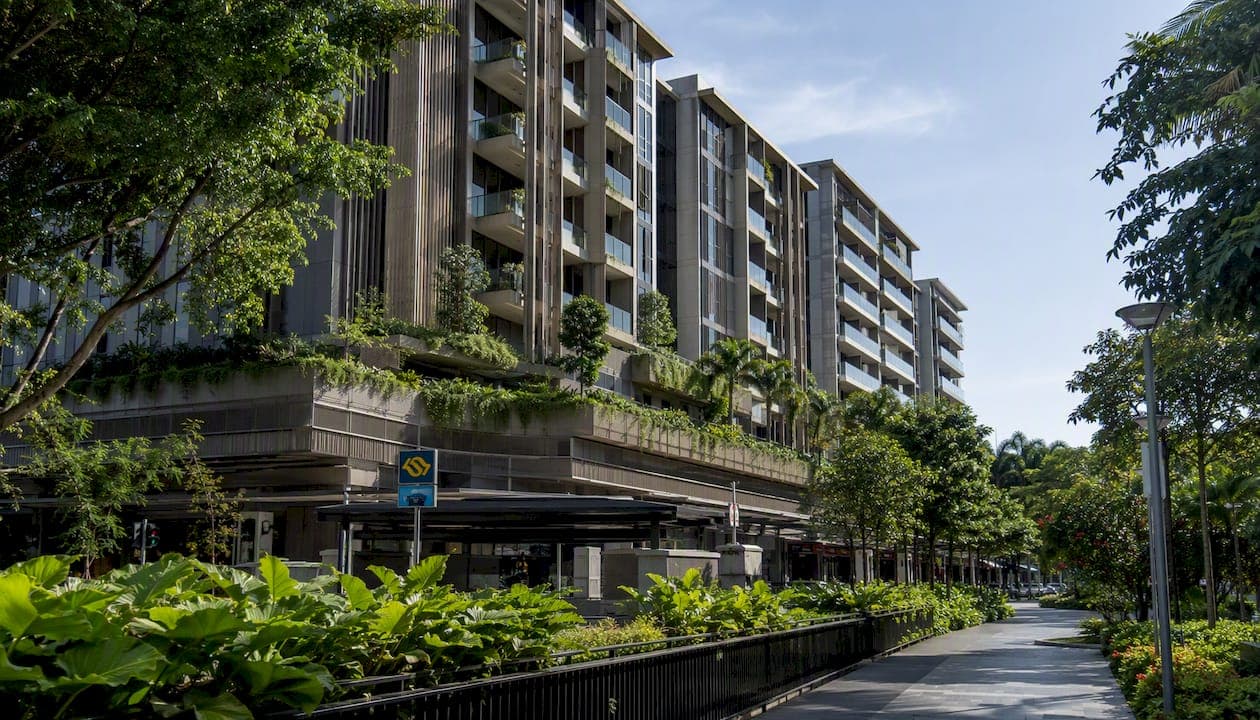
In Singapore, a north–south facing unit is generally the best orientation for thermal comfort and ventilation. Two reasons stand out: the sun's path across the equator means east and west walls take the harshest direct sun, while north–south walls largely avoid it; and Singapore's seasonal monsoon winds align well with north–south openings to enable cross-ventilation. The trade-off is real, though. Some north–south units receive softer, less direct natural light, and the actual comfort of any specific unit still depends on layout, floor level, and neighboring obstructions.
At a glance:
- North–south orientation avoids the brutal afternoon west sun that drives up A/C use
- Seasonal monsoon breezes tend to flow through north–south aligned openings more consistently
- Natural light is steadier but less intense than east or west facings
- Layout and neighboring blocks can override orientation benefits entirely
Key Takeaways
North–south facing is the most practical default orientation for Singapore homebuyers prioritizing thermal comfort and ventilation, though layout, floor level, and neighboring obstructions determine real outcomes for any specific unit.
| Point | Details |
|---|---|
| North–south is the cooler choice | East and west walls take the harshest direct sun; north–south walls largely avoid prolonged direct exposure. |
| Monsoon winds favor this alignment | Singapore's northeast and southwest monsoons both flow through north–south openings, supporting year-round cross-ventilation. |
| Light is softer, not absent | Expect steady, diffuse brightness rather than intense direct sun; a trade-off worth accepting for most buyers in Singapore's climate. |
| Layout overrides orientation | A unit labeled north–south can still have a west-facing kitchen or bedroom; always verify individual room exposures. |
| Hougang Central Residences | Request the stack orientation diagram and balcony depth specs at the showflat to apply this checklist to a real unit. |
Table of Contents
- How the sun moves in Singapore and what north–south facing means in practice
- Why monsoon winds make north–south alignment even more valuable
- Pros and cons of north–south facing homes in Singapore
- How north–south compares to east, west, and other facings
- A buyer's viewing checklist to evaluate orientation, sunlight, and ventilation
- How this guidance applies to Hougang Central Residences
- The case for trusting ventilation over sunlight
- See north–south comfort for yourself at Hougang Central Residences
- Sources
- FAQ
How the sun moves in Singapore and what north–south facing means in practice
Singapore sits roughly 1.3° north of the equator, which changes everything about how sunlight enters a home. The sun rises nearly due east, tracks high overhead at midday, and sets nearly due west. Because the sun's arc stays close to directly overhead, the east and west facades of any building receive low-angle, penetrating sunlight for hours every day. North and south walls, by contrast, get far less direct exposure.
Axial tilt produces small seasonal shifts in the sun's declination, so there are brief periods around the equinoxes when the sun passes almost directly overhead and around the solstices when it tilts slightly north or south. In practice, this means:
- Morning sun (east-facing walls): Direct, low-angle sunlight from roughly 7 AM to 11 AM
- Afternoon sun (west-facing walls): The most intense exposure, from roughly 1 PM to 6 PM, when heat accumulates and glare peaks
- North and south walls: Receive angled, indirect sun for most of the day; brief direct exposure occurs only during the solstice periods when the sun's declination shifts slightly
- Noon sun: High overhead, meaning flat roofs and horizontal shading elements bear most of the midday load rather than vertical walls
For a north–south facing condo in Singapore, the main living walls face the lower-heat directions. The practical result is a home that stays meaningfully cooler through the afternoon, when outdoor temperatures and solar radiation are at their highest.
Why monsoon winds make north–south alignment even more valuable
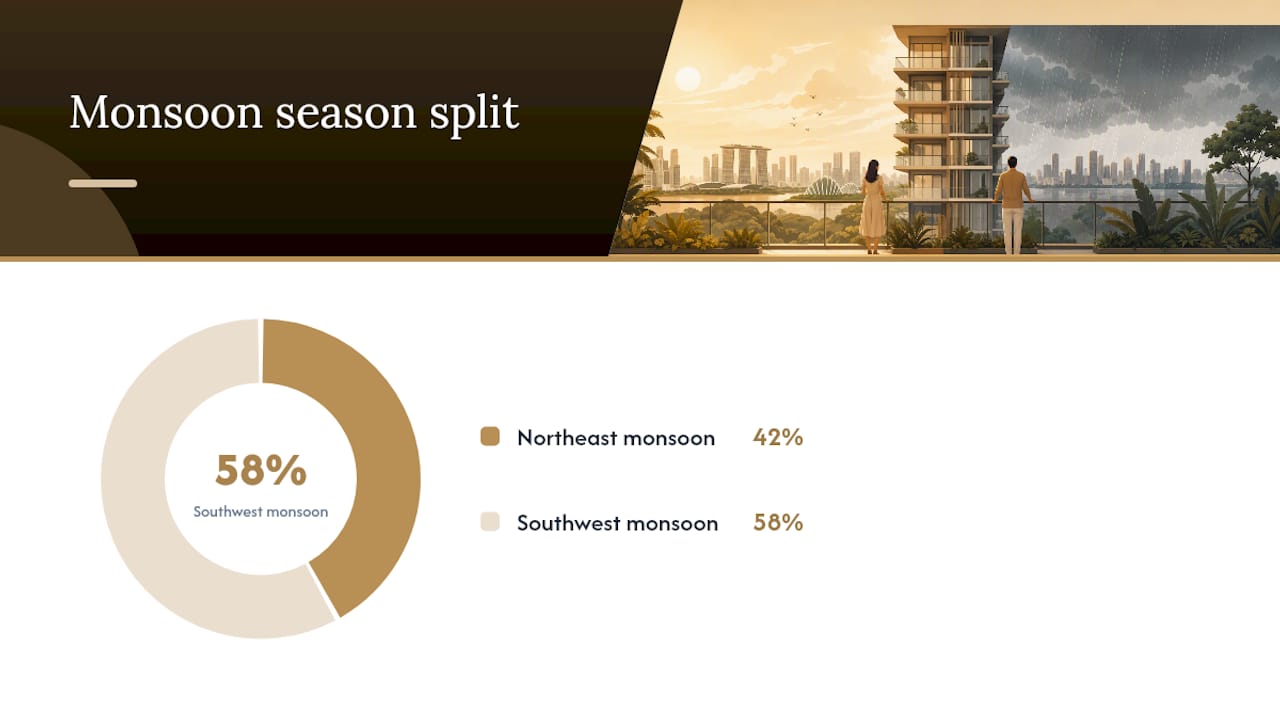
Singapore experiences two distinct monsoon seasons, and both matter for how well a unit ventilates. According to Singapore's official wind observations, prevailing winds shift between a northeast monsoon (roughly November through March) and a southwest monsoon (roughly April through October). Property guides consistently reference this seasonal shift when explaining why north–south stacks tend to get more consistent cross-ventilation across the year.
Cross-ventilation requires two things: openings on opposite sides of a unit, and a clear airflow path between them. A north–south oriented unit with windows or a balcony on both the north and south sides can capture breezes from either monsoon season without needing to rotate. An east–west unit may catch one monsoon well and the other poorly.
- Northeast monsoon (November–March): Winds blow from the northeast; north-facing openings capture these breezes directly
- Southwest monsoon (April–October): Winds shift to the south and southwest; south-facing openings benefit
- Inter-monsoon periods: Wind direction is variable, but north–south units still have two open faces to catch whatever breeze exists
- Neighboring blocks: A tall adjacent building directly to the north or south can block airflow entirely, regardless of orientation
Pro Tip: During a viewing, open the main balcony door and an opposing bedroom window simultaneously. If you feel airflow at standing height within 30 seconds, cross-ventilation is working. If not, ask the salesperson about the gap between your block and the next.
PropertyGuru's local property guidance notes that north–south facing units are among the most recommended in Singapore specifically because seasonal monsoon flow gives them more consistent breezes than east or west alternatives.
Pros and cons of north–south facing homes in Singapore
StackedHomes recommends north–south stacks as a general pick for Singapore buyers, while noting that layout and side-wall exposure still determine real outcomes. That caveat matters. Here is the honest picture:
Advantages:
- Lower afternoon heat: No prolonged direct west sun means the living room and bedrooms stay cooler from 1 PM onward, the period when most families are home
- Reduced A/C dependency: Cooler walls and better ventilation potential translate to shorter A/C runtimes, which adds up over years of electricity bills
- Steadier indoor brightness: Diffuse, indirect light is consistent through the day without the harsh glare spikes that east and west units experience
- Better ventilation alignment: Two open faces capture both monsoon seasons, as described above
- Easier shading: North and south windows are simpler to shade with horizontal overhangs than east or west windows, where low-angle sun requires vertical fins or blinds
Disadvantages:
- Softer natural light: Photographers, plant enthusiasts, and anyone who loves bright, direct morning sun may find north–south units feel dimmer than east-facing alternatives
- Side-wall exposure risk: If the building's true orientation is slightly off due north–south, or if the unit sits at a corner, side walls may catch more sun than expected
- Layout dependency: A unit where all bedrooms face north and the kitchen faces west still has a west-facing kitchen, regardless of how the building is labeled
- Floor level matters: Lower floors may be shaded by neighboring blocks, losing both light and breeze; upper floors may gain both
How north–south compares to east, west, and other facings
Choosing a facing direction is really about matching your daily routine to the sun's schedule. Passive-solar design guidance for near-equatorial climates consistently prioritizes shading and ventilation over maximizing solar gain, and flags east and west glazing as the hardest to control because of low-angle sun.
- North–south: Best overall for ventilation and avoiding harsh afternoon heat. Trade-off is softer direct light. Suits families, home workers who prioritize a cool environment, and investors focused on lower long-term running costs.
- East-facing: Morning sun floods the living room from 7 AM to 11 AM, which many buyers love. Afternoons are cooler than west-facing units. Good for early risers and those who want bright mornings without the afternoon heat penalty.
- West-facing: Strong, low-angle afternoon sun from 1 PM to 6 PM. Rooms heat up significantly, and shading is harder to achieve with standard blinds. Higher A/C use is almost unavoidable. Can work for buyers who are rarely home in the afternoon.
- Southeast: A moderate blend. Gets some morning sun and avoids the worst afternoon heat. Often a good compromise when a pure north–south stack is unavailable.
- Southwest: Catches some afternoon sun, though less brutally than due west. Warmer than north–south but more manageable than a full west-facing unit.
For most Singapore buyers prioritizing long-term comfort and lower utility costs, north–south is the default recommendation. East-facing is the runner-up for those who genuinely want morning light as a daily experience.
A buyer's viewing checklist to evaluate orientation, sunlight, and ventilation
Practical buyer guidance recommends using compass apps and site-analysis tools to verify a specific stack's exact exposure before committing. Here is a numbered checklist to use at any viewing:
- Open a compass app before entering the unit and confirm the true magnetic orientation of the main facade. Developer marketing materials sometimes describe orientation loosely.
- Note the time of your viewing. Morning viewings of west-facing units feel deceptively cool; afternoon viewings of east-facing units feel the same. Schedule a second visit at a different time if possible.
- Stand in the living room and check which walls receive direct sun. Feel the glass surface temperature on windows facing different directions.
- Test cross-ventilation by opening the balcony door and an opposing window simultaneously. Airflow at standing height within 30 seconds is a good sign.
- Check the balcony depth. A shallow balcony of less than 1.5 meters provides minimal shading for the living room glass behind it. Deeper balconies act as natural overhangs.
- Look north and south from the unit. Identify any taller neighboring blocks within 30–50 meters that could block breezes or cast shade that changes the light character.
- Ask the salesperson for the site orientation plan and stack diagram. This shows every unit's true facing, which walls are shared with neighboring stacks, and where the balconies sit relative to the sun path.
- Check proposed future developments nearby. A currently open view to the south could be blocked by a new building within five years.
Pro Tip: Record a short video on your phone while standing at the balcony door with the opposing window open. Play it back later to assess airflow and light quality more objectively than memory allows.
How this guidance applies to Hougang Central Residences
Hougang-central-residences sits directly above Hougang MRT station, integrating 835 residences across unit types from 1-bedroom plus study to 5-bedroom penthouses with a retail mall and bus interchange below. That integrated base matters for orientation analysis: the surrounding retail and transit podium creates a lower-density buffer at ground level, which can reduce the obstruction effect that dense low-rise neighbors create for lower-floor units.
The development's tropical landscaping and communal spaces are designed with Singapore's climate in mind, and the smart-home systems include intelligent climate controls that can compensate for orientation trade-offs in specific stacks. For buyers evaluating family unit sizes, the range from 1-bedroom to 5-bedroom means orientation preferences can be matched to unit type rather than accepted as a fixed constraint.
Buyers focused on investment returns should note that north–south stacks typically attract tenants who prioritize comfort and lower utility bills, which can support rental demand over the long term.
The case for trusting ventilation over sunlight
Most buyers walk into a showflat and respond to light. Bright, sun-filled rooms feel aspirational. The problem is that a west-facing unit at 10 AM on a showflat visit looks nothing like that same unit at 4 PM on a Tuesday in July when you are trying to work from home with the A/C running at full capacity.
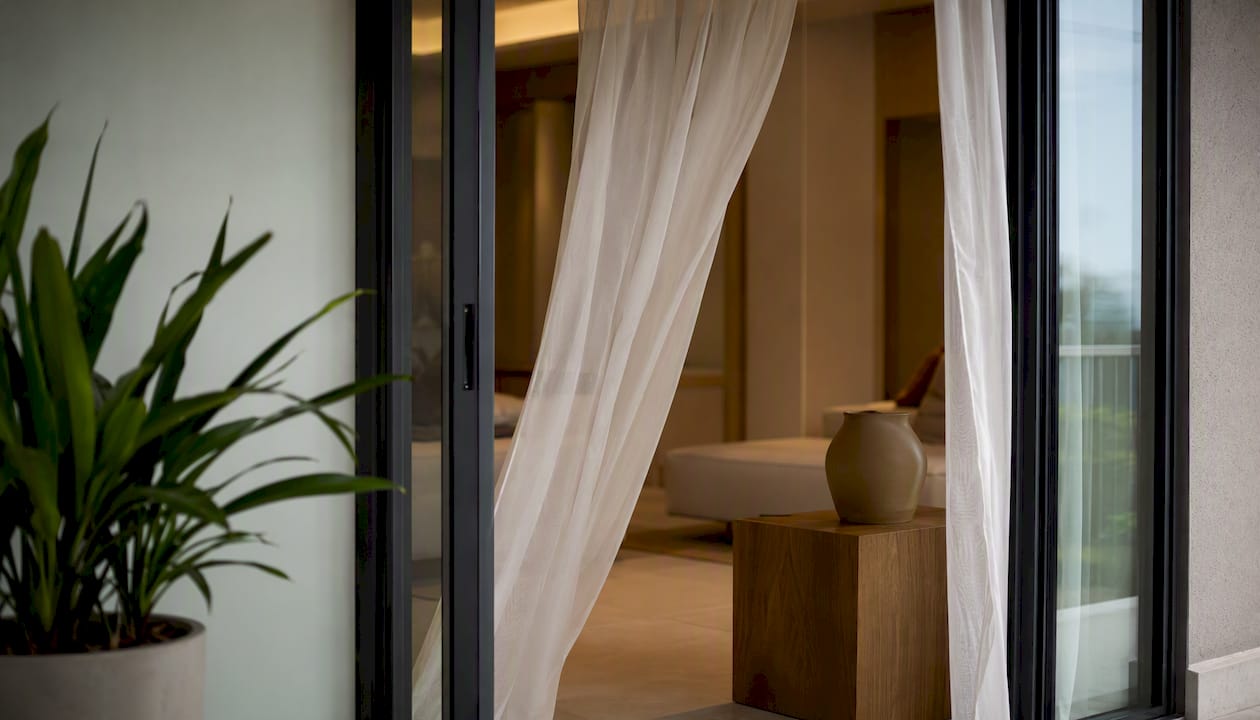
Ventilation is harder to see but easier to feel over time. In Singapore's climate, a unit that stays two or three degrees cooler through the afternoon without mechanical cooling is worth more in daily quality of life than one that photographs beautifully. The research consistently supports this: prioritizing thermal comfort over direct sunlight leads to better long-term satisfaction in tropical climates.
My practical rule: choose north–south facing as the default unless you have a specific, daily reason to want direct morning or afternoon sun. "It looks bright" is not a daily reason. "I grow plants that need four hours of direct sun" is.
See north–south comfort for yourself at Hougang Central Residences
The checklist in this article works best when you can actually stand in a unit and test it. Hougang-central-residences offers showflat visits where you can verify cross-ventilation, check balcony depth, and request the stack orientation diagram from the sales team directly.
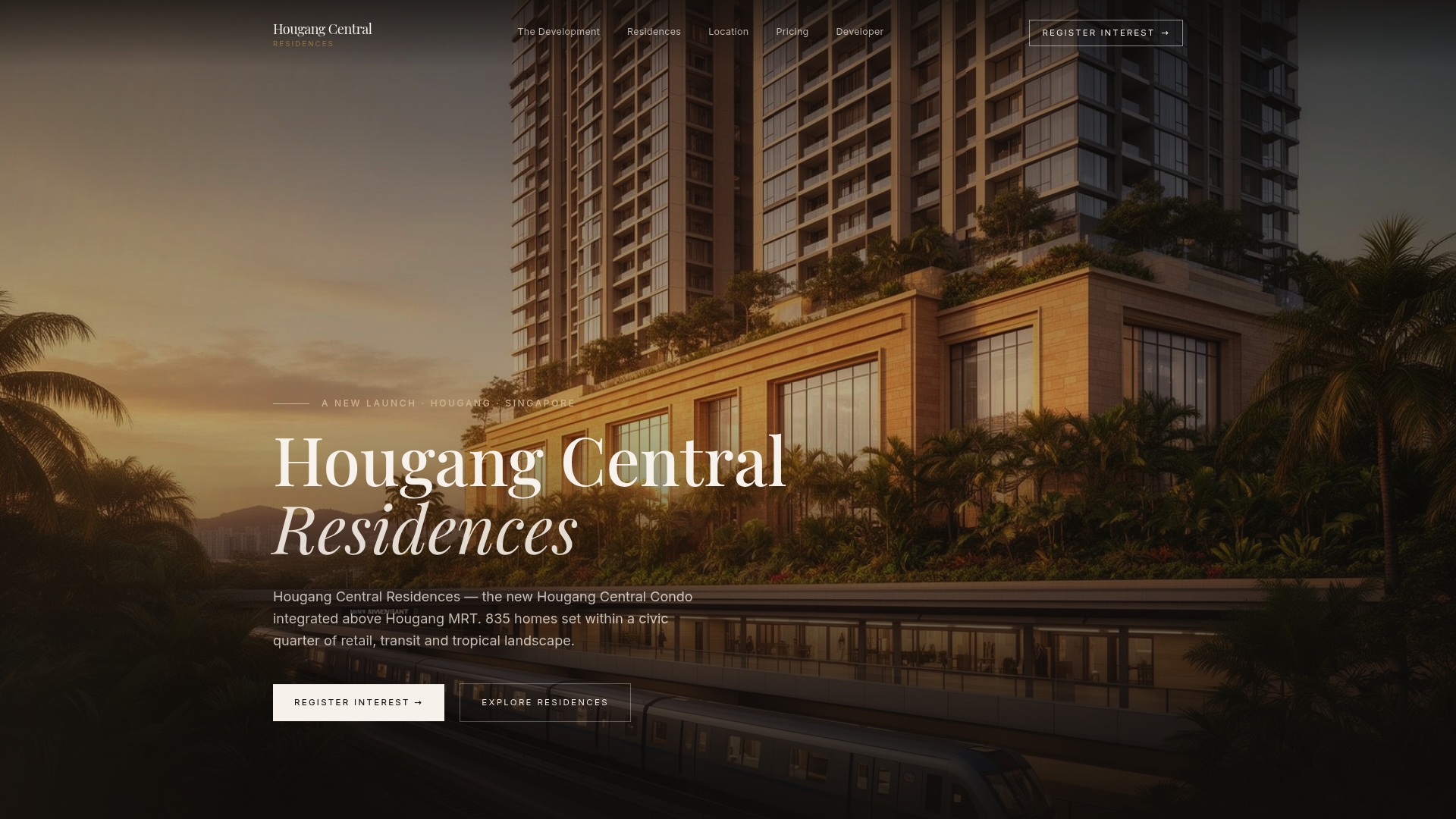
Book a showflat visit, download the e-brochure, or request the full stack and orientation plans at Hougang Central Residences. The sales team can walk you through which stacks face north–south, the balcony specifications for each unit type, and any planned developments that could affect future ventilation corridors. That conversation takes 20 minutes and answers the questions that no online article can answer for your specific unit.
Sources
- Sun Direction Singapore: What’s the Best House Facing Direction for Your Home? | PropertyGuru
- Discover the Ultimate Guide to Choosing the Perfect House Facing Direction for Your Ideal Condo Stack in Singapore | Tapscape
- Best House Facing Direction: Here is how you should choose which is the best condo stack | StackedHomes
- Best House Orientation for Sun and Comfort | Passive Solar Architecture
FAQ
What is the best facing direction for a house in Singapore?
North–south facing is generally the best choice for thermal comfort and ventilation in Singapore's tropical climate, as it avoids prolonged direct east and west sun. PropertyGuru and StackedHomes both recommend it as the default pick for most buyers.
Which direction does the sun travel in Singapore?
The sun rises nearly due east, tracks high overhead at midday, and sets nearly due west year-round, because Singapore sits just 1.3° north of the equator. Small seasonal shifts occur due to axial tilt, but the east-to-west arc remains the dominant pattern throughout the year.
Is a north-facing or south-facing unit better in Singapore?
Both north and south facings avoid the worst direct sun in Singapore, so either is preferable to east or west. The difference between them is minor; what matters more is which monsoon season the opening faces and whether the layout allows cross-ventilation through the unit.
What does feng shui say about the best house facing direction?
Feng shui traditionally favors south-facing homes for positive energy flow, and in Singapore that preference aligns practically with avoiding harsh afternoon west sun. That said, the actual comfort of a unit depends on orientation, layout, and ventilation far more than any single directional principle.
How do I verify a condo stack's true orientation before buying?
Use a compass app on your phone at the viewing to confirm the magnetic facing of the main facade, and ask the developer's sales team for the official site orientation plan and stack diagram. Tapscape's buyer guide specifically recommends this step because developer marketing materials sometimes describe orientation loosely.