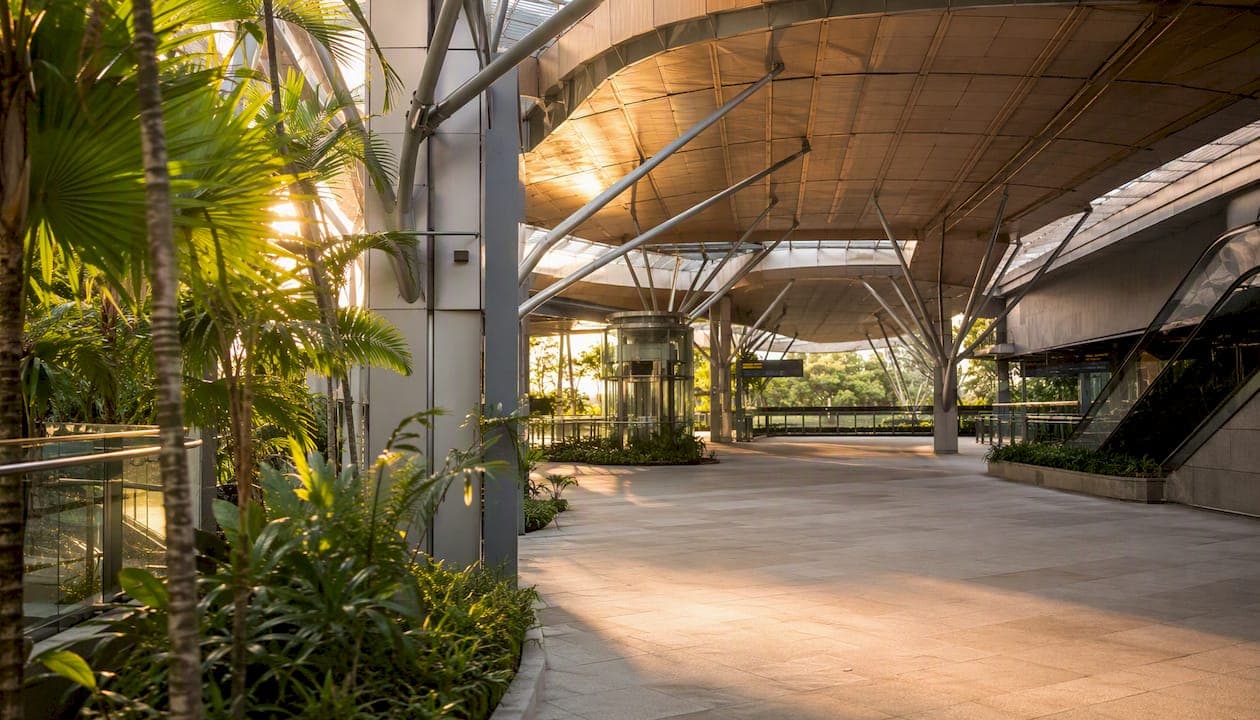
The planned interchange at Hougang Central Residences materially improves both daily commute convenience and long-term investment value. Here is the short version for buyers who need a quick read:
- The HDB tender conditions legally require sheltered, barrier-free connections between the bus interchange, Hougang MRT, and the development, with covered walkway widths of at least 3.6m (3.0m clear) and a continuous 6m at-grade public thoroughfare.
- The Cross Island Line Phase 1 targets a Hougang interchange opening around 2030, and construction is underway with a planned completion window around that year according to LTA and project progress reports.
- The Integrated Transport Hub (ITH) awarded in 2026 brings at least 150 bicycle parking lots, PUDO/taxi provisions, and a bus interchange directly into the development footprint, meeting HDB's tender-mandated requirements for sheltered, barrier-free, and direct access between all transport nodes.
One caveat: construction disruption is real through the late 2020s. Buyers planning to move in before 2029 should factor in temporary access changes and noise from ongoing CRL and ITH works.
Key Takeaways
Proximity to a two-line interchange with a contractually mandated sheltered connection is among the strongest transport-linked value signals a Singapore residential buyer can verify before purchase.
| Point | Details |
|---|---|
| Interchange opens around 2030 | CRL Phase 1 targets Hougang as an interchange station, with LTA planning completion around 2030 and tunneling substantially complete by late 2025. |
| 10–20% MRT proximity premium | Properties within ~400m of an MRT station typically command a 10–20% premium, higher for interchange stations. |
| Verify WCP and TIA before signing | Request the Walking and Cycling Plan and Transport Impact Assessment to confirm sheltered access is contractually locked in. |
| Construction disruption through late 2020s | Buyers moving in before 2029 should expect temporary access changes and noise from CRL and ITH works. |
| Hougang-central-residences | Direct MRT access above Hougang station, with ITH integration and CRL interchange access targeted for the early 2030s according to project and LTA targets. |
Table of Contents
- What physical connections are planned at Hougang Central?
- When will the CRL interchange and ITH actually open?
- How does the interchange change your actual commute?
- How does interchange status affect resale and rental value?
- What should you verify before signing anything?
- How these estimates were derived
- An honest read on what the interchange actually means
- Hougang-central-residences: direct access, built into the building
- Sources
- FAQ
What physical connections are planned at Hougang Central?
Evaluating MRT interchange connectivity starts with knowing exactly what will be built, not just what is promised in a brochure. At Hougang Central, the connections are unusually well-documented because they are written into the HDB tender.
The development sits directly above Hougang MRT station on the North East Line (NEL), which currently handles roughly 28,153 passenger trips per day as of June 2024. That station will become a two-line interchange once the Cross Island Line opens, giving residents direct access to both the NEL and CRL without stepping outside.
The ITH awarded to a CapitaLand-led consortium adds a substantial gross floor area for the bus interchange, numerous bicycle parking lots, multiple vehicular access points, and dedicated PUDO/taxi drop-off areas. All pedestrian connections between the bus interchange, MRT concourse, and the residential tower must be sheltered and barrier-free per HDB conditions.
Key on-the-ground features buyers should expect:
- Direct underground MRT access from the residential lobby to the NEL concourse, no outdoor crossing required.
- Sheltered bus interchange on the same site, with bus priority measures built into the road design.
- Bicycle parking (150+ lots) and PUDO zones for ride-hailing and taxis.
- Lifts and escalators at all transport node connections, subject to LTA approval conditions.
- Town plaza at grade, with a continuous 6m public thoroughfare connecting the street to the transport nodes.
Pro Tip: When visiting the showflat, ask to see the approved site plan showing the exact pedestrian route from each residential block entrance to the MRT concourse. A sheltered 200m route beats an exposed 80m route on a rainy morning.
For buyers assessing everyday lifestyle tradeoffs, the integrated retail and transport setup at Hougang Central is worth comparing against standalone condos nearby.
When will the CRL interchange and ITH actually open?
The timeline has three moving parts, and they do not all land at the same time.
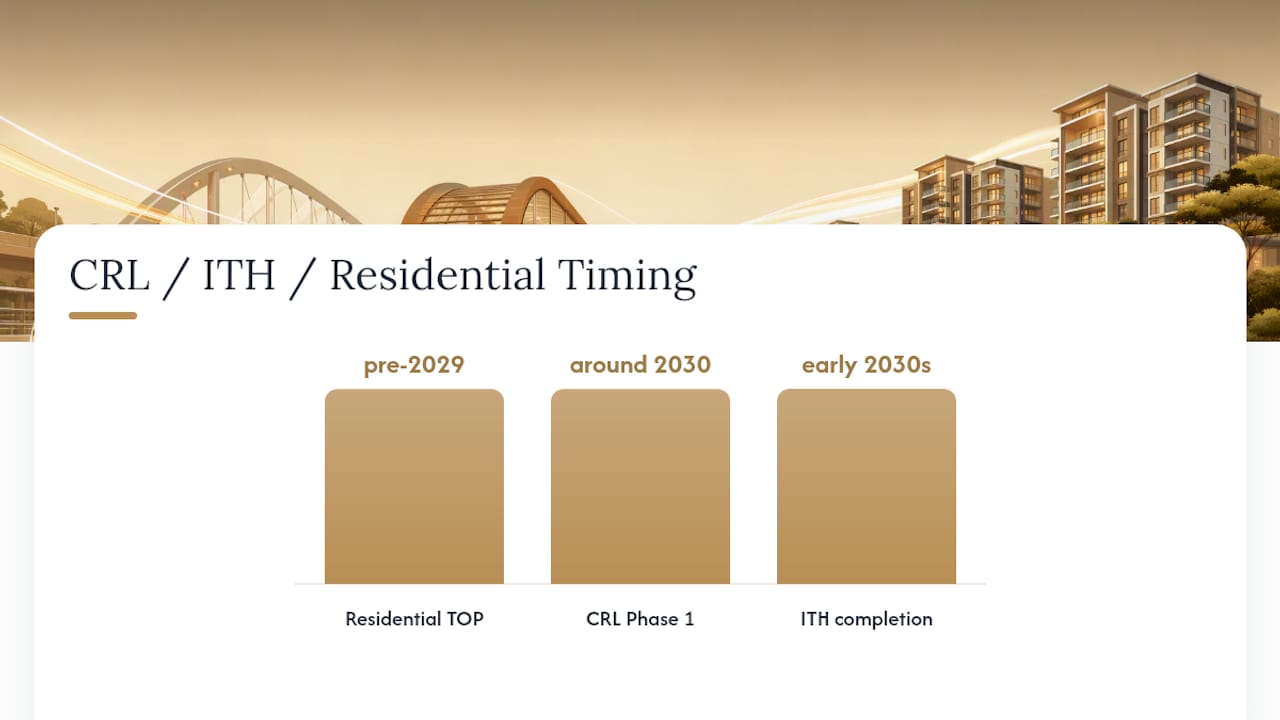
- CRL Phase 1 target opening: around 2030. LTA lists Hougang as a Phase 1 interchange station with a completion window targeting 2030. Tunneling works for the CRL contracts serving Hougang have progressed well, with key TBM drives completed and excavation at active stages as of April 2026. Sub-surface work for several CRL sections was substantially complete by late 2025, which supports the 2030 delivery pathway.
- ITH completion: targeted for the early 2030s. The ITH site was awarded in 2026. Construction of the integrated bus interchange and mixed-use podium will overlap with the final CRL fit-out period.
- Residential completion: Buyers should confirm the developer's target TOP (Temporary Occupation Permit) date directly, as it may precede full ITH and CRL delivery.
Construction impacts to expect during the build period:
- Temporary closures or diversions of pedestrian routes around the station box and ITH construction site.
- Altered bus stop locations as the existing Hougang Central Bus Interchange is redeveloped.
- Dust and noise from slab works, excavation, and surface reinstatement around the station.
- Possible partial road closures near the two signalized access points during civil works.
Buyer timing advice: Long-hold investors and buyers who can wait until 2030 or later will capture the full commuter benefit. Buyers moving in before 2029 should budget for a transitional period where the bus interchange is still under construction and some sheltered links may not yet be complete.
How does the interchange change your actual commute?
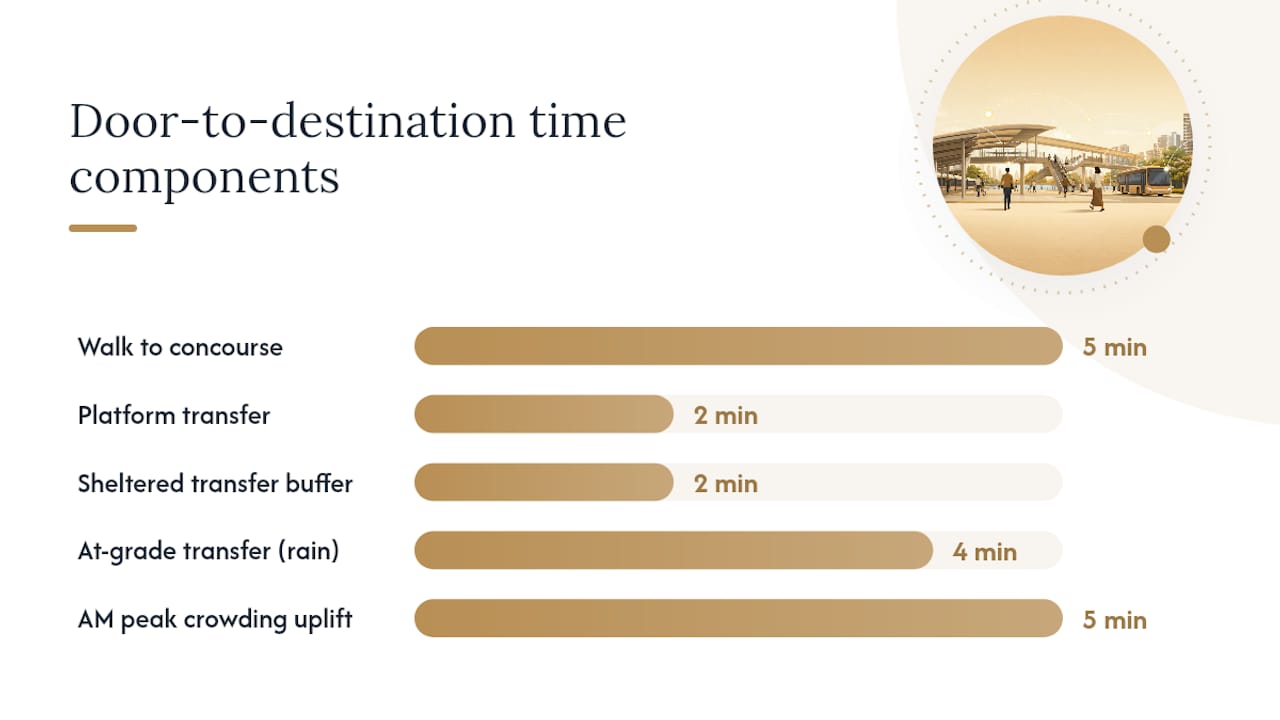
Three worked examples show the practical difference. Assumptions: 5-minute walk from unit to MRT concourse (sheltered, direct), 2-minute platform transfer for same-station interchange, standard NEL/CRL headways, no peak crowding uplift unless noted.
| Destination | Route today (NEL only) | Route after CRL opens | Time saving |
|---|---|---|---|
| Raffles Place (CBD) | NEL direct | NEL direct (no change; NEL already serves CBD) | Minimal, but CRL adds route redundancy |
| Ang Mo Kio (NSL connection) | NEL to Serangoon, transfer to CCL or bus | CRL direct to Ang Mo Kio, ~20 min (estimated) | ~20 min saved |
| Pasir Ris / Tampines (East) | NEL to Dhoby Ghaut, transfer to EWL | CRL direct (estimated) | significant time saved |
Assumptions: walking speed 1.2 m/s, sheltered transfer buffer 2 min, peak crowding uplift +5 min for CBD routes during AM peak.
To estimate your own door-to-destination time:
- Measure the walking route from your specific unit to the nearest MRT exit using OneMap or Google Maps walking mode.
- Add a 2-minute sheltered transfer buffer (or 4 minutes for an at-grade transfer in rain).
- Look up in-train travel time on the LTA Journey Planner for your destination.
- Add 5 minutes for AM peak crowding on the NEL between Hougang and Dhoby Ghaut.
For buyers prioritizing access to business hubs, the guide to shortlisting condos near business districts walks through this door-to-destination method in more detail.
How does interchange status affect resale and rental value?
Property analysis for Singapore shows that being within roughly 400m of an MRT station typically adds around 10–20% to property values versus comparable units further away. Interchange stations and lines with direct CBD access command premiums at the higher end of that range.
Interchange status tends to create two appreciation waves: one at announcement and a second after the line opens and the precinct matures. Buyers who enter before the CRL opens are positioned for the second wave.
The ITH's multi-modal setup (bus interchange, bike parking, PUDO) expands the tenant pool beyond NEL commuters to anyone who uses the CRL, feeder buses, or ride-hailing. That breadth improves liquidity. LTA's policy target of having 8 in 10 households within a 10-minute walk of an MRT by 2030 reinforces why interchange stations attract disproportionate demand.
Risk caveats worth tracking:
- Construction delay risk: CRL Phase 1 targets 2030, but large infrastructure projects can slip. A 12–18 month delay would defer the second appreciation wave.
- Peak-hour crowding: At 28,153 daily trips today, Hougang station is moderately busy. Adding CRL volumes will increase throughput; LTA's TIA requirement means mitigation plans must be submitted, but crowding during the ramp-up period is realistic.
- Retail mix uncertainty: The Town Plaza's tenant mix is not yet confirmed. A strong anchor tenant improves daily convenience; a weak one reduces the lifestyle premium.
- Pricing already reflects some premium: New launch pricing at integrated developments often incorporates anticipated connectivity gains. Buyers should compare per-square-foot prices against non-integrated nearby projects to gauge how much premium is already baked in.
The investment case for mixed-use integrated developments covers how these dynamics typically play out over a 5–10 year hold.
What should you verify before signing anything?
On-site checklist:
- Walk the actual route from the unit's block entrance to the MRT concourse. Time it. Check whether it is fully sheltered.
- Confirm lift and escalator placements at every level change between the residential lobby and the transport nodes.
- Locate the PUDO/taxi drop-off zone and check whether it is accessible without crossing a live road.
- Find the bicycle parking entrance and test whether it is accessible from the residential lobby without going outdoors.
- Check wayfinding signage. Poor signage in a large integrated development adds real time to every trip.
Questions to ask the developer or agent:
- "Can I see the final approved Walking and Cycling Plan (WCP) submitted to LTA?"
- "What is the TIA summary, and what bus-priority or signal changes are planned?"
- "Which specific MRT exit connects to the residential lobby, and is that connection sheltered from day one of TOP?"
- "What is the phased delivery schedule for the ITH and the CRL link?"
- "Who is responsible for maintaining the shared pedestrian passageways after TOP?"
Red flags: a developer who cannot produce the WCP or TIA, inconsistent site plans between the showflat model and the HDB control plan, or any claim that critical sheltered access depends on external works outside the project boundary with no confirmed timeline.
Pro Tip: Request the HDB Additional Conditions of Tender document directly. It is a public document and specifies exactly what the developer is contractually required to deliver. If the agent has not seen it, that itself is a signal.
For a detailed lift and escalator accessibility checklist, the guide to evaluating lift lobby access covers what to measure and what to ask.
How these estimates were derived
Commute time assumptions:
- Walking speed: 1.2 m/s (standard pedestrian planning figure).
- Sheltered transfer buffer: 2 minutes; at-grade transfer: 4 minutes.
- Peak crowding uplift: 5 minutes added for AM peak on the NEL toward the CBD.
- CRL in-train times: estimated from published station spacing and LTA's stated design speed for the CRL.
Primary sources used:
- LTA Cross Island Line page for Phase 1 station list and target completion.
- Land Transport Guru ITH coverage for control-plan layout and mixed-use integration details.
- Property-value analysis from Winfred Quek for the 10–20% proximity premium range.
Limitations: CRL in-train times are estimates until LTA publishes an official timetable. Buyers should verify all timelines with the developer and consult the official LTA Journey Planner once the CRL opens. The TIA and WCP are the authoritative documents for access configurations; request them before purchase.
An honest read on what the interchange actually means
The connectivity case for Hougang Central Residences is stronger than most new launches because the integration is contractual, not aspirational. HDB's tender conditions mean the developer cannot deliver the project without the sheltered links, the barrier-free connections, and the ITH features. That is a meaningful distinction from a project that merely sits "near" an MRT station.
Where buyers should stay clear-eyed: the full benefit does not arrive at TOP. The CRL interchange targeting 2030 and the ITH completing in the early 2030s means the first two to three years of residency will involve construction noise and incomplete multi-modal access. For long-hold investors and renters who prioritize direct interchange access, the timing works well. For buyers who need the full commuter experience from day one, the honest answer is that it will take a few years to get there.
The interchange status is the differentiator. A single-line station adds convenience; a two-line interchange with an integrated bus hub adds genuine route redundancy and a tenant pool that spans the entire CRL corridor.
Hougang-central-residences: direct access, built into the building
Hougang-central-residences sits directly above Hougang MRT, with 835 units ranging from 1-bedroom-plus-study to 5-bedroom penthouses. The sheltered, barrier-free connection to the NEL concourse is not a future promise — it is a tender requirement. When the CRL interchange opens around 2030, residents gain a second line without leaving the building.
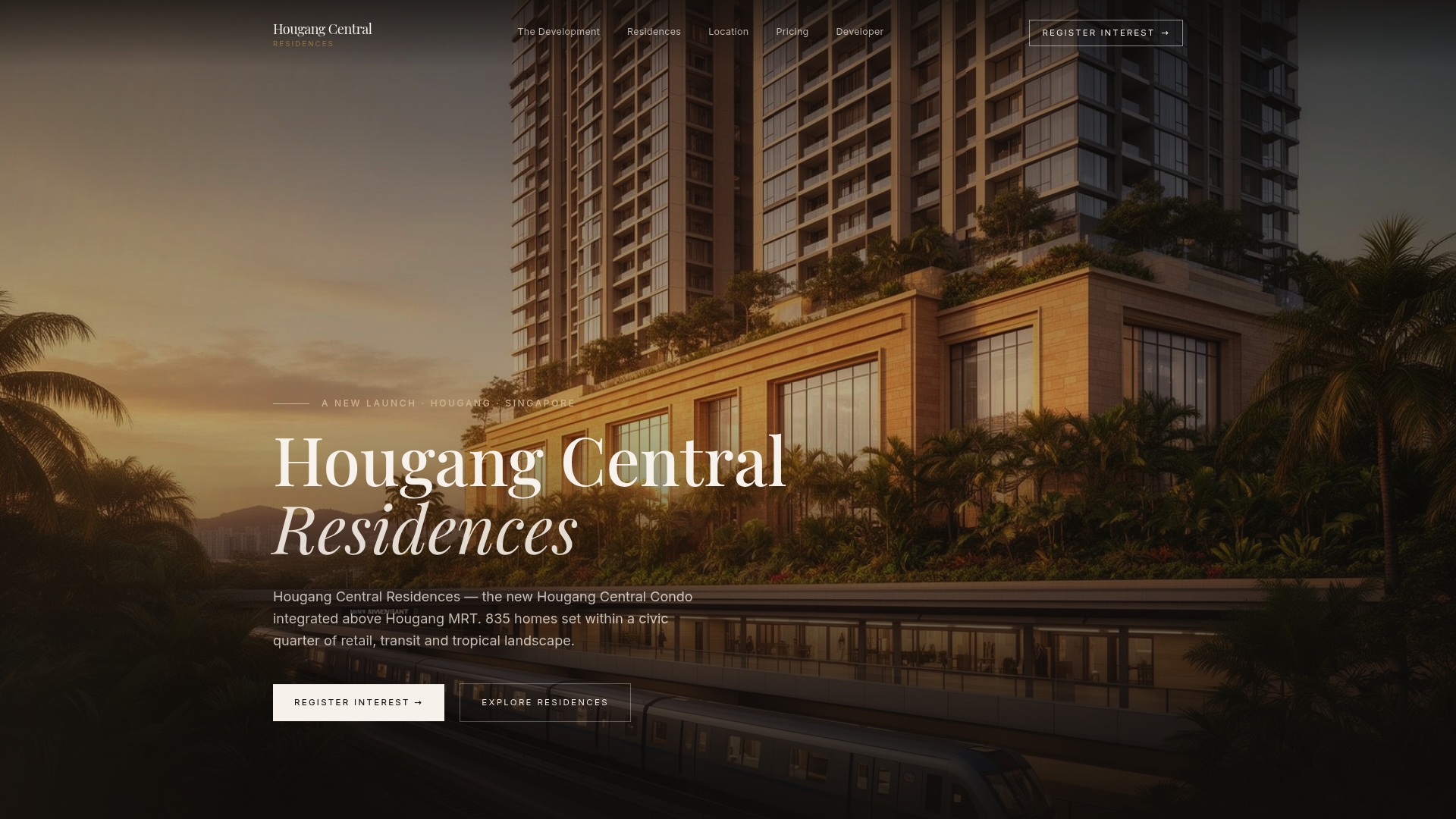
The integrated retail mall, ITH bus interchange, smart-home systems, and tropical communal spaces are all part of the same footprint. Before you visit, download the e-brochure and run through the buyer checklist above. Then book a showflat appointment to walk the actual pedestrian route from the lobby to the MRT concourse yourself — that single walk will tell you more than any floor plan.
Sources
- Cross Island Line (LTA)
- How Far from MRT Affects Singapore Property Prices: The Data | Winfred Quek
- Hougang MRT station — Wikipedia
This article is general information, not a substitute for advice from a qualified financial advisor. Consult a qualified financial professional about your own circumstances before acting on anything here.
FAQ
Does the CRL interchange at Hougang open in 2030?
LTA targets CRL Phase 1, which includes Hougang as an interchange station, for completion around 2030. Tunneling works were substantially complete by late 2025, supporting that timeline.
What is the 10–20% MRT proximity premium based on?
Property analysis for Singapore shows units within roughly 400m of an MRT station typically command a 10–20% premium over comparable units further away, with interchange stations and CBD-direct lines at the higher end of that range.
What documents should I request before buying at Hougang Central?
Ask the developer for the approved Walking and Cycling Plan (WCP) and the Transport Impact Assessment (TIA) summary. Both are required by LTA under the HDB tender conditions and confirm exactly what sheltered access the developer must deliver.
Will peak-hour crowding be a problem after the CRL opens?
Hougang station currently handles roughly 28,153 trips per day. Adding CRL volumes will increase throughput, and some crowding during the ramp-up period is realistic. The TIA requirement means LTA-approved mitigation plans must be in place before opening.
Is Hougang-central-residences the only development with direct interchange access here?
Hougang-central-residences sits directly above Hougang MRT and is the integrated mixed-use development tied to the ITH and future CRL interchange by HDB tender conditions, making it the primary residential option with contractually mandated sheltered interchange access at this location.