A dual key unit in Singapore suits owner-occupiers who want multi-generation privacy or investors who plan to rent out a self-contained sub-unit while living in the main space. It does not suit buyers chasing quick resale or maximum liquidity, because the pool of interested resale buyers stays narrower than for standard layouts. Three facts back that verdict up front.
- A dual key unit is one strata title with two separate living spaces, so it counts as a single property for Additional Buyer's Stamp Duty purposes.
- Developers commonly price these units at a premium over a comparable single-key layout, according to independent cost analysis.
- Rental income from the sub-unit typically delivers a modest yield uplift once you account for that premium.
Quick math: if a dual-key layout costs 12% more per square foot than an equivalent single-key unit, and the sub-unit rents for enough to cover roughly half that gap, the unit still needs years of steady occupancy before the premium pays for itself.
Key Takeaways
A dual key unit works best as an owner-occupier solution for multi-generation families, with rental income as a bonus rather than the primary reason to buy.
| Point | Details |
|---|---|
| Check the single-title rule | A dual-key unit counts as one property for ABSD, LTV, and TDSR, confirmed against the IRAS ABSD fact sheet. |
| Budget for the PSF premium | Developers typically price dual-key units above comparable single-key layouts, and rental income doesn't always close that gap quickly. |
| Prioritize layout quality | A cramped or windowless sub-unit hurts both livability and resale, so walk the unit before trusting the brochure. |
| Stress-test the rental case | Model vacancy, bank income haircuts, and a rent drop scenario before assuming the sub-unit will offset your mortgage. |
| Consider transit-linked projects | Hougang Central Residences offers a unit mix from one to five bedrooms directly above Hougang MRT, a location factor that supports steady tenant demand for any sub-unit rental plan. |
This article is general information, not a substitute for advice from a qualified financial advisor. Consult a qualified financial professional about your own circumstances before acting on anything here.
Table of Contents
- What is a dual key unit in Singapore?
- Dual Key Pros and Cons: Who Should Buy One?
- How Much Does a Dual Key Unit Cost in Singapore?
- What Tax Rules Apply to Dual Key Units in Singapore?
- Where Can You Find Dual Key Units for Sale?
- Is a dual key condo a good investment?
- How Do You Finance a Dual Key Unit Purchase?
- The Verdict on Dual Key Living for Owner-Occupiers
- A Dual Key Option Above Hougang MRT
- Sources
- FAQ
What Is a Dual Key Unit in Singapore?
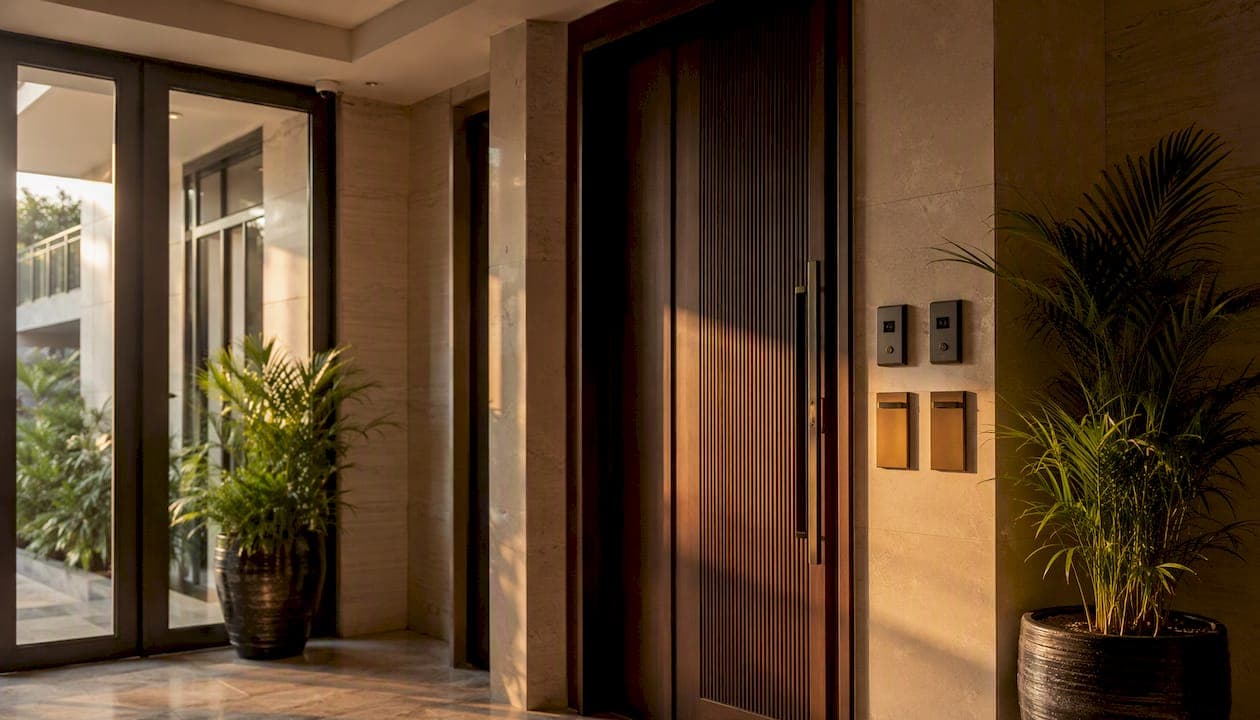
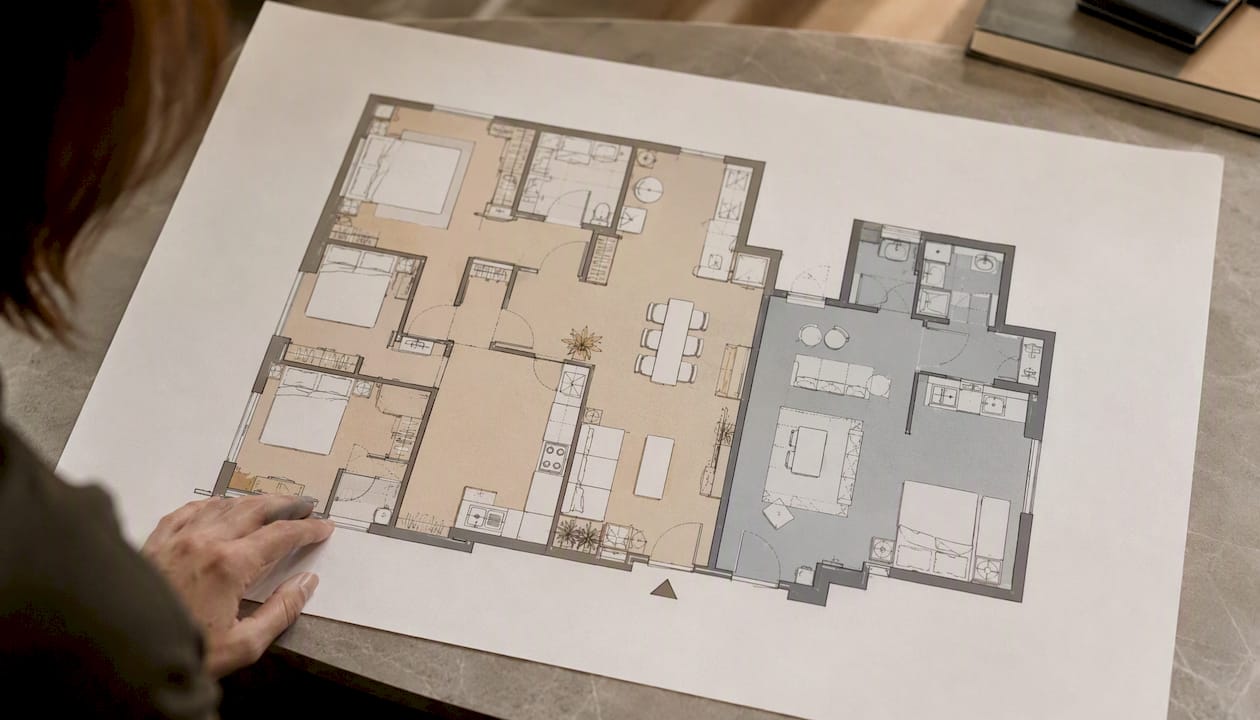
A dual key unit is a single strata-titled private residential property built with two self-contained living spaces under one shared entrance. You get a larger main unit, typically a two or three bedroom layout, plus a smaller studio-style sub-unit with its own bedroom, bathroom, and often a kitchenette. Both spaces share a private foyer and a single address, but they function independently, with separate locks and no interior connecting door in most projects.
The legal structure matters more than the floor plan. Because it's one title, you cannot sell the main unit and sub-unit separately later. Common configurations run "2+1" or "3+1," and combined sizes usually fall between roughly 1,100 and 1,600 square feet, according to market data on typical dual-key configurations. That's noticeably larger than a comparable single-key three-bedroom, since you're effectively paying for two kitchens, two bathroom clusters, and a duplicated entry sequence.
This is a private condominium product, not an HDB one. HDB flats operate under an entirely different ownership and subletting framework, and dual-key configurations are not a standard HDB offering, so don't assume the rules cross over. Projects like Piccadilly Grand, Parc Clematis, and Enchante have featured dual-key layouts in recent years, according to local property research, giving buyers real precedent to study before shortlisting a new launch.
[Layout diagram: main unit and sub-unit connected by a shared foyer, each with independent bedroom, bathroom, and kitchen access, illustrating the single-entrance dual-key configuration.]
Dual Key Pros and Cons: Who Should Buy One?
The financial logic favors specific buyer types, and it works against others. Here's the honest breakdown.
The advantages:
- One ABSD count, two living spaces. Because the unit is a single title, you avoid the second-property ABSD hit you'd face buying two separate units for extended family.
- Real privacy, not a shared bathroom. Renting out a room to a stranger and renting out a locked sub-unit are completely different living experiences for the owner-occupier.
- Multi-generation flexibility. Parents or adult children get independent space without needing a second address.
- Potential financing edge. Rental income from the sub-unit can sometimes support your loan servicing calculations, though banks discount that income (more on this below).
The trade-offs:
- Narrower resale pool. Not every buyer wants or understands the dual-key format, which shrinks your eventual list of interested purchasers.
- You pay a premium going in. Developers price the extra plumbing, extra kitchen, and extra door into the PSF, and that premium doesn't always come back at resale.
- No split-sale option. You cannot sell the sub-unit separately if your circumstances change. One title, one buyer, one transaction.
- You become a landlord inside your own home. Tenant vetting, maintenance calls, and vacancy stretches land on your desk, not a third party's.
Dual key suits owner-occupiers housing parents or adult children, and it suits investors who genuinely plan to self-manage a rental for years, not flip in eighteen months. It's a weaker fit for buyers whose primary goal is capital appreciation speed or who want maximum resale optionality.
Pro Tip: If resale liquidity matters more to you than rental income, favor sub-unit layouts with a simple kitchenette rather than a full kitchen. Full-kitchen sub-units cost more to build and rarely command proportionally higher rent, which narrows your margin without widening your buyer pool at resale.
How Much Does a Dual Key Unit Cost in Singapore?
Developers generally build the dual-key premium into launch pricing rather than treating it as an optional upgrade. Independent cost analysis has found the mortgage cost of that premium can outstrip typical sub-unit rental income unless occupancy stays consistently high, according to comparative math on dual-key economics. That's the single most important number to sanity-check before you commit.
When comparing listings, run this benchmark: take the total PSF of the dual-key unit and compare it against a same-sized single-key unit in the same project or a comparable nearby development. Any gap is your premium, and you should be able to justify it with the rental income or lifestyle value you're getting in return.
Costs to budget beyond the headline price:
- Base purchase price plus Buyer's Stamp Duty, calculated on the full purchase price as one title.
- Legal and conveyancing fees, typically a fixed fee or a modest percentage of the purchase price.
- Bank valuation fees, usually a few hundred dollars.
- Agent commission, if you're buying resale through a buyer's agent.
- Monthly maintenance and estate fees, which run higher for dual-key units because of the extra plumbing and utility points.
- Fitting-out costs if the sub-unit's second kitchen or bathroom needs upgrading before you rent it out.
At viewings, check three things that reveal a hidden premium: whether the floor plate is unusually deep for the stated square footage, whether the sub-unit has a full kitchenette or just a kitchenette shell, and whether the unit's orientation matches what a rental tenant would actually want.
What Tax Rules Apply to Dual Key Units in Singapore?
A dual key unit is treated as one residential property for stamp duty, loan-to-value, and total debt servicing ratio purposes, because it carries a single strata title regardless of how many separate living spaces sit inside it.
That single sentence explains most of the tax and financing logic you need to understand before signing anything. Because IRAS and lenders look at the title, not the floor plan, a dual-key purchase doesn't trigger a second ABSD charge the way buying two separate units would, according to guidance on dual-key financing treatment. The official IRAS ABSD fact sheet remains the authoritative source for current rates and how they apply based on your citizenship status and existing property count.
Before signing an Option to Purchase, confirm the following with your conveyancing lawyer:
- How ABSD applies given your specific existing property count and citizenship or residency status.
- Whether any developer-specific title conditions affect how the unit can be rented or subdivided.
- Whether both the main unit and sub-unit can legally be tenanted separately, or only as a whole.
- Your income tax reporting obligations with IRAS once rental income starts flowing in.
URA rules prohibit renting out private residential property, including dual-key sub-units, for stays shorter than three months, so short-term or Airbnb-style rental isn't an option here. Bring your existing property portfolio details, your ABSD scenario questions, and your intended rental plan to your first meeting with a lawyer or mortgage broker, since all three affect how the numbers work out.
Where Can You Find Dual Key Units for Sale?
New launches and resale listings both carry dual-key inventory, but you'll search each channel differently.
- Check developer project pages directly for new launches, since dual-key availability and unit mix get listed in the official price list and floor plan brochure, not always in marketing headlines.
- Use dedicated resale filters on major property portals, which maintain active dual-key search categories you can sort by district, price, and size.
- Cross-reference the project's original launch brochure if you're looking at resale, since it tells you the original unit mix and helps confirm whether the layout you're viewing was purpose-built as dual-key or converted informally.
At the actual viewing, work through this checklist:
- Stand at the shared entrance and listen. Sound privacy between the two units matters more than any brochure photo will tell you.
- Check the sub-unit's natural light and ventilation. Some dual-key sub-units get carved from what was originally a windowless storage or utility zone.
- Confirm separate utility metering exists or can be installed, since this affects how cleanly you can bill a tenant.
- Review the estate's by-laws for any restrictions on subletting or renovation that might limit your sub-unit rental plans.
Ask the agent directly about past tenant demand for the sub-unit, average vacancy periods between tenants, any restrictions on renovating or adding a partition, and recent resale PSF comparables for similar dual-key units in the same project.
Pro Tip: When you get a floorplate PDF, spend 90 seconds checking three things: the sub-unit's total area versus the main unit (a lopsided split under 25% of total floor area often means a cramped, hard-to-rent sub-unit), whether the sub-unit window faces a usable view or a service yard, and whether the shared foyer is wide enough to feel private rather than like a shared hallway. A strong layout balances both spaces; a weak one sacrifices the sub-unit entirely to inflate the main unit's headline size.
Is a Dual Key Condo a Good Investment?
Treat the investment case as a stress test, not a guarantee. A worked example makes the math concrete.

Say you buy a dual-key unit where the sub-unit could rent for a reasonable monthly amount in the current market. Subtract typical monthly service charges, an allowance for occasional vacancy, and agent fees on lease renewal, and you're left with a net contribution toward your mortgage, not full coverage of it. Market guides describe the resulting rental yield uplift over an equivalent single-key unit as modest, often in a narrow band, and heavily dependent on the specific project's tenant demand, according to 2026 market primer data.
| Input | Assumption |
|---|---|
| PSF premium vs single-key | Assume a moderate launch premium |
| Sub-unit monthly rent | Market rate for comparable studio in the area |
| Monthly service charge | Estate maintenance plus sub-unit utilities |
| Vacancy allowance | Build in at least one month per year unoccupied |
| Net yield uplift vs single-key | Typically modest, not dramatic |
Landlord reality checks in before the first tenant moves in. You'll handle tenant screening, respond to maintenance issues inside your own home, and absorb any vacancy gap financially. Banks also apply a haircut to projected rental income when assessing your total debt servicing ratio, so don't assume 100% of the sub-unit's rent will count toward loan eligibility.
Pro Tip: Stress-test your investment case three ways: model the ABSD savings against the PSF premium you're paying, model your net yield at full occupancy versus a two-month vacancy scenario, and check whether the numbers still work if rent drops 10% from today's asking rate. If the deal only works under the best-case scenario, it's not a deal, it's a hope.
How Do You Finance a Dual Key Unit Purchase?
Loan-to-value limits and downpayment rules for a dual-key unit follow standard private residential condo downpayment rules in Singapore, since lenders assess the single strata title, not the internal layout. Your existing property count and outstanding loans still drive your maximum LTV the same way they would for any other private condo purchase.
Banks will typically apply a discount to any projected rental income from the sub-unit before counting it toward your total debt servicing ratio, which means you shouldn't bank on the full rental figure boosting your loan quantum. Get a mortgage broker's read on this early, before you fall in love with a specific unit.
A typical purchase timeline runs like this:
- Booking and Option to Purchase — you pay the option fee and lock in the unit for a set exercise period.
- Exercise the option and engage a lawyer — conveyancing begins, and your loan application should already be moving in parallel.
- Loan approval — the bank issues its formal offer, factoring in any rental income haircut if you're relying on the sub-unit's projected rent.
- Completion and handover — final payment, keys, and the start of your maintenance fee obligations.
Prepare income documents, existing property and loan statements, and a realistic rental projection for the sub-unit before your first meeting with a mortgage broker, since incomplete paperwork is the most common reason pre-approval stalls.
The Verdict on Dual Key Living for Owner-Occupiers
The conventional pitch treats dual-key units as an investment hack, a clever way to get "two units for one ABSD charge." That framing oversells the rental math and undersells the real reason these layouts exist. The strongest case for a dual-key unit isn't the yield spreadsheet. It's the ability to house aging parents or an adult child with genuine independence, without the tax and financing overhead of buying a second title outright.
If you're evaluating one primarily as an income play, run the vacancy stress test before you run the appreciation dream. Most rental uplift from the sub-unit is modest, and the PSF premium you pay at purchase often takes years to recover. That doesn't make the format a bad buy. It makes it the wrong buy for someone chasing fast returns.
Prioritize the layout quality over the label. A dual-key unit with a cramped, windowless sub-unit is a worse purchase than a well-designed single-key three-bedroom, no matter what the floor plan brochure calls it. Walk the unit before you trust the marketing.
A Dual Key Option Above Hougang MRT
If you're weighing dual-key layouts and want a project where transit access does the heavy lifting for tenant demand, Hougang Central Residences is worth a direct look.
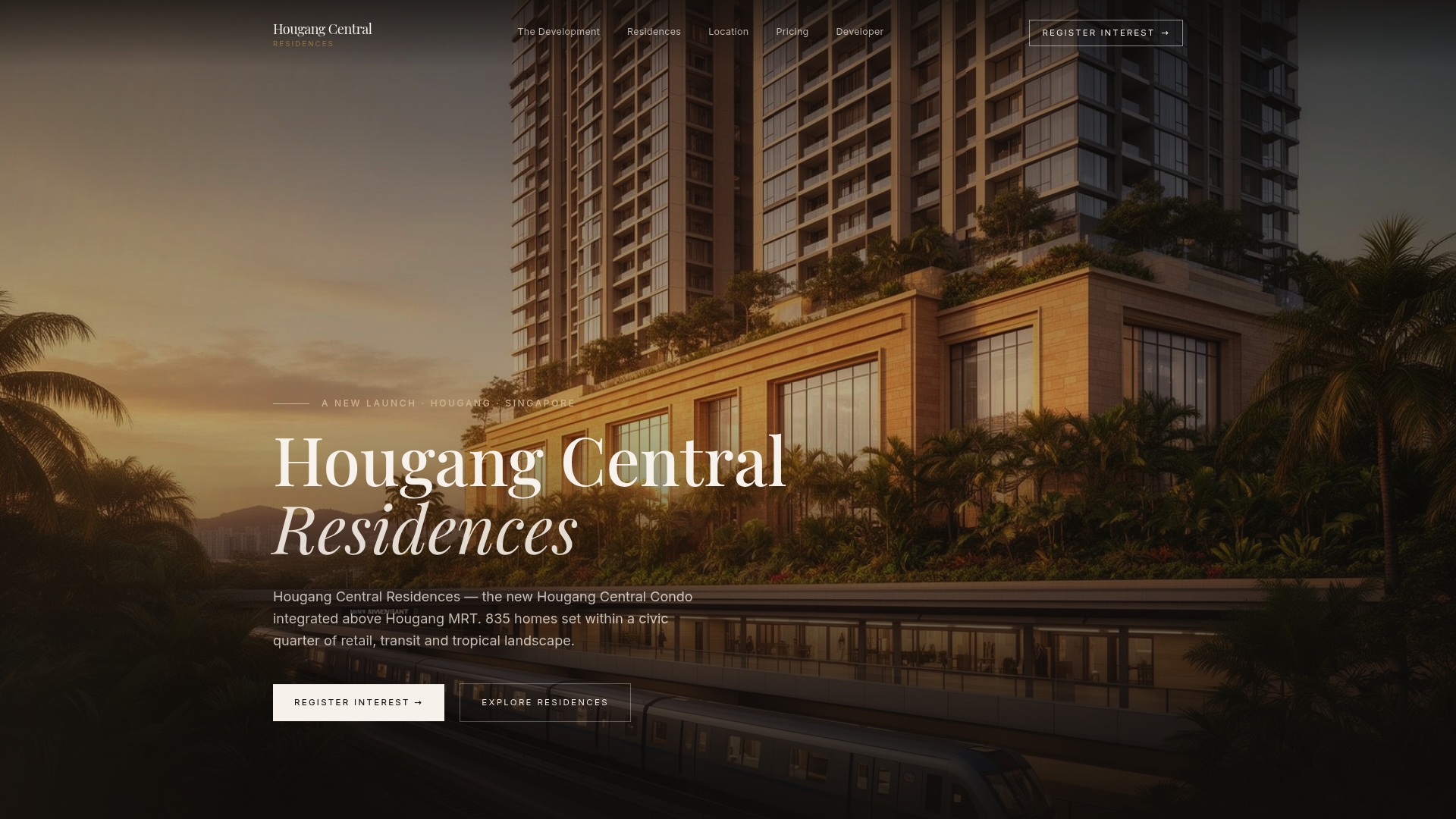
Hougang Central Residences sits directly above Hougang MRT station, integrated with a retail mall and bus interchange, which matters enormously if you're counting on a sub-unit renting reliably to working tenants who want a car-free commute. The development spans 835 units from one-bedroom-plus-study to five-bedroom penthouses, giving buyers room to compare unit mixes that can accommodate a dual-key style living arrangement for extended family. Every unit comes with smart-home systems that add tenant appeal, alongside premium European fittings, tropical landscaped grounds, and wellness and social facilities that support the multi-generation living case this article has walked through. Future connectivity to the Cross Island Line interchange only strengthens the transit story over time, which is exactly the kind of location fundamental that keeps a sub-unit rented rather than vacant.
If this fits your shortlist, request an e-brochure or book a showflat visit at Hougang Central Residences and bring your specific dual-key questions from this guide directly to the sales team.
Sources
- Dual-key condo Singapore: the honest math on live-and-rent strategies | Winfred Quek
- Dual-Key Condo Singapore 2026: Layout, Yield, ABSD | LovelyHomes
- 99
FAQ
What is a dual key unit in Singapore?
A dual key unit is a single strata-titled private condo with two self-contained living spaces, a main unit and a smaller sub-unit, sharing one entrance and address.
Is dual key allowed in HDB flats?
No, dual-key layouts are a private condominium product and are not a standard HDB configuration, since HDB operates under a separate ownership and subletting framework.
Is a dual key condo a good investment?
It's a stronger owner-occupier choice than a pure investment play, since rental yield uplift from the sub-unit is typically modest and the PSF premium paid at purchase can take years to recover.
Does a dual key unit trigger extra ABSD?
No, because it carries a single strata title, a dual-key unit counts as one property for ABSD purposes, unlike buying two separate units.
Where can I find dual key units for sale in Singapore, including options like Hougang Central Residences?
Check new-launch developer pages directly for unit mix details, use dedicated dual-key filters on resale property portals, and review projects like Hougang Central Residences that offer a range of unit sizes suited to multi-generation living.