TL;DR:
- Community-focused condo living emphasizes social spaces and voluntary events to foster genuine belonging. Proper design, communication, and resident initiative help build lasting community ties that enhance property value. Small, recurring gatherings and flexible participation options create a welcoming environment for diverse residents.
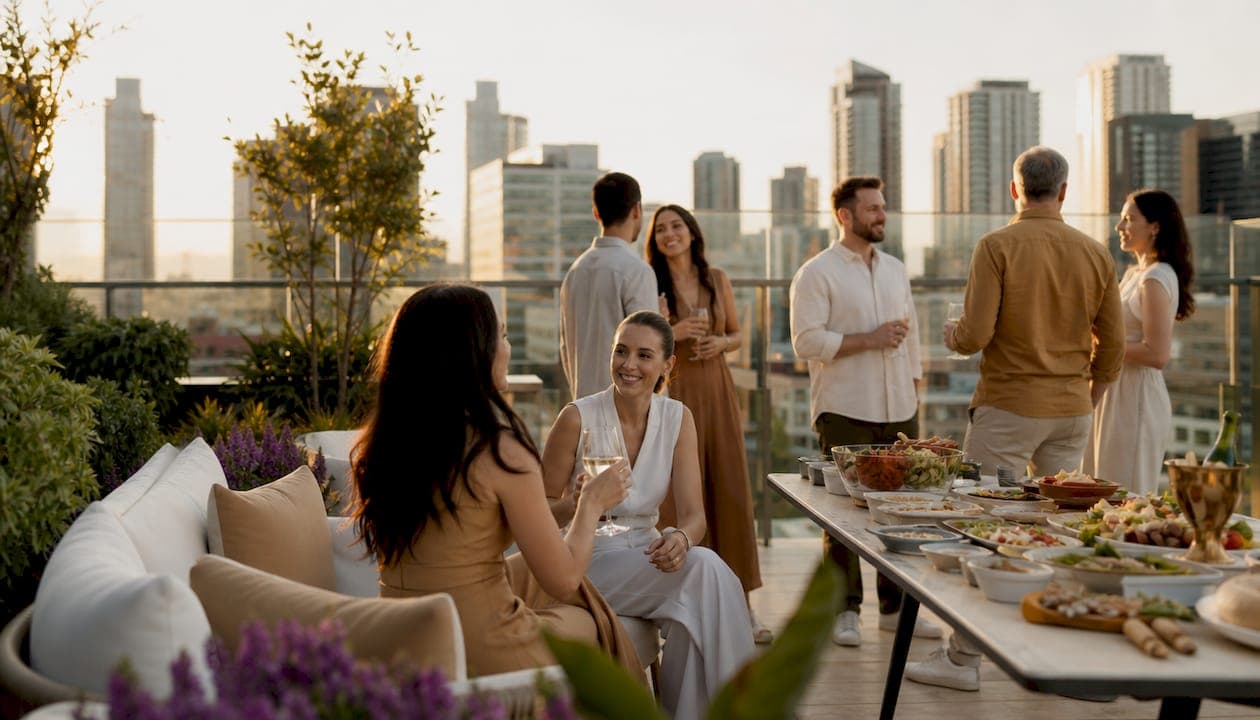
Community events integrated condo living is defined as the deliberate design of shared social activities within a condominium setting, using common spaces, management support, and resident initiative to build genuine belonging. The concept goes beyond amenities. It treats the building itself as a social infrastructure. Research shows that connection by design means physical spaces and optional organized activities give residents access to community without forcing it. Hougang-central-residences applies this principle directly, pairing 835 residences with tropical landscaped areas and shared facilities that make spontaneous interaction natural, not mandatory.
What does community events integrated condo living actually mean?
Integrated community living, the recognized industry term for this approach, treats social programming as a core feature of the residential product, not an afterthought. A building with a pool is not automatically a community. A building where residents gather monthly for a social night, share a garden, and vote digitally on shared decisions is. The difference is intentional design backed by consistent execution.
Condo community activities serve two purposes at once. Events combine enjoyment with communication about operational initiatives and community policies. A barbecue night is also an opportunity for management to share updates on building maintenance. A fitness class doubles as a recurring touchpoint that turns strangers into neighbors.
The residents who benefit most are those who want social access without social pressure. Integrated living events work precisely because they are optional. Residents choose their level of involvement, which makes the community feel welcoming rather than demanding.
What facilities and tools support successful condo community events?
The physical foundation matters more than most buyers realize. Shared spaces determine what kinds of events are even possible.
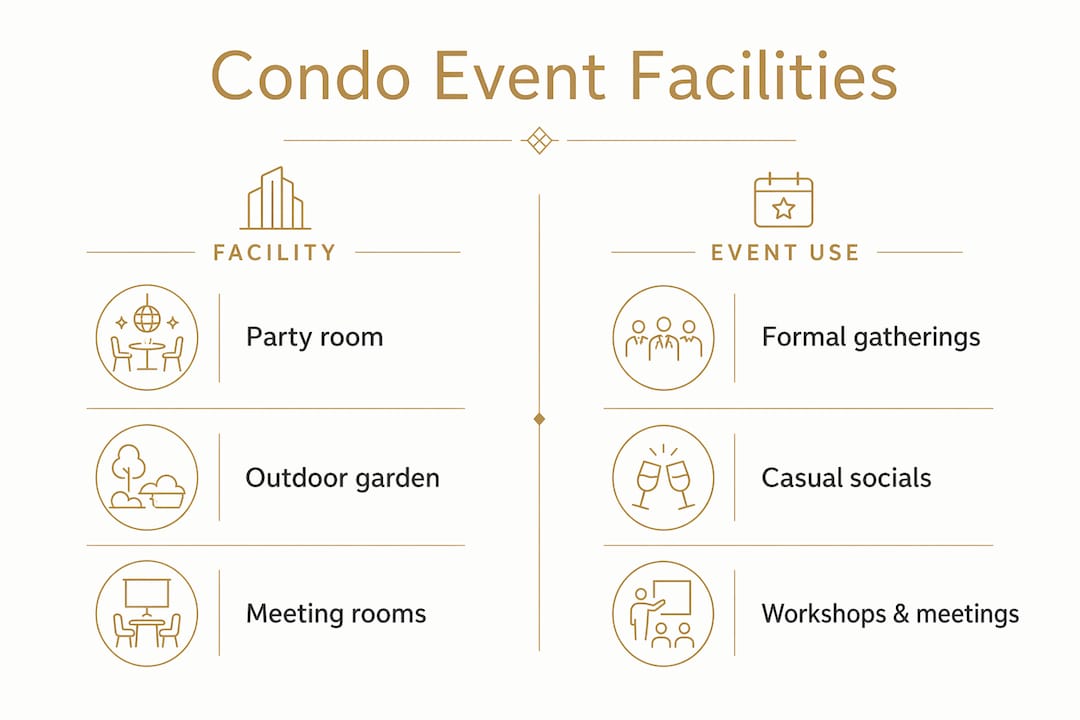
| Facility | Primary function in event hosting |
|---|---|
| Party room or function hall | Formal gatherings, celebrations, resident meetings |
| Rooftop or garden lounge | Casual social nights, fitness classes, cultural events |
| Walking paths and green spaces | Pet playdates, morning runs, informal neighbor interaction |
| Bulletin boards and digital platforms | Event announcements, RSVPs, community feedback |
| Gym or fitness studio | Recurring fitness programs that build consistent attendance |
Management communication channels are equally critical. Active bulletin boards and newsletters create the pathways that connect boards to residents and residents to each other. Without consistent communication, even the best event falls flat because no one knows it is happening.
The good news for budget-conscious communities is that low-cost solutions work. Opening a party room twice monthly for informal social gatherings significantly boosts resident engagement without heavy spending. The cost is minimal. The return in resident satisfaction is substantial.
Pro Tip: Before buying into a condo, check whether the building's shared spaces are bookable by residents or reserved exclusively for management use. Resident-accessible spaces are the single clearest signal of a community-first design philosophy.
For residents exploring what to look for, a community amenities checklist provides a practical framework for evaluating whether a building's physical setup can actually support the social life you want.
How to plan and host engaging events that fit diverse residents
Residential event planning works best when it starts with the people, not the program. Condo communities include retirees, young professionals, families with children, and pet owners. A single event type will not reach all of them.
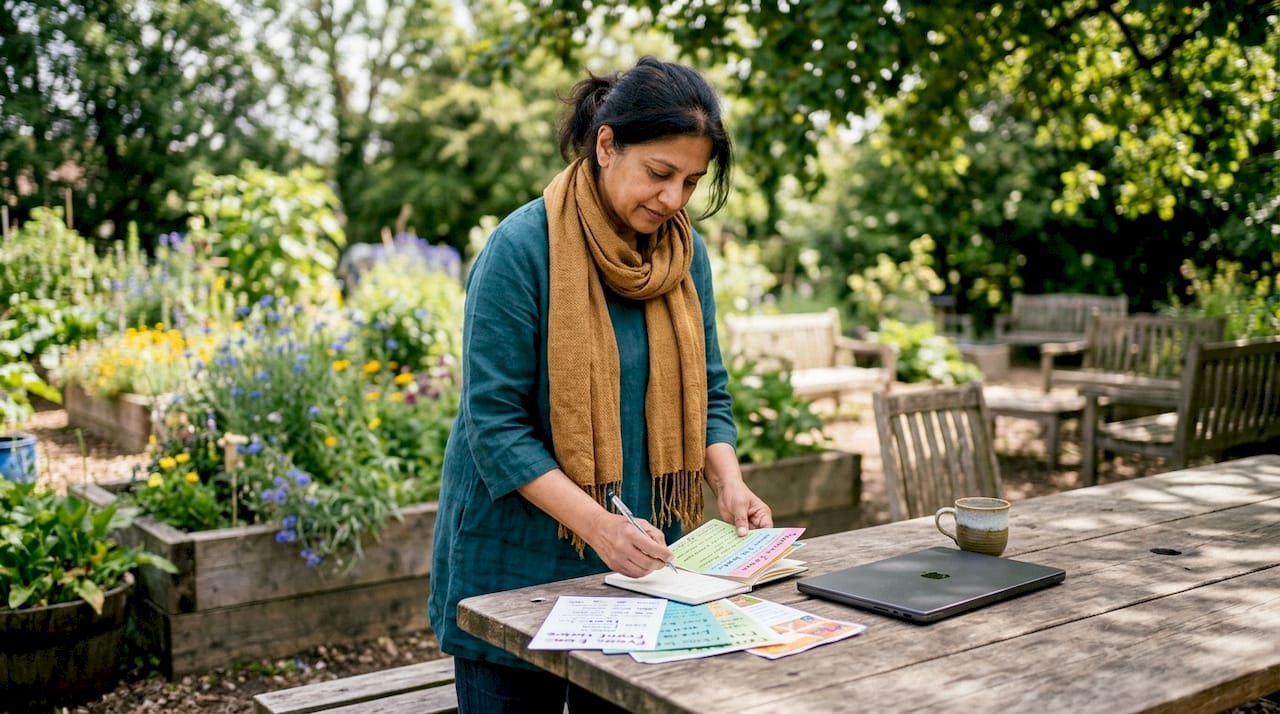
The most effective approach mixes formal and informal activities across the calendar. Social nights, cultural celebrations, fitness classes, pet playdates, and seasonal markets each attract different resident segments. Rotating formats keeps the calendar fresh and signals that the community values everyone.
A repeatable planning process makes execution consistent regardless of who is organizing:
- Survey residents to identify interests and preferred timing.
- Set a realistic budget using existing shared spaces to minimize costs.
- Assign a small volunteer committee to own logistics and promotion.
- Promote the event through all available channels at least two weeks in advance.
- Collect feedback after each event to improve the next one.
Annual large-scale events also build lasting identity. Parc Familia Fiesta 2026 runs two weeks every july with sports, music, and social gatherings, demonstrating that diverse programming sustains engagement over time. The lesson for condo communities is that variety and consistency together create events residents actually anticipate.
Pro Tip: Small volunteer committees lower the barrier to involvement far more than open calls for board members. Asking someone to help set up chairs for one event is a yes. Asking them to join the board is usually a no.
Families evaluating whether a condo fits their lifestyle will find that family-friendly amenities directly shape which events are possible and how often children and parents participate together.
What challenges arise in condo event integration and how do you solve them?
The most common barriers to social events for condos are not lack of interest. They are structural. Bylaws, communication gaps, and low initial turnout stop communities before they start.
Buyers often overlook condo bylaws on entertaining and guest policies. Noise restrictions, guest limits, and event approval processes can make hosting a simple gathering surprisingly complicated. Reviewing these rules before purchase protects your social lifestyle expectations.
Common challenges and their practical solutions:
- Restrictive noise and guest policies: Request bylaw amendments through the board, or design events that comply with existing rules rather than fighting them.
- Low initial turnout: Start with small, low-pressure formats. A six-person game night builds more momentum than a failed 50-person launch event.
- Communication gaps: Use multiple channels simultaneously. A digital platform, a physical bulletin board, and a direct email reach different resident segments.
- Demographic mismatch: Rotate event types monthly so no single group feels the calendar belongs only to them.
- Volunteer fatigue: Distribute roles across micro-committees rather than relying on the same three residents every time.
Hybrid meeting formats and electronic voting measurably increase resident participation beyond what traditional in-person meetings achieve. Digital surveys and virtual attendance options remove the time barrier that keeps working residents from engaging with building governance.
Pro Tip: Run a 10-minute digital survey after every event. Three questions maximum. The data tells you what to repeat and what to drop, and residents feel heard without attending a meeting.
How do integrated events improve resident well-being and property value?
The benefits of community engagement in condos extend well beyond enjoyment. Social connection directly affects mental well-being, and buildings that facilitate it consistently outperform socially isolated ones on resident satisfaction.
| Factor | Event-rich condo community | Socially isolated condo building |
|---|---|---|
| Resident satisfaction | High, driven by belonging and familiarity | Lower, driven primarily by unit features |
| Neighbor familiarity | Strong, built through recurring interaction | Weak, limited to hallway acknowledgment |
| Property desirability | Higher, community reputation attracts buyers | Lower, harder to differentiate from comparable units |
| Resident retention | Strong, social ties reduce turnover motivation | Weaker, residents leave more readily |
| Management transparency | High, events serve as communication channels | Lower, residents feel disconnected from decisions |
Micro-volunteer roles such as social committees, landscaping groups, and sustainability teams build property value while fostering meaningful relationships. Buyers notice when a building has an active community. It signals that residents care about the property, which translates directly into better maintenance and stronger resale demand.
Community-oriented condo living focuses on enabling spontaneous social interaction balanced with resident privacy. The best communities do not force connection. They make it easy to choose it.
Why I think most condos get community events completely wrong
Most buildings invest in amenities and then wonder why residents still feel isolated. The gym is there. The pool is there. The party room is there. Nobody uses any of it together. The problem is not the space. It is the absence of a social trigger.
What actually works is embarrassingly simple. A recurring, low-pressure social night organized by two or three residents builds more community than a professionally catered launch event. The reason is familiarity. People return to things they already know. A monthly gathering on the same night creates a rhythm. Residents start to expect it, then to rely on it.
The privacy concern is real, and I take it seriously. Not every resident wants to know their neighbors. The best communities I have observed never pressure anyone. They make connection available and then step back. That restraint is what makes the community feel safe rather than suffocating.
My strongest advice for prospective buyers is this: visit the building on a Tuesday evening, not a Saturday open house. Watch whether residents acknowledge each other in the lobby. Check whether the bulletin board has recent postings. Those two observations tell you more about the community than any brochure.
The residents who thrive in integrated condo communities are not the most social people. They are the ones who appreciate having the option. That distinction matters enormously when you are choosing where to live.
— Simon
Hougang-central-residences and what connected condo living looks like
Hougang-central-residences sits above Hougang MRT station in Singapore, combining 835 residences with tropical landscaped areas, shared facilities, and smart-home systems designed to support both daily convenience and resident connection. The building's layout creates natural gathering points where residents cross paths organically, which is the foundation of any active community.
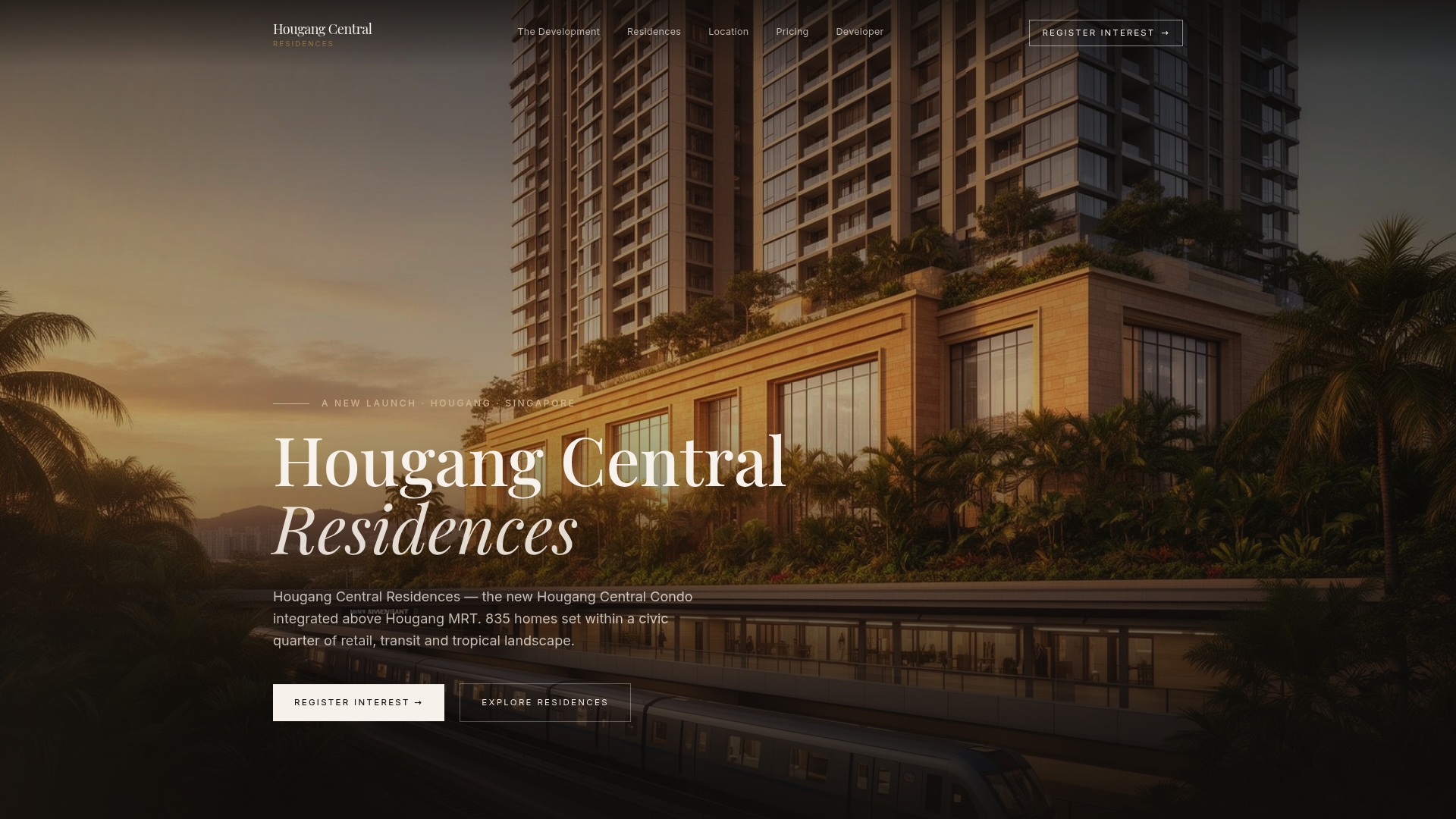
Residents at Hougang-central-residences benefit from a design that treats shared spaces as social infrastructure, not just square footage. From fitness areas to landscaped outdoor zones, the building supports the kind of integrated living events that turn a condo into a genuine neighborhood. If you are evaluating community-oriented condo options in Singapore, Hougang-central-residences offers a concrete example of how thoughtful design and resident-focused amenities work together.
Key takeaways
Community events integrated into condo living require intentional space design, consistent management communication, and resident-driven initiative to build lasting social connection and property value.
| Point | Details |
|---|---|
| Design enables connection | Shared lounges, gardens, and party rooms are the physical foundation for any community event program. |
| Low-cost events outperform big launches | Recurring, informal social nights build stronger community than one-off catered events. |
| Bylaws shape your social life | Review guest and noise policies before buying to confirm they match your desired lifestyle. |
| Micro-volunteering sustains engagement | Small committee roles lower the barrier to involvement and keep events running without burnout. |
| Hybrid formats increase participation | Digital voting and virtual attendance options bring in residents who cannot attend in person. |
FAQ
What are community events in condo living?
Community events in condo living are organized or informal social activities held within shared spaces of a condominium building. They range from casual social nights to fitness classes and cultural celebrations, all designed to build resident connection.
How do I start a community event program in my condo?
Start by surveying residents on their interests, then organize one small recurring event using an existing shared space. Resident-driven social nights with a small volunteer committee are the most effective starting point.
Do community events affect condo property value?
Active community events signal that residents care about the building, which increases desirability and supports stronger resale demand. Buildings with engaged communities consistently attract more buyer interest than socially isolated ones.
What should I check in condo bylaws before hosting events?
Review noise restrictions, guest limits, and event approval requirements. Overlooking these rules is one of the most common mistakes buyers make when evaluating whether a condo fits their social lifestyle.
How do you increase resident participation in condo events?
Use hybrid formats that combine in-person and digital options, and offer micro-volunteer roles rather than asking for board-level commitment. Electronic voting and hybrid meetings measurably improve participation rates compared to traditional in-person-only approaches.