
TL;DR:
- Flex-living condo units are designed for spaces that can legally change to meet evolving needs, with smart infrastructure and verified compliance. These units offer adaptable layouts in transit-oriented locations, supporting long-term value and lifestyle flexibility. Buyers must verify code compliance and infrastructural quality to ensure lasting investment benefits.
What are flex-living condo units, exactly?
Flex-living condo units are residences built around one core idea: your space should change as your life does. The term covers two distinct concepts that buyers frequently confuse, and that confusion can cost you real money.
The first is the architectural "flex unit": a condo with a large open floor plan legally designed to be reconfigured into additional rooms that meet building codes, such as a convertible one-bedroom or two-bedroom layout. The second is "flex living" as an operational model: a hospitality-inspired management approach offering furnished units, flexible lease terms, and shared amenities. For luxury permanent residents, the architectural definition is the one that matters most.
Key characteristics of a true flex-living condo unit:
- Large open floor plans designed for legal room reconfiguration
- Compliance with local building codes covering ceiling height, egress, and window access
- Modular or adaptable infrastructure, including non-load-bearing walls and pre-wired smart systems
- Multi-functional common and private spaces supporting hybrid work and lifestyle shifts
- Location in transit-oriented developments that amplify daily convenience and long-term value
Table of Contents
- How convertible layouts actually work
- The flex living operational model, and why it differs from ownership
- Design innovations that make flexible living spaces genuinely work
- Legal and practical considerations before you buy
- Benefits of flex-living condo units for luxury permanent residents
- How flex-living condos compare to traditional condos
- Why transit-oriented locations make flex-living more desirable
- Real flex-living projects worth studying in the US
- Potential drawbacks of flex-living condos for permanent residents
- Hougang-central-residences: flex-living built for permanent luxury residents
- Key Takeaways
- FAQ
How convertible layouts actually work
A convertible one-bedroom is technically a studio large enough to be divided into a sleeping area and a living area. A convertible two-bedroom is a one-bedroom with enough square footage to carve out a second room. The word "convertible" signals potential, not a finished product.
What makes a conversion legal rather than cosmetic is strict code compliance. In New York City, for example, a new bedroom must be at least 80 square feet, include at least one window, and leave a living room of at least 150 square feet after the split. Any wall that interferes with ventilation or sprinkler systems fails the test outright. Sliding walls, retractable partitions, and freestanding bookshelf dividers can satisfy code when installed correctly, but pressurized walls have been restricted since a 2005 Bronx fire revealed how illegally divided rooms can trap first responders.
Common convertible design elements in luxury condos:
- Retractable walls and sliding doors that divide open spaces without permanent construction
- Murphy beds and foldable desks that reclaim floor area on demand
- Modular seating and dining configurations that shift between entertaining and workspace modes
- Open-concept layouts with moveable partitions for easy reconfiguration
- Multifunctional furniture systems combining storage, sleeping, and work surfaces
The flex living operational model, and why it differs from ownership
As an operational concept, flex living is a medium-term furnished residence model managed by a professional operator, offering hospitality-style amenities and lease terms that range from days to a year. Coworking spaces, fitness centers, food and beverage areas, and curated programming are standard inclusions.
The business logic behind this model is occupancy optimization. Operators blend long-stay tenants for income stability with short-stay guests to capture peak-period revenue. That hybrid approach suits investors and operators well, but it creates a fundamentally different resident experience than permanent luxury ownership. Stability, community continuity, and long-term personalization are not the priorities of an occupancy-driven model.
Key features of the operational flex living model in condos:
- Fully furnished, move-in-ready units with utilities and services bundled
- Flexible lease durations without long-term commitments
- Shared amenities including coworking, wellness, and social programming
- Professional property management handling maintenance and community events
- A resident mix that may include short-stay guests alongside long-term residents
Luxury permanent buyers should read condo offering documents carefully to understand which model governs their building.
Design innovations that make flexible living spaces genuinely work
Demand for multi-purpose residential spaces is driven by hybrid work habits and urban density, and architects have responded with infrastructure that goes well beyond furniture tricks. The distinction between cosmetic flexibility and structural adaptability is where luxury condos separate themselves from the pack.
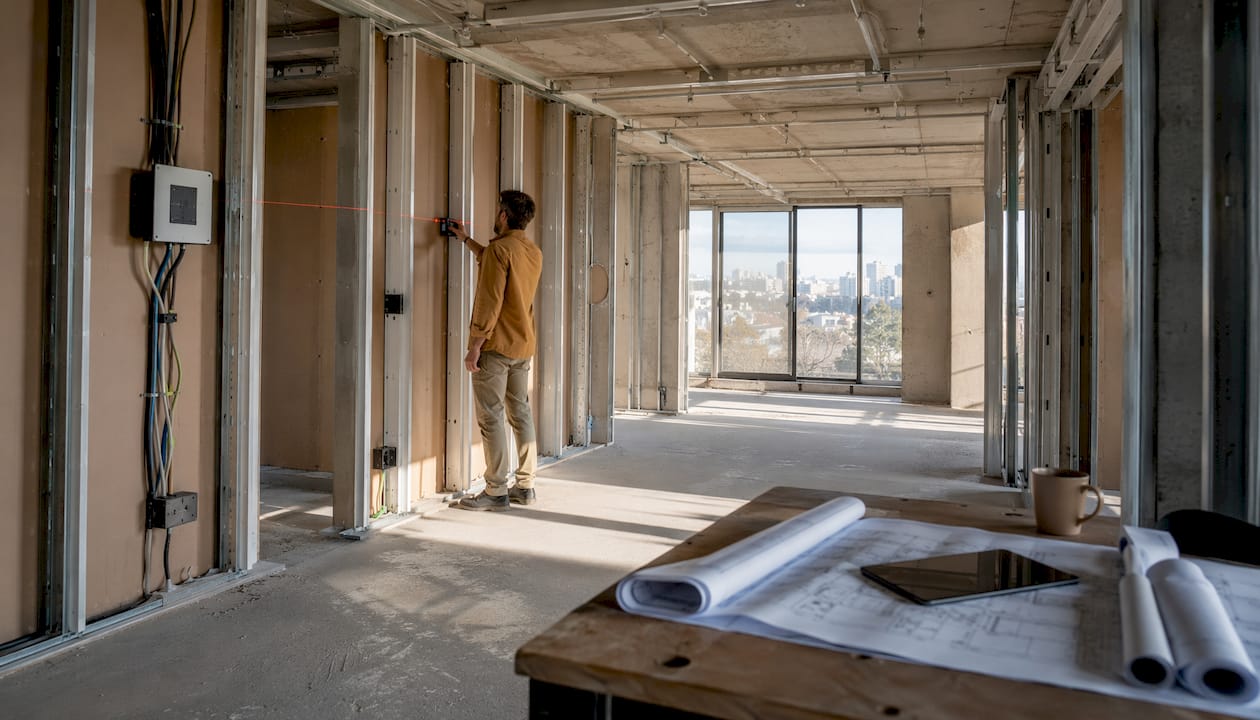
Pre-wired smart home hubs, non-load-bearing interior walls, and modular flooring systems are the features that preserve both luxury standards and long-term investment value. Automated lighting scenes, motorized room dividers, and integrated entertainment systems let a single room function as a home office at 9 AM and a private screening room by evening. A flexible studio layout executed at this level feels permanent, not provisional.
Pro Tip: When touring a flex condo, ask the developer specifically whether interior walls are load-bearing. Non-load-bearing walls are the single most reliable indicator that the unit can be legally reconfigured without structural engineering costs.
Design features enabling true flexibility in luxury condos:
- Pre-wired smart hubs supporting automated lighting, climate, and security
- Non-load-bearing interior walls that allow legal reconfiguration
- Modular flooring and ceiling track systems for partition installation
- Murphy beds and built-in foldable desks concealed within cabinetry
- Automated room dividers and motorized sliding panels
Legal and practical considerations before you buy
Marketing language and legal definitions diverge sharply in the flex condo market. Experts consistently warn that buyers must require evidence of code compliance rather than accepting a large open space as proof of convertibility. A room that lacks proper egress, window access, or ceiling height does not qualify as a legal bedroom regardless of how it is marketed.
Unapproved modifications risk violating fire safety regulations and voiding insurance policies. Before closing, verify that any advertised convertibility has been reviewed by a licensed architect or engineer and approved by the relevant building authority. Condo board rules may also restrict modifications, so review the governing documents alongside the offering plan.
Practical steps for buyers evaluating flex-living condo units:
- Request documentation of code compliance for any advertised convertible room
- Confirm ceiling heights, egress routes, and window access meet local standards
- Review condo association bylaws for restrictions on interior modifications
- Consult a licensed architect before purchasing to assess reconfiguration costs
- Verify that any existing partition walls were installed with proper permits
Pro Tip: Ask the seller for the original Department of Buildings permit for any existing wall installation. If no permit exists, treat the conversion as unapproved and factor remediation costs into your offer price.
Benefits of flex-living condo units for luxury permanent residents
The appeal for affluent buyers is straightforward: a home that grows with you without requiring a move. A nursery becomes a home office when children leave for college. A guest suite converts to a private gym when travel slows. These transitions happen within the same address, preserving community ties and avoiding transaction costs.
Transit-oriented locations amplify these benefits. Proximity to rail stations reduces car dependency, which matters when urban density limits parking and when daily commutes shift between office and remote work. Smart condo features that support adaptable living also tend to retain value better than fixed-layout units as buyer preferences continue shifting toward flexibility.
Benefits of flex-living for luxury permanent residents:
- Space efficiency through rooms that serve multiple functions without wasted square footage
- Lifestyle adaptability supporting family growth, remote work, and wellness needs
- Technology integration that automates comfort and convenience
- Stronger resale appeal as flexible housing options attract a broader buyer pool
- Community stability within transit-oriented developments that sustain long-term value
How flex-living condos compare to traditional condos
Traditional condos offer fixed floor plans, defined room counts, and predictable layouts. That predictability suits buyers who know exactly how they will use each space for the foreseeable future. Flex-living condos trade some of that certainty for adaptability, which carries real advantages and real trade-offs.
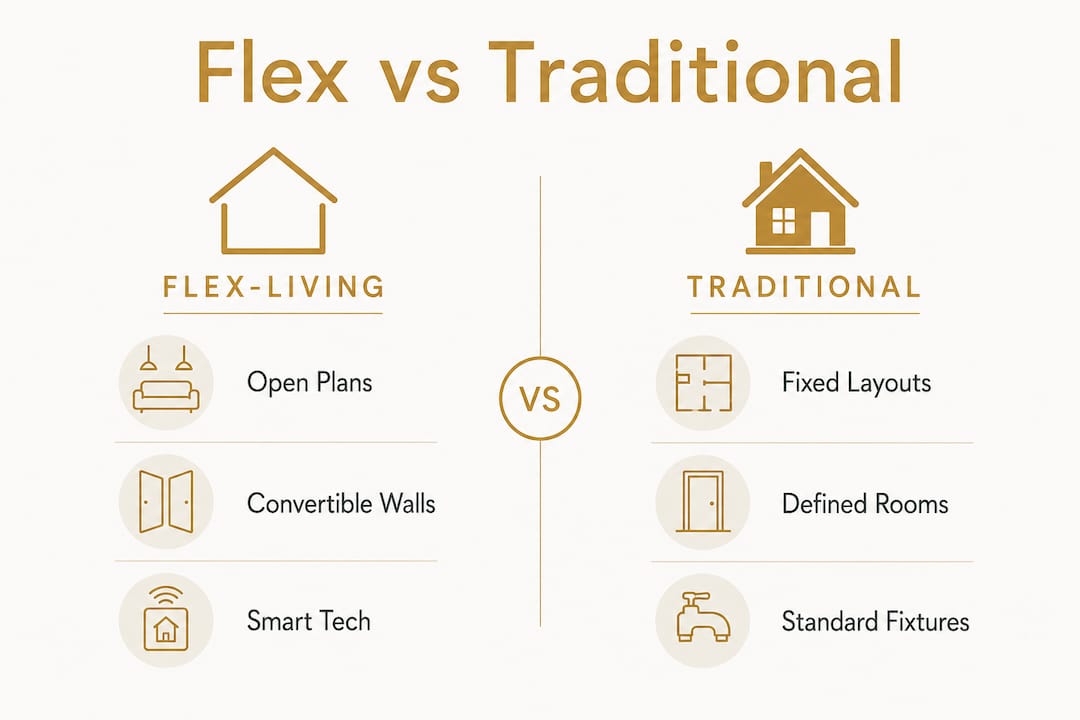
| Feature | Flex-living condo | Traditional condo |
|---|---|---|
| Floor plan | Open, reconfigurable | Fixed, defined rooms |
| Room count | Adjustable within code limits | Set at purchase |
| Smart infrastructure | Pre-wired, modular | Varies widely |
| Resale flexibility | Broader buyer appeal | Narrower, layout-dependent |
| Upfront cost | Often higher per square foot | Generally lower per square foot |
| Legal complexity | Requires code verification | Minimal reconfiguration concerns |
The work-life balance features that flex condos prioritize, such as dedicated home office zones and adaptable common areas, are largely absent from traditional fixed-layout units built before 2015.
Why transit-oriented locations make flex-living more desirable
A flex condo in a transit-oriented development compounds its own value. Residents who work across multiple locations, travel frequently, or simply want to reduce car ownership find that rail access transforms daily logistics. The building's flexibility mirrors the neighborhood's connectivity: both adapt to how modern professionals actually live.
Developers in transit-oriented projects also tend to invest more heavily in shared amenities, including coworking lounges, rooftop terraces, and wellness facilities, because the density of the location supports that programming. For a permanent luxury resident, that means the building itself functions as an extension of the home.
Real flex-living projects worth studying in the US
New York City's convertible apartment market is the most documented in the country, with CityRealty tracking dozens of legally convertible units across Manhattan and Brooklyn at various price points. Buildings like One Hanson Place in Fort Greene demonstrate how pre-war structures can be adapted into flex-friendly condos with alcove studios that convert to junior one-bedrooms.
On the new-construction side, luxury developers have integrated multi-functional room design as a standard offering rather than an upgrade, particularly in high-density urban markets like Chicago, Seattle, and Miami. The common thread across successful projects is infrastructure investment: smart wiring, non-load-bearing walls, and high-quality partition systems that look permanent even when they are not.
Potential drawbacks of flex-living condos for permanent residents
Flexibility costs money upfront. Modular infrastructure, smart home systems, and high-quality partition walls add to the purchase price and, in some cases, to monthly HOA fees if the building maintains shared adaptive spaces. Buyers who never actually reconfigure their unit pay a premium for optionality they do not use.
Legal complexity is the other friction point. Verifying code compliance, obtaining permits for modifications, and navigating condo board approval processes takes time and professional fees. In buildings that also operate a flex living hospitality model alongside permanent residences, the resident mix can affect community feel and long-term stability in ways that a traditional owner-occupied building does not.
Hougang-central-residences: flex-living built for permanent luxury residents
Permanent luxury living in a transit-oriented development does not require choosing between flexibility and refinement. Hougang-central-residences delivers both, with 835 residences above the Hougang MRT station ranging from one-bedroom to five-bedroom configurations, each designed to accommodate shifting family needs without sacrificing the premium finishes and smart-home integration that define upscale ownership.
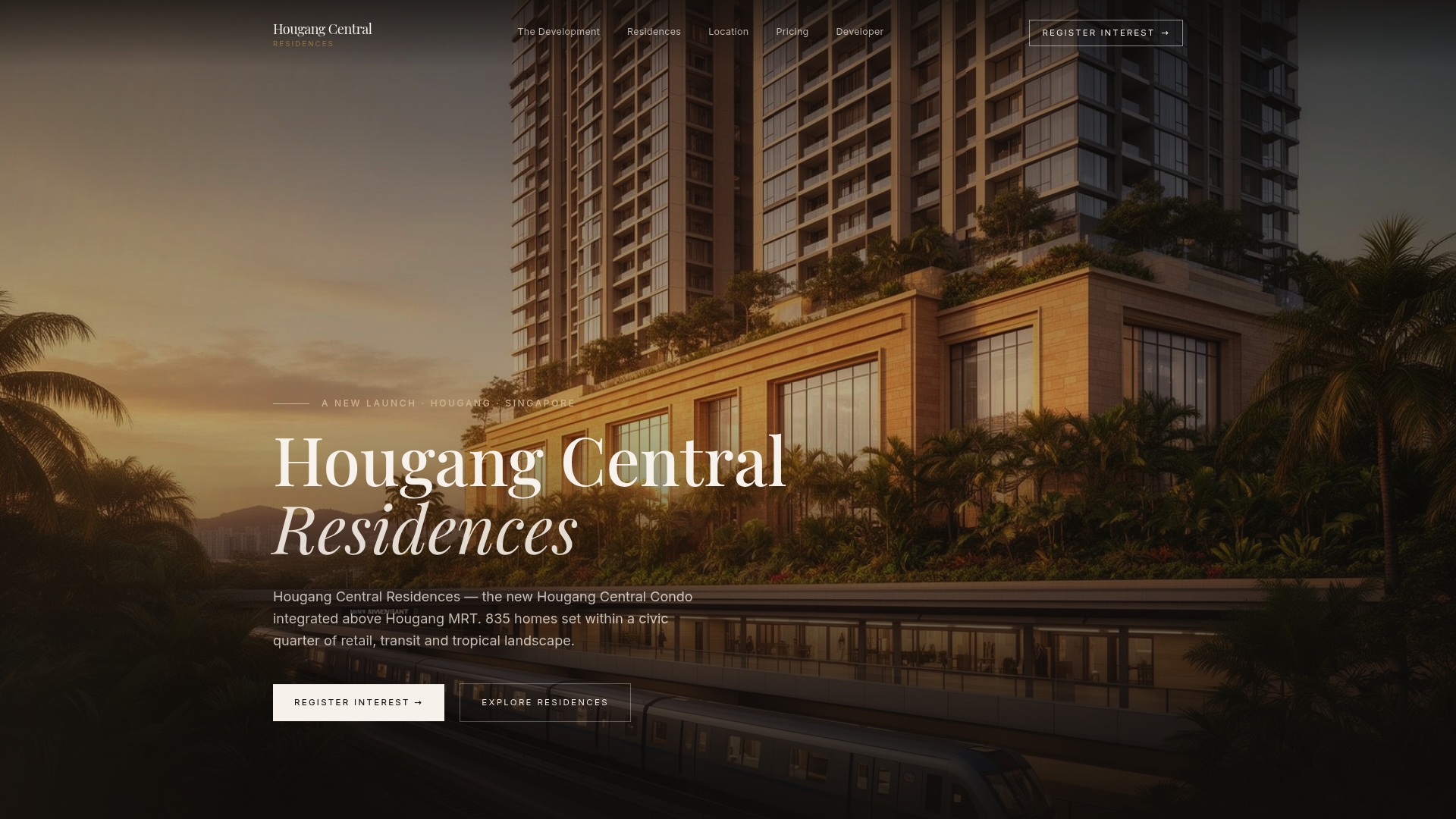
The building's smart-home systems, tropical landscaped areas, and premium European fittings create the kind of environment where a flex layout actually gets used, because the infrastructure supports it and the location makes every configuration practical. Whether you need a dedicated home office today or a guest suite next year, the unit adapts without a renovation project.
Visit Hougang-central-residences to explore available floor plans and schedule a private viewing.
Key Takeaways
Flex-living condo units deliver lasting value only when architectural convertibility is backed by verified code compliance and genuine smart infrastructure, not just open floor plans.
| Point | Details |
|---|---|
| Two distinct definitions | "Flex unit" means legally convertible architecture; "flex living" means a hospitality-operational model. Buyers must distinguish between them. |
| Code compliance is non-negotiable | Legal convertibility requires proper ceiling height, egress, and window access. Marketing claims are not a substitute for permits. |
| Infrastructure over cosmetics | Pre-wired smart hubs and non-load-bearing walls preserve luxury standards and investment value far better than temporary partitions. |
| Transit-oriented location multiplies value | Rail access and shared amenities in transit-oriented developments extend the practical benefits of a flexible floor plan. |
| Hougang-central-residences | Offers 835 smart-home-integrated units above Hougang MRT, from one-bedroom to five-bedroom, designed for adaptable permanent luxury living. |
FAQ
What does "flex" mean in a condo listing?
In US real estate, a "flex" or "convertible" condo has a large open floor plan designed to be legally divided into additional rooms that meet local building codes. It does not automatically mean the conversion has been completed or approved.
Is flex living the same as short-term rental living?
Not exactly. The flex living operational model blends short and medium-term stays to optimize occupancy, which differs from permanent luxury ownership. Luxury buyers should confirm whether their building operates under a hospitality model or a standard owner-occupied structure.
What should I verify before buying a flex condo unit?
Confirm that any advertised convertible room has proper permits, meets ceiling height and egress requirements, and has been approved by the relevant building authority. A licensed architect review before closing protects both your investment and your insurance coverage.
Do flex-living condos hold their resale value?
Units with genuine smart infrastructure and legally verified convertibility tend to attract a broader buyer pool, which supports resale value. Cosmetic flexibility backed only by temporary partitions offers far less protection when market conditions shift.