In Singapore property talk, "price per quantum" simply means the actual dollar amount you pay for a unit versus its price per square foot, at Hougang Central Residences. It is not quantum computing pricing. Right now, the only public anchor is the land rate the developer paid: S$1,179 psf per plot ratio, with no official price list released yet. Until that list drops, ask for a dated, unit-specific quotation and cross-check it against URA's records before you treat any number as real.
TL;DR:
- The land rate for Hougang Central Residences is S$1,179 psf ppr, but this is not the final selling price for units; construction, financing, fees, and margin add to it.
- The actual purchase price calculation is based on dividing the quoted total price by the saleable area, with saleable area excluding common spaces and subject to adjustments.
- Verify developer quotes using URA's official tools, ensuring the saleable area and price are in the same document, and compare these figures against URA records for accuracy.
- Portals offer rough estimates that can vary due to different measurement conventions, so always obtain a current, unit-specific quotation directly from the developer before acting.
- Before committing, request a detailed, dated quotation matching the unit, confirm what costs are included, and review official records to avoid overpaying or misunderstandings.
Table of Contents
- How Do You Calculate Price Per Square Foot?
- Where Can You Verify Quoted Prices in Singapore?
- Why Isn't the Land Rate the Same as Unit Psf?
- What Should You Check Before Committing to a Unit?
- How Reliable Are Portal Estimates and Analyst Ranges?
- Why Transit Access Changes How You Should Read the Numbers
- How to Get an Official Quotation for Hougang Central Residences
- Quick Links for Verifying Hougang Central Pricing
- Sources
- FAQ
How Do You Calculate Price Per Square Foot?
The math is simple, but people mess it up by using the wrong area figure. Here's the formula:
Total quoted price ÷ saleable area (in square feet) = price per square foot (psf)
Say a 3-bedroom unit at Hougang Central Residences is quoted at S$2,100,000 with a saleable area of 850 sq ft. That works out to roughly S$2,471 psf. This is a hypothetical example only, since no confirmed unit prices exist yet. The point is the process: total price divided by area, nothing more mystical than that.
- Get the total contracted price from the quotation, not a "from" headline figure.
- Confirm the saleable area stated for that exact unit, not a project average.
- Divide price by area to get your psf.
- Compare that psf against similar units, similar stacks, similar floors.
Singapore developers typically quote saleable area, not gross floor area (GFA) or strata area, since saleable area strips out common spaces like corridors and lift lobbies and gives buyers an apples-to-apples number. Watch for adjustments too. Some units bundle in parking, others charge separately. Some carry a premium for higher floors or unblocked views facing the MRT concourse. These add-ons change your effective psf even when the headline price looks identical to a neighboring stack.
Pro Tip: Always ask the sales team to write the saleable area on the same page as the price. If those two numbers live on separate documents, you cannot trust the psf anyone quotes you verbally.
Where Can You Verify Quoted Prices in Singapore?
Two government tools do the heavy lifting here, and both come from the Urban Redevelopment Authority.
- URA's developers' sales e-Service publishes new-sale prices sourced directly from developers' Options to Purchase. It also shows how many units in a project are launched, sold, and unsold, updated monthly as developers submit their figures.
- URA's private-residential transaction search covers resale and subsale transactions based on caveats lodged with the Singapore Land Authority, going back 60 months. New-sale transactions from May 25, 2015 onward also draw from Options to Purchase.
The distinction matters because these two data sources rest on different legal instruments. An Option to Purchase is a binding contractual step, while a caveat is a lodged legal claim protecting a buyer's interest in a resale deal. URA's own methodology spells out which figure comes from which document, and that's the paper trail worth trusting over a sales brochure.
To actually use these tools, search by project name, filter by transaction date, and note whether the number you're looking at is labeled a new-sale (developer-sourced) or a resale (caveat-sourced). Label every figure you find by its status. That habit alone will save you from comparing incompatible numbers later.
Why Isn't the Land Rate the Same as Unit Psf?

Hougang Central's Government Land Sales tender closed at a top bid of S$1,500,738,338, which works out to S$1,179 psf per plot ratio (psf ppr), according to the developer's own project page. That figure describes what the developer paid for the land relative to the maximum buildable floor area under the site's plot ratio. It is not, and never has been, what a buyer will eventually pay per square foot for a finished unit.
Getting from land rate to selling psf involves stacking several cost layers on top:
- Construction cost per square foot (structure, finishes, mechanical and electrical systems)
- Financing costs during the build period
- Statutory fees, marketing, and sales commissions
- Developer margin
Industry commentary following the land award pegged an indicative launch range around S$2,500 to S$2,600 psf, derived by adding those cost layers to the land rate. That range is an analyst estimate, not a developer-confirmed figure, and it will move once actual construction tenders and finishing specs are locked in. Treat it as a planning reference, not a number you'd write into an offer.
What Should You Check Before Committing to a Unit?
Buying off a launch price list feels urgent, especially when a sales gallery has a queue. Slow down and work through this sequence instead.
- Request a dated, unit-specific quotation. It should list the unit number, floor, saleable area in square feet, and total price, all on one document.
- Confirm what's included. Ask whether parking, fitted packages, or any furnishing allowance sits inside that quoted price or gets billed separately.
- Calculate the psf yourself using price divided by saleable area, then label it clearly as a "developer quotation" rather than an "official transaction."
- Cross-check against URA data. Look at new-sale figures for the project once listed, and compare against recent District 19 transactions for context on where nearby projects have actually sold.
- Read the Option to Purchase carefully. Check the exercise deadline, the progressive payment schedule, and any conditions attached to incentives like absorbed stamp duty or furniture vouchers.
Watch for red flags along the way: a quotation with no date on it, saleable area figures that shift between documents, or a discount so large it isn't explained anywhere in writing. If you're buying as a foreigner, also review the cash and tax checklist tied to Additional Buyer's Stamp Duty before you sign anything.
Pro Tip: Keep every quotation you receive, even superseded ones. If a price changes between your first showflat visit and your booking date, having the paper trail protects you if there's a dispute later.
How Reliable Are Portal Estimates and Analyst Ranges?
Property portals often show project-level averages that mix stale listings, proprietary algorithms, and different area conventions. One portal might include car park value in its psf calculation; another might not. Neither is necessarily wrong, but neither is authoritative either.
- Treat portal psf figures as a starting reference point, never as the final word.
- Treat analyst ranges, like the S$2,500 to S$2,600 psf estimate mentioned earlier, as informed guesses built on assumptions about construction cost and margin, not confirmed pricing.
- Prioritize a dated developer price list and URA's Option-to-Purchase records above anything else you read online.
Discrepancies between portals usually come down to differing data conventions rather than any single source being fraudulent, and this pattern shows up beyond Singapore too. Property databases like Poland's IleZaMetr land price tracker show similar gaps between notarial land records and portal averages, which is a useful reminder that this is a data problem, not a Singapore-specific quirk.
Why Transit Access Changes How You Should Read the Numbers
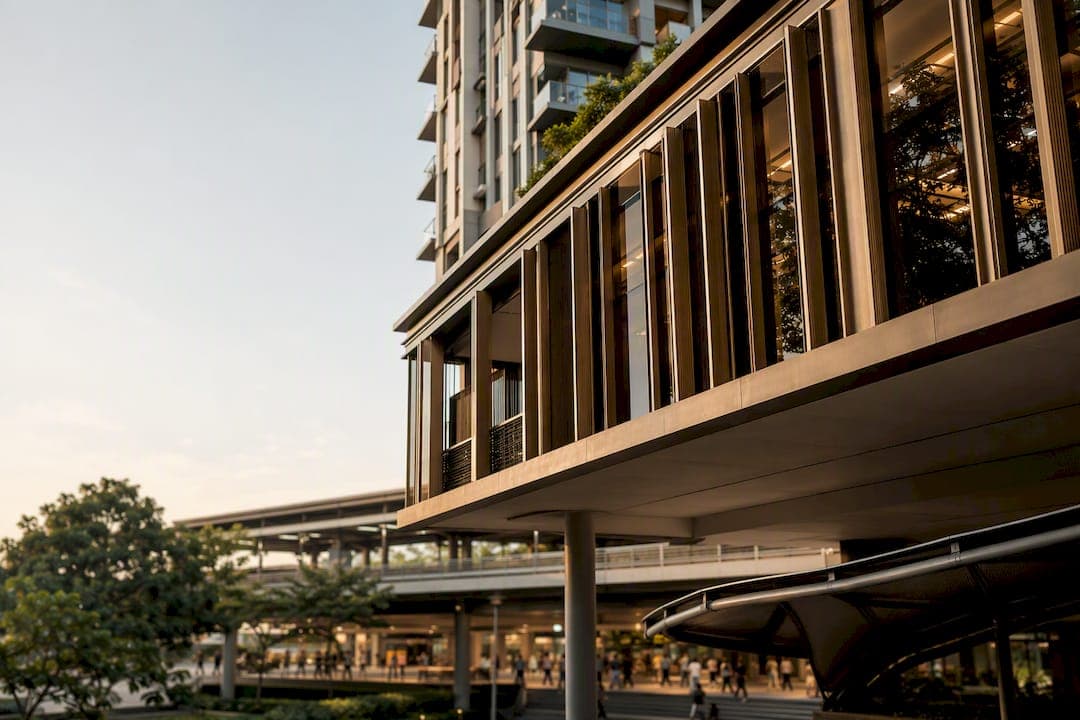
Sitting directly above an MRT interchange with an integrated retail mall tends to support a premium over comparable projects without that access, and Hougang Central's positioning above the Hougang MRT station fits that pattern. But a headline psf means little without knowing the unit mix behind it. A compact, efficiently laid out 2-bedroom can deliver better livable space per dollar than a larger unit with wasted corridors, so checking layout efficiency matters as much as the psf itself. Your final read on value still depends on the dated price list and whether you're buying to live in or to hold as an investment.
— Simon
How to Get an Official Quotation for Hougang Central Residences
The land rate tells you where pricing starts, not where it lands. For a number you can actually act on, go straight to Hougang Central Residences' official pricing page, where dated unit quotations and availability updates get posted as they're released.
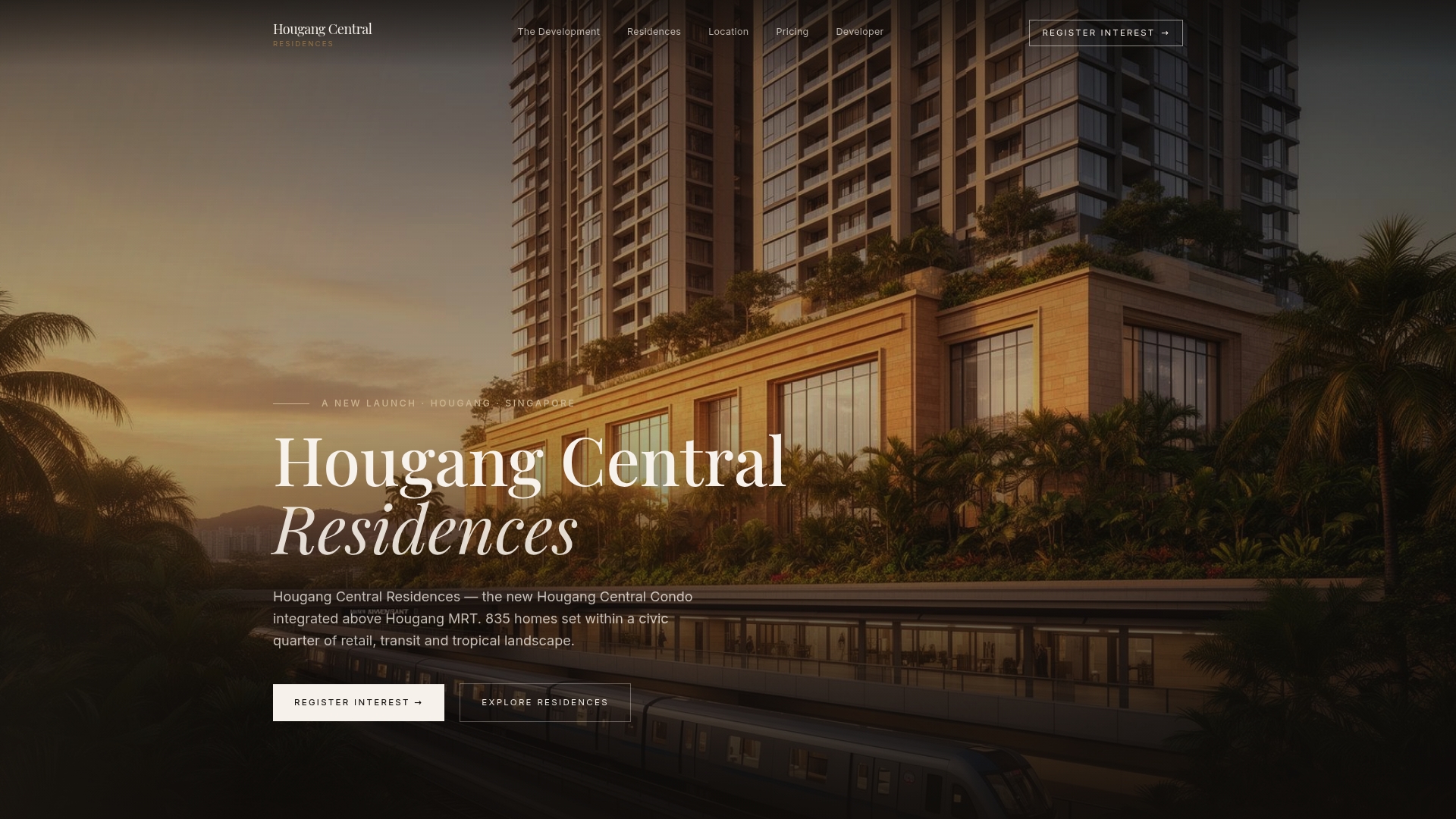
At preview, ask the sales team for three things in writing: a price list broken down by unit number, the confirmed saleable area for each unit you're considering, and the Option to Purchase terms including the exercise deadline and payment schedule. You can also browse available unit types, from 1-bedroom-plus-study layouts through 5-bedroom penthouses, to match a floor plan against the psf math you've already worked out. If you'd rather talk it through first, register for a showflat appointment or request an e-brochure directly through the pricing page, and get answers before the price list is public rather than after.
Quick Links for Verifying Hougang Central Pricing
- URA developers' sales e-Service
- URA private-residential transaction search
- Hougang Central Residences project details
This article is general information, not a substitute for advice from a qualified financial advisor. Consult a qualified financial professional about your own circumstances before acting on anything here.
Sources
- Developers' Sales - Property Market Information
- Private Residential Property Transactions - Property Market Information
- Coverage and methodology - REIS
- 99
FAQ
What Does "Price Per Quantum" Mean for Hougang Central Residences?
It refers to a unit's total selling price and its price per square foot, calculated as total price divided by saleable area. For Hougang Central Residences specifically, the only confirmed figure so far is the land rate of S$1,179 psf ppr, since no developer price list has been published yet.
How Much Does a Unit at Hougang Central Residences Cost?
Current pricing starts from S$2,800 per square foot as listed on the official pricing page, which is the publisher's own published price. Because unit-specific quotations vary by floor, stack, and saleable area, request a dated quote for the exact unit you're considering rather than relying on this figure alone.
Is the S$1,179 Psf Ppr the Same as the Unit Selling Price?
No. That figure is the land rate the developer paid per square foot of buildable floor area under the site's plot ratio, not the eventual price a buyer pays. Selling psf gets built on top of land rate through construction costs, financing, fees, and developer margin.
Where Can I Check If a Quoted Price Matches Official Records?
Use URA's developers' sales e-Service for new-sale prices based on Options to Purchase, and URA's private-residential transaction search for resale and subsale caveats going back 60 months. Both are free government tools and the most reliable way to confirm a number before you commit.
Why Do Different Property Portals Show Different Psf Figures for the Same Project?
Portals often use different area conventions, some include car park value while others exclude it, and listings can go stale between updates. Treat any portal figure as a rough reference point and always request a dated, unit-specific quotation from the developer for anything you plan to act on.