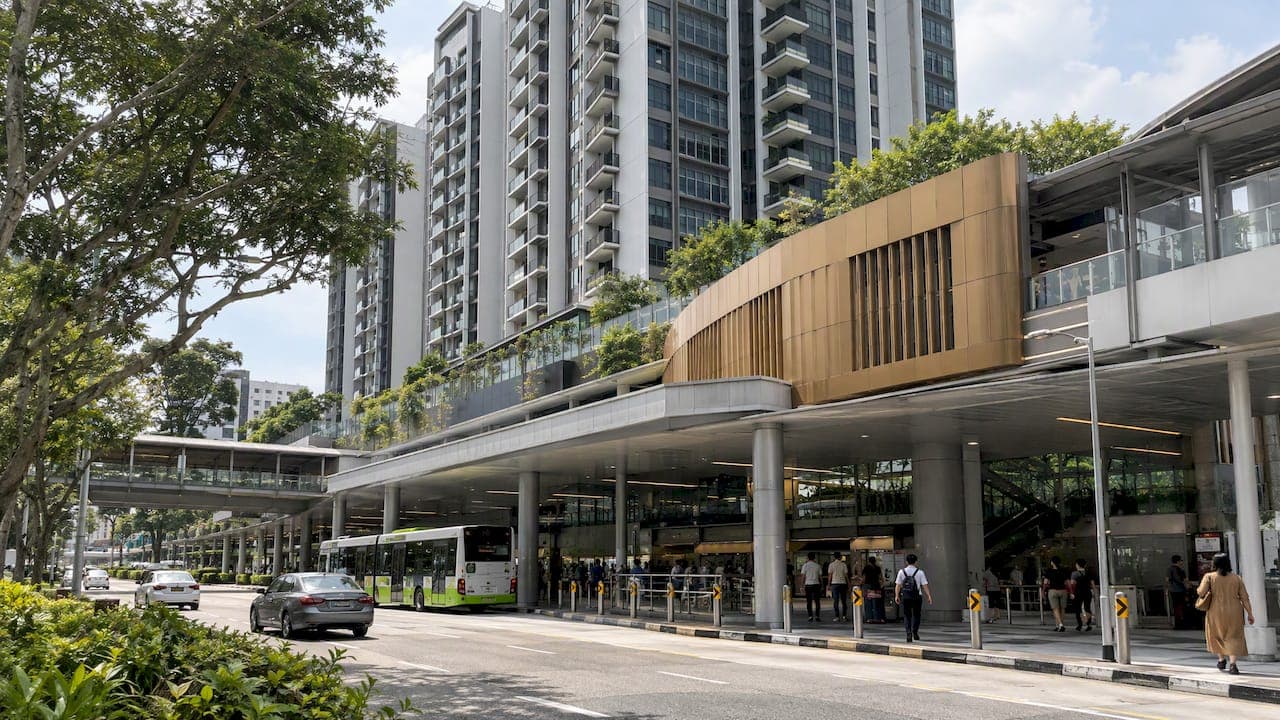
A bus interchange property is a residential or mixed-use development that includes, sits above, or directly adjoins a bus interchange, and in Singapore this kind of integration often comes with real convenience and a measurable price edge. Developments like Hougang Central Residences illustrate the model, while planning guidance from the URA and LTA shapes how these projects get built.
TL;DR:
- Resale price premiums for units near integrated transport hubs can be around 12.6%, though findings are based on limited case studies.
- Living above or beside a bus interchange can expose units to noise, vibration, and air quality issues if not properly mitigated in the development's design.
- Confirming the exact relationship between the residential unit and the interchange, including access points and ventilation, is crucial before purchase.
- Larger interchanges with bigger retail spaces tend to amplify the value and convenience benefits for residents and tenants.
- Buying before the retail and transport elements open offers potential savings but comes with increased uncertainty about noise, access, and completion timelines.
Table of Contents
- Why buyers and renters value bus interchange properties in Singapore
- What evidence says about price and rental impact
- Risks, disamenities, and common mitigations to check
- Checklist: how to evaluate a bus interchange property before you buy
- Case study: Hougang Central Residences and what the plans tell buyers
- How timelines and future transport upgrades affect value and buying timing
- Author perspective: which buyer and investor profiles benefit most
- How Hougang Central Residences fits the bus interchange property brief
- FAQ
- Sources
Why buyers and renters value bus interchange properties in Singapore
The appeal starts with the commute. When a bus interchange sits inside or beneath a residential tower, residents move from their lobby to a bus berth or MRT platform without stepping outside, which matters during Singapore's frequent downpours and midday heat. The URA's Master Plan 2025 references multiple operational Integrated Transport Hubs that link bus interchanges with MRT stations and adjoining retail, a planning approach meant to make daily journeys shorter and more sheltered.
The retail layer adds to the pitch. A supermarket, clinic, and food court built into the same podium as the transport node cuts down on separate errands, and that convenience compounds for households without a car.
These developments also reflect specific design priorities:
- Sheltered, barrier-free walkways connect residential lobbies to bus berths and train platforms.
- Retail and community uses are placed to generate foot traffic throughout the day, not just during commute hours.
- Bicycle parking and pedestrian-first street design reduce reliance on private vehicles.
Because only a limited number of sites combine residential towers with a full interchange, demand tends to concentrate wherever one gets built.
Pro Tip: Ask the developer or agent exactly which transit modes connect in-building versus which require stepping outside, since "near an interchange" and "integrated with an interchange" are not the same thing.
What evidence says about price and rental impact
Buyers often ask whether integration actually shows up in resale value, and the available evidence suggests it can, within limits. An academic study of the Bukit Panjang integrated hub found a resale price premium for units within the hub's influence area compared to control areas elsewhere, according to a hedonic regression study of the site. That figure comes from one case study rather than a market-wide average, so it should be read as an indication of what integration can add rather than a guaranteed uplift for every project.
The reasoning behind the premium is straightforward: fewer households need to budget time or money for a second leg of transport, and the retail mix inside the development adds rental appeal for tenants who want groceries and services within the building. Larger interchanges and bigger retail footprints tend to amplify this effect further, since they support a wider range of daily needs. A future MRT line arriving at the same node, as is planned for several Singapore developments, can also shift buyer expectations upward well before the line opens.
Risks, disamenities, and common mitigations to check
Living above or beside a bus interchange has trade-offs that are worth checking before you commit. Diesel and electric bus movements generate noise and low-frequency vibration, and units on lower floors facing the bus bay are the most exposed. Ventilation shafts tied to the interchange or mechanical plant rooms can also affect air flow and odor if not properly routed away from residential units.
A few other points are worth confirming directly with the developer:
- Vehicle access points for buses, pick-up and drop-off zones, and delivery trucks, and how far these sit from residential entrances.
- Operating hours for the retail mall and interchange, since early morning bus movements can start well before most residents wake.
- Whether acoustic treatment or screening is specified at interchange-facing facades, not just promised in marketing copy.
- Mechanical ventilation and exhaust routing plans for any unit near interchange structures.
Tender documents for integrated sites, including the one governing the Hougang site, typically mandate mechanical screening and barrier-free connections specifically to reduce these disamenities, so ask whether those same clauses appear in the project you are considering.
Checklist: how to evaluate a bus interchange property before you buy
Before signing anything, work through these checks in order:
- Confirm whether the interchange is truly in-building or merely a short walk away, and ask for the exact number and location of station exits relative to the residential lobby.
- Request the unit's floor level and orientation relative to the bus bay, ventilation shafts, and any mechanical plant rooms.
- Ask for the development's stated interchange gross floor area, retail mix, and provisions for pick-up and drop-off, bicycle parking, and sheltered linkways.
- Check the tender conditions or planning approvals tied to the site, the expected completion date, and how strata management will handle shared costs between residential, retail, and transport components.
- Factor in the likely price premium against your budget, along with standard Singapore buyer stamp duty and loan eligibility rules that apply to any private residential purchase.
Pro Tip: Bring a decibel meter app on your phone during a site visit at peak bus hours, since noise levels at ground level rarely match what you will experience on a higher floor.
For buyers weighing a purchase as a long-term asset, it is also worth reviewing how property inheritance works in Singapore before finalizing ownership structure, particularly for multi-generation households.
Case study: Hougang Central Residences and what the plans tell buyers
Hougang Central Residences offers a concrete example of how these specifications play out on paper. The site was awarded in January 2026 for a mixed-use development of approximately private homes built above a new Integrated Transport Hub, with tender conditions specifying a minimum bus interchange floor area specified and a retail mall of substantial size.
A few details stand out when reading the public plans:
- The development sits directly above Hougang MRT station, with the bus interchange and retail integrated into the same podium.
- Tender documents call for sheltered, barrier-free pedestrian connections between the residential lobby, interchange, and MRT platforms.
- Commercial components are expected to complete around 2030 to 2031, according to public reporting on the tender award.
- The site sits on a 99-year lease, consistent with other government land sales in Singapore.
Buyers interested in this project should review the site plan to see access points and podium layout, and check the project factsheet for unit mix and site area details before relying on any marketing summary.
How timelines and future transport upgrades affect value and buying timing
Committed infrastructure projects shift buyer expectations well before completion. The Cross Island Line interchange planned for the Hougang site is one such example, and committed lines like this tend to support price trajectories even during construction years.
Delivery schedules matter just as much. LTA milestones for interchange completion affect when retail opens, when rental demand picks up, and when resale comparables become meaningful. Buying pre-completion usually means a lower entry price but more uncertainty, while waiting closer to occupancy trades a likely higher price for more certainty about noise, access, and finished amenities.

Author perspective: which buyer and investor profiles benefit most
Commuters without a car, rental investors chasing tenant demand, and multi-generation households that value one-stop errands tend to gain the most from an integrated development. Buyers who prize quiet evenings over convenience might prefer a project set back from the interchange. Weigh the commute savings against the bustle you are willing to live with.
— Simon
How Hougang Central Residences fits the bus interchange property brief
For buyers specifically looking for this kind of integration, Hougang Central Residences pairs an in-building bus interchange with direct MRT access, an integrated retail mall, and a unit mix spanning 1-bedroom plus study to 5-bedroom penthouses. Pricing starts from $2,800 SGD per square foot, and the full range of layouts is listed on the residences page.
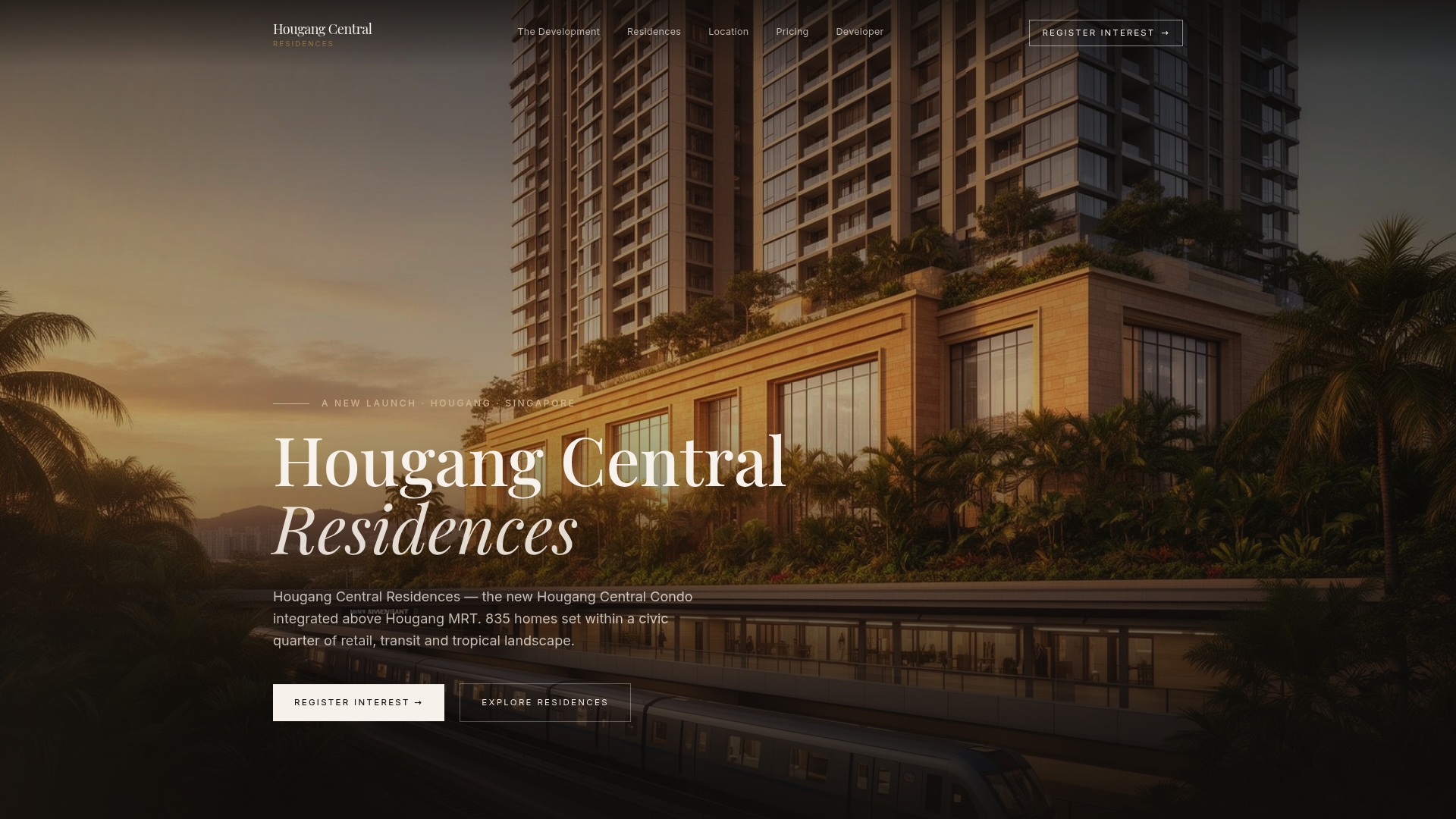
If you want to see how access points and orientation play out across the site, the site plan is the clearest starting point, and the location page covers the District 19 setting in more detail. From there, requesting pricing or booking a showflat visit is the fastest way to see how a specific unit stacks up against the checklist above.
This article is general information, not a substitute for advice from a qualified financial advisor. Consult a qualified financial professional about your own circumstances before acting on anything here.
FAQ
What does "bus interchange property" mean in Singapore?
It refers to a residential or mixed-use development that includes, sits above, or directly adjoins a bus interchange, often as part of a wider Integrated Transport Hub. URA planning guidance lists 15 such hubs currently operating across Singapore.
Do properties near a bus interchange really sell for more?
Evidence is limited but suggestive: one study of the Bukit Panjang hub found a resale premium of about 12.6% for units within its influence area, as shown in a hedonic regression study. This is a single case study, not a guaranteed market-wide figure, so treat it as an indication rather than a promise.
What should I check before buying a unit near an interchange?
Confirm the unit's floor and orientation relative to the bus bay and ventilation shafts, review the development's tender conditions for noise mitigation, and ask about retail mix and operating hours. The HDB tender conditions for the Hougang site show the kind of commitments worth looking for elsewhere too.
How much does Hougang Central Residences cost?
Hougang Central Residences is priced from $2,800 SGD per square foot on a one-off basis, with specific unit prices available through the residences page.
Does Hougang Central Residences actually integrate with the bus interchange?
Yes, the tender conditions for the site specify a minimum 6,500 square meter bus interchange built into the same development, alongside a retail mall of substantial size, as described in public reporting on the award.
Sources
- URA — Master Plan 2025: convenient and people-centric journeys
- LTA — Integrated Transport Hub (ITH)
- Impact of Integrated Transport Hubs on House Prices in Singapore (research paper)
- Land Transport Guru — Hougang ITH award coverage