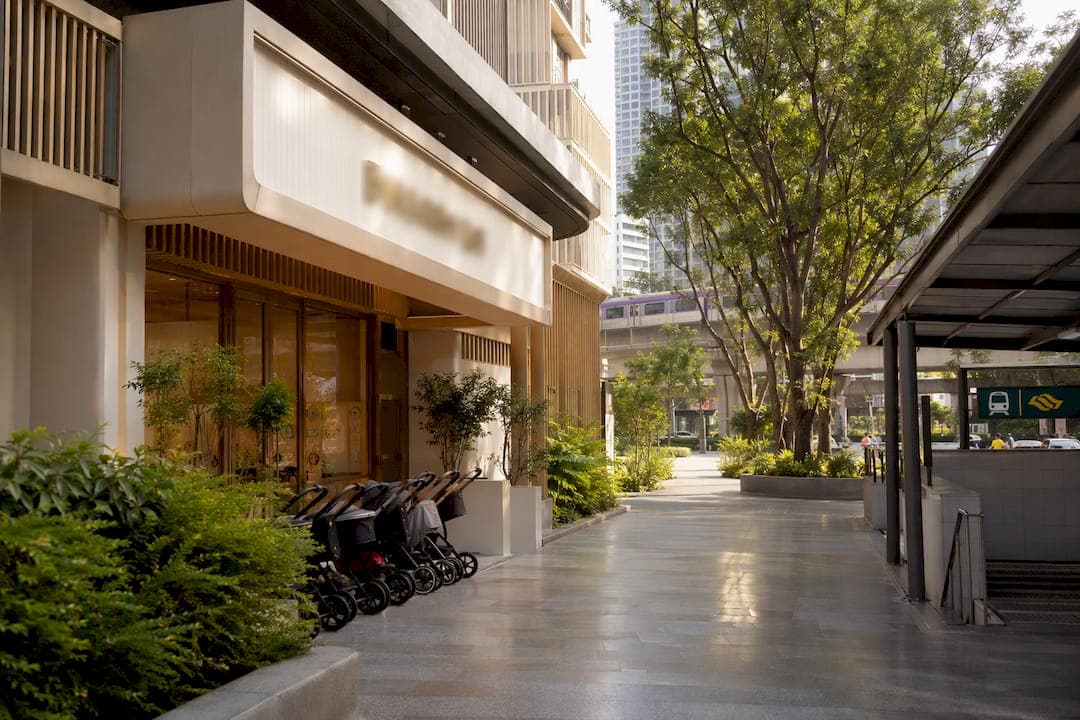
For most Hougang families, Star Learners at Hougang Central is the strongest overall pick, thanks to its ECDA Partner Operator fee cap, SPARK certification, and location practically on top of Hougang MRT. Close runners-up are Kinderland (Hougang) for its extended hours, Blossom Educare Centre (Hougang) for bilingual, ratio-transparent teaching, and E-Bridge Pre-School (Hougang Olive) for Anchor Operator stability. The sections below break down fees, curriculum, and how to shortlist confidently.
TL;DR:
- Families in Hougang should prioritize centres operated under ECDA fee caps, such as Star Learners, to benefit from government-supported affordability.
- The ideal centre depends on individual priorities: Star Learners offers the most cost certainty, while Kinderland provides extended hours with transparent fees.
- Staffing ratios and curriculum style, such as Blossom Educare’s bilingual approach or E-Bridge’s inquiry-based model, significantly influence suitability for different children.
- Proximity to Hougang MRT can drastically ease daily routines, especially if home is above the station, reducing the overall commute and associated stress.
- Application wait times range from three to six months, especially for popular POP and Anchor Operator centres, so early planning and multiple applications are crucial.
Table of Contents
- Best Childcare Hougang: Top Centres Compared at a Glance
- What Actually Differs Between These Centres?
- How Do You Choose the Right Childcare Centre in Hougang?
- How Hougang Central Living Changes Your Childcare Routine
- When Should You Apply and How Long Is the Wait?
- What Subsidies Can Hougang Families Actually Claim?
- What Extra Services Do These Centres Offer Beyond Basic Care?
- How Safe and Well-Equipped Are These Facilities?
- What Transport Options Matter Beyond Just Being Nearby?
- How Do These Centres Keep Parents in the Loop?
- What Do Existing Reviews and Certifications Actually Tell You?
- A Parent's-Eye View on Convenience Versus Curriculum
- A Different Kind of Decision: Where You Live, Not Just Where They Learn
- Sources
- FAQ
Best Childcare Hougang: Top Centres Compared at a Glance
Four centres consistently come up when Hougang parents compare notes at the playground or on parenting forums: Star Learners, Kinderland, Blossom Educare Centre, and E-Bridge Pre-School. Each serves a slightly different priority, so the "best" one really depends on whether you're optimizing for cost certainty, curriculum style, or operating hours.
Here's a quick profile of each, based on what the centres themselves publish.
-
Star Learners (Hougang / Hougang Central) is a Partner Operator (POP) preschool under the ECDA framework, serving children from 18 months to 6 years. Because it's a POP centre, its fees are capped by government agreement rather than set freely by the operator. Star Learners reports 2026 full-day childcare fees of S$650 for Singapore citizens before subsidies, and the centre carries SPARK certification, Singapore's quality accreditation for early childhood programs. It sits right in Hougang Central, making it one of the most walkable options for families living near the MRT interchange.
-
Kinderland (Hougang) has been operating in the Hougang/Kovan corridor long enough to build a reputation around its music-infused early learning approach. It publishes some of the most detailed fee breakdowns of any centre in the area: infant care runs S$2,398.20 and childcare runs S$1,711.10 per month for full-day programs before subsidies. Operating hours stretch from 7:00am to 7:00pm on weekdays, which matters if your commute doesn't fit neatly into a 9-to-5 window.
-
Blossom Educare Centre (Hougang) stands out for two things most centres leave vague: bilingual instruction and staff-child ratios. The centre's Hougang branch page lists a 1:6 ratio for playgroup and 1:9 to 1:12 for nursery levels, spanning playgroup, nursery, and kindergarten. If you want your child taught consistently in two languages rather than picking up a second language as an afterthought, this is the centre built around that.
-
E-Bridge Pre-School (Hougang Olive) operates as an Anchor Operator, which comes with a different pricing and oversight model than POP centres (more on that distinction below). Its curriculum draws on the Reggio Emilia approach, an inquiry-based teaching philosophy where children direct much of their own exploration rather than following a fixed lesson plan. E-Bridge belongs to the EtonHouse group, giving it institutional backing that some parents value when weighing long-term stability.
A few things worth noting across all four:
- Every centre listed here mentions proximity to Kovan or Hougang MRT as a selling point, not an afterthought.
- Fee figures above are full fees before any government subsidy is applied; most Singaporean families will pay considerably less after the Basic Subsidy and, if eligible, the Additional Subsidy.
- None of these centres are the cheapest technically available in Singapore, but all four sit within a reasonable band for a mature, well-served town like Hougang.
What Actually Differs Between These Centres?
Strip away the marketing copy and four variables separate these centres: operator type, fee structure, programme focus, and hours. Operator type matters more than most parents realize, because it directly shapes what a centre is allowed to charge.
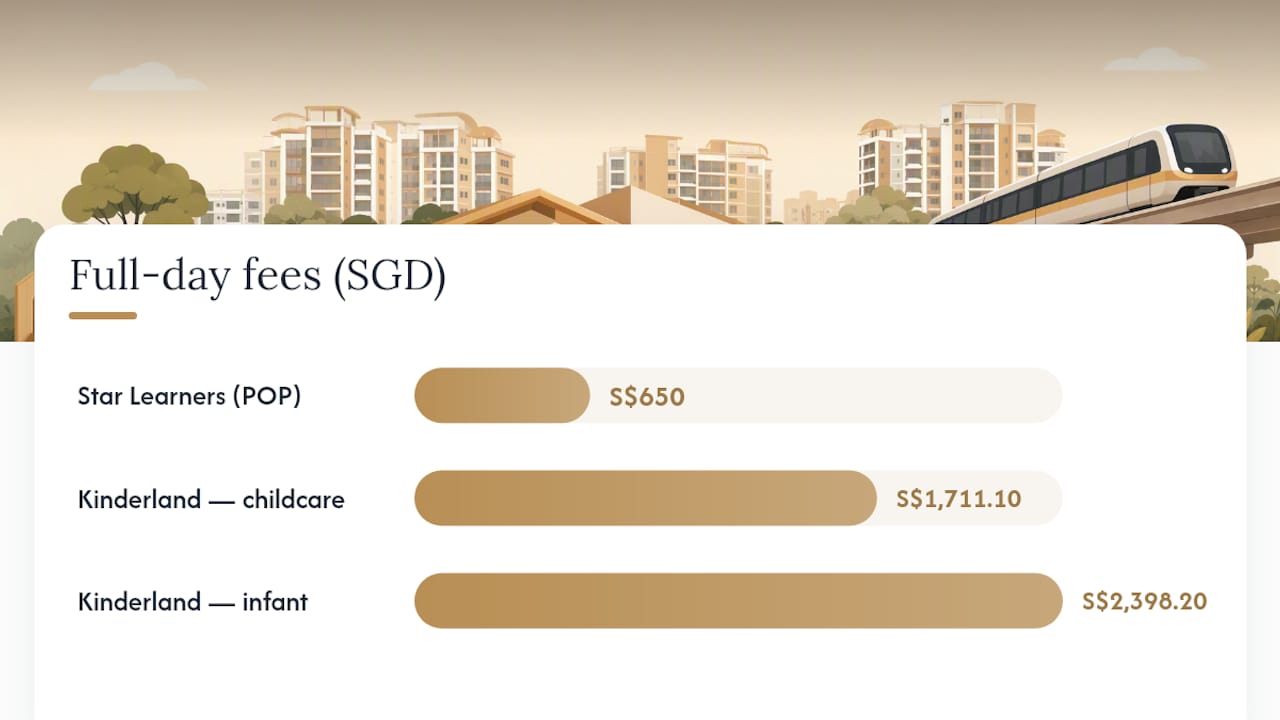
Partner Operator (POP) centres, like Star Learners, sign an agreement with ECDA to keep fees under a government-set cap in exchange for grants and support. Anchor Operator centres, like E-Bridge, operate under a similar but distinct scheme with its own fee ceiling and quality commitments. Neither model is "cheaper" or "better" in absolute terms. Both exist specifically because ECDA wants affordable, quality-assured options across every town, including Hougang. Local reporting on the fee-cap framework confirms that POP centres like Star Learners are required to stay within capped rates, which is exactly why its S$650 full-day fee reads as unusually low next to a private centre like Kinderland.
Here's how the sourced numbers stack up:
| Centre | Operator Type | Example Full-Day Fee (SGD, before subsidy) | SPARK Certified | Best For |
|---|---|---|---|---|
| Hougang-central-residences area: Star Learners (Hougang Central) | Partner Operator (POP) | S$650 | Yes | Families wanting fee-cap affordability near the MRT |
| Kinderland (Hougang) | Private / not stated as POP or Anchor | S$1,711.10 (childcare); S$2,398.20 (infant care) | Not stated | Families wanting extended hours and detailed fee transparency |
| Blossom Educare Centre (Hougang) | Not stated | Not publicly listed | Not stated | Families wanting bilingual, ratio-transparent teaching |
| E-Bridge Pre-School (Hougang Olive) | Anchor Operator | Not publicly listed | Not stated | Families wanting Anchor Operator stability and inquiry-based curriculum |
A few things the table doesn't capture on its own. Kinderland's higher fee reflects the fact that it isn't operating under the same government fee cap as Star Learners, and its published rates cover infant care separately from childcare, which is a more granular breakdown than most competitors offer. Blossom Educare and E-Bridge don't publish exact fee figures on their public pages, which is common for centres that prefer to walk parents through pricing during an actual enrollment inquiry.
On programme coverage, Star Learners spans the widest age range (18 months to 6 years), while Blossom Educare's playgroup-through-kindergarten pathway is built around gradual, stage-based transitions rather than one continuous programme. If your child is still in infant care, Kinderland's published infant rate gives you a concrete number to budget against before you even schedule a visit.
How Do You Choose the Right Childcare Centre in Hougang?
Touring a childcare centre can feel like assessing four things at once: the teachers, the space, the paperwork, and your own gut instinct. Narrowing it down gets easier once you know exactly what to ask.
- Check the commute fit first, not last. A centre that's five minutes from home but fifteen minutes out of your way to work will wear on you faster than a slightly pricier one directly on your route.
- Confirm ECDA operator status and what it means for fees. Ask directly whether the centre is a Partner Operator, Anchor Operator, or fully private since this determines whether fees are capped or market-set.
- Match curriculum to your child's age and temperament. An inquiry-based Reggio Emilia style suits a curious, independent toddler differently than a structured, music-based curriculum would.
- Ask for the actual staff-child ratio, not a vague "small class sizes" answer. Blossom Educare's published 1:6 for playgroup is the kind of specific number you want every centre to give you.
- Clarify hours and late pickup policy in writing. Kinderland's 7:00am to 7:00pm window works for most office hours, but confirm whether late fees apply past closing.
- Ask about hygiene protocols and how sick-child policies work. Watch how staff talk about this. Vague answers here are a red flag.
- Ask what a normal day looks like, hour by hour. This tells you more about fit than any brochure will.
Red flags worth walking away from: a centre that can't give you a written fee breakdown on request, staff who dodge questions about qualifications, visible clutter or unclean surfaces during a walk-through, and no clear answer on caregiver-to-child ratios.
Pro Tip: Visit during actual drop-off or pick-up hours, not a quiet mid-morning slot. Rush hour reveals how chaotic (or calm) the handover process really is, and that's the moment you'll be living through every single workday.
How Hougang Central Living Changes Your Childcare Routine
Choosing a childcare centre is only half the equation. Where you live relative to that centre quietly shapes your entire weekday. Families based directly above Hougang MRT, at a development like Hougang Central Residences, skip the second commute leg entirely: no drive to the station, no bus connection, just a lift down and a short walk to drop-off.
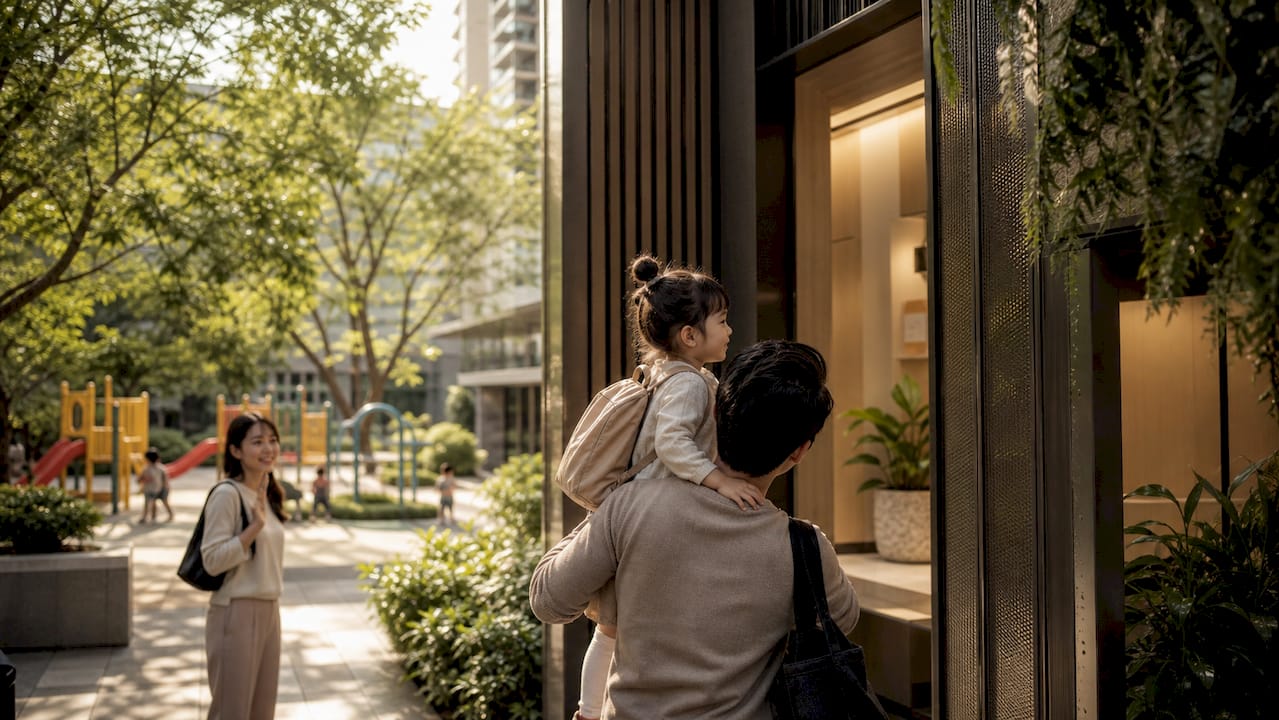
That proximity compounds in small ways parents underestimate. Choosing a centre that sits on your daily commute route rather than in a completely different direction reduces daily friction in ways that add up over a school year, not just a single trip.
A few concrete examples of what this looks like day to day:
- Picking up a forgotten diaper bag or spare uniform from home takes minutes, not a detour across town.
- Integrated retail beneath a transit-linked condo means grabbing dinner or a missing school supply doesn't require a separate errand trip.
- Smart-home features, like remote-controlled lighting or appliances, mean parents can start dinner prep or laundry mid-commute instead of after a tired toddler is already asking for attention.
- Family-oriented facilities within the development give options for weekend downtime without needing to travel anywhere at all.
None of this replaces choosing the right centre on its own merits. But it does mean fewer wasted minutes stacked on top of an already full day. Parents weighing where to live relative to childcare options can check the family amenities checklist for a fuller picture of what to look for.
When Should You Apply and How Long Is the Wait?
Popular Hougang centres, particularly POP and Anchor Operator ones with capped fees, tend to fill up faster than private alternatives simply because the pricing makes them attractive to more families. Applications for infant care in particular should go in as early as during pregnancy at some centres, since infant care spots are the most limited by staff-child ratio requirements.
For childcare (ages 18 months to 6 years), a realistic timeline is 3 to 6 months ahead of your intended start date, though popular centres near Hougang MRT sometimes fill faster during peak enrollment periods around the start of the school year in January. Most centres will let you join a waitlist even without an immediate opening, and it's worth doing this at more than one centre simultaneously rather than waiting on a single application.
The actual process usually runs in a predictable order: submit an inquiry or registration form, tour the centre, receive a fee schedule and enrollment agreement, then pay a registration deposit to secure the place. Some centres, particularly POP ones bound by ECDA's framework, have more standardized paperwork than private operators, which can make the process feel faster even if the waitlist itself is longer. Always ask directly about current waitlist length for your child's specific age group rather than assuming general availability applies to your situation.
What Subsidies Can Hougang Families Actually Claim?
Every Singapore citizen child enrolled in an ECDA-licensed centre, including all four profiled here, qualifies for the Basic Subsidy, which applies regardless of household income. Families with lower household income can also qualify for the Additional Subsidy, which is means-tested and reduces fees further on top of the basic amount.
This is exactly why the full fees quoted earlier, like Star Learners' S$650 or Kinderland's S$1,711.10, aren't what most Singaporean families actually pay out of pocket. After subsidies are applied, the real monthly cost is typically a fraction of the published rate. Eligibility isn't specific to Hougang as a town. It's a national framework administered by ECDA, so a family moving from another part of Singapore into Hougang carries the same eligibility with them.
Permanent Resident families qualify for a separate, generally lower subsidy tier than citizens, and it's worth confirming the exact figure directly with your chosen centre since it varies by citizenship status and household income bracket. Centres are required to walk you through the subsidy calculation during enrollment, so don't hesitate to ask for the after-subsidy number in writing before signing anything. That number, not the headline fee, is the one that should actually shape your decision.
What Extra Services Do These Centres Offer Beyond Basic Care?
Beyond core hours, most Hougang centres differentiate through extended care, meals, and enrichment add-ons. Extended care, sometimes called late pickup or after-hours care, lets parents whose workday runs past standard closing keep their child at the centre for an additional fee, and Kinderland's 7:00am to 7:00pm baseline already covers more ground than many centres offer as standard.
Meals are typically included in full-day fees across POP and Anchor Operator centres, usually covering breakfast, lunch, and a snack, with dietary accommodations available on request for allergies or religious requirements. It's worth confirming exactly what's included versus billed separately, since some private centres itemize meals apart from the base fee.
Enrichment programmes vary the most between centres and are often where the real curriculum differences show up. Star Learners layers structured enrichment activities on top of its core SPARK-certified programme. Kinderland's music-infused curriculum runs through daily activities rather than as a bolt-on class. Blossom Educare's bilingual instruction functions as a built-in enrichment layer rather than an optional extra. E-Bridge's inquiry-based model treats exploration itself as the enrichment, letting children pursue questions through guided projects instead of scheduled add-on classes. None of these approaches is objectively superior, but they do suit different kinds of learners, so it's worth asking how enrichment actually gets delivered day to day rather than assuming a list of activity names on a brochure tells the whole story.
How Safe and Well-Equipped Are These Facilities?
ECDA licensing itself sets a baseline safety standard every centre on this list must meet, covering everything from child-proofing to staff first-aid certification to fire safety compliance. That baseline is non-negotiable regardless of which centre you choose, so licensing status is really a floor, not a differentiator.
What varies is how transparently a centre communicates safety practices beyond the minimum. Blossom Educare's published staff-child ratios (1:6 for playgroup, 1:9 to 1:12 for nursery) are a safety indicator as much as a curriculum one. Tighter ratios mean more supervision per child during transitions, meals, and outdoor play, when most minor accidents actually happen.
During a tour, look past the obvious things like clean floors and ask about specifics: how visitors are screened at entry, whether CCTV covers all indoor and outdoor areas, how allergy information is tracked and communicated to all staff (not just the lead teacher), and what the emergency evacuation drill schedule looks like. A centre confident in its safety record will answer these without hesitation, often pointing you to a written policy document rather than giving a verbal reassurance.
What Transport Options Matter Beyond Just Being Nearby?
Proximity to Hougang MRT gets mentioned on nearly every centre's page, but "near the MRT" covers a wide range of actual walking distances and route complexity. Kinderland, E-Bridge, and Star Learners all cite convenience to Kovan or Hougang MRT as a selling point, yet the practical experience of getting there differs depending on whether you're walking, driving, or coming by bus.
For parents driving, check whether the centre has dedicated pickup and drop-off parking, since Hougang's residential streets can get tight during school-run hours. For parents relying on public transport, factor in whether your route requires a bus transfer after the MRT or if it's a direct walk, since that second leg is often what actually determines your morning stress level, not the MRT distance alone.
If you're also handling errands around drop-off, like grabbing breakfast or picking up groceries, it's worth checking what's actually walkable from the centre versus requiring a separate trip. A local dining guide can help you map out realistic morning or evening routines around whichever centre you choose. Families who cycle or walk with a stroller should also ask whether the centre has covered waiting areas, since Singapore's weather makes this more relevant than it sounds on paper.
How Do These Centres Keep Parents in the Loop?
Daily communication quality varies more between centres than most parents expect going in, and it becomes one of the biggest sources of either reassurance or frustration once your child is actually enrolled. Most established centres in Hougang use a dedicated parent app or portal for daily updates covering meals, naps, diaper changes, and mood notes, giving working parents visibility into the day without needing a phone call.
Beyond daily logs, ask about the cadence of formal communication: how often parent-teacher conferences happen, whether there's a termly progress report, and how quickly staff respond to a message flagged as urgent. Centres with SPARK certification, like Star Learners, are held to documented quality standards that typically include structured parent engagement as part of the accreditation criteria.
It's also worth asking how a centre handles the small, unscheduled moments. Who do you call if your child seems off during the day? Is there a single point of contact or does it depend on which staff member is on duty? Centres that give a clear, specific answer here tend to be the ones with genuinely consistent communication practices rather than ones that treat parent updates as an afterthought.
What Do Existing Reviews and Certifications Actually Tell You?
SPARK certification is the closest thing Singapore has to an official quality seal for early childhood centres, and it's granted only after a structured review of a centre's curriculum, staff development, and health and safety practices. Star Learners holds this certification, which gives parents an external quality signal beyond the centre's own marketing claims.
Beyond formal certification, published fee transparency itself functions as a quality indicator. Kinderland's decision to list exact infant care and childcare fees publicly, down to the cent, suggests a level of operational confidence that vaguer pricing pages don't convey. Similarly, Blossom Educare's willingness to publish specific staff-child ratios rather than a generic "small class sizes" claim gives parents something concrete to verify during a visit rather than take on faith.
When you read reviews for any centre, whether on Google, parenting forums, or word of mouth in your own building, weigh specificity over sentiment. A review that mentions a particular teacher's name, a concrete incident, or a specific programme detail tells you more than a generic five-star rating with no context. Ask each centre directly if they can connect you with a current enrolled family for an informal chat. Centres confident in their quality rarely hesitate to offer this.
A Parent's-Eye View on Convenience Versus Curriculum
The tension every Hougang parent eventually faces is this: do you optimize for the centre closest to home, or the one whose curriculum philosophy actually matches your child? My honest read, after digging through what these four centres publish, is that convenience should win more often than parents give it credit for, provided the curriculum gap between options isn't enormous.
A brilliant Reggio Emilia programme five bus stops away loses its shine fast once you're doing that commute twice a day, every day, for three years. A solid, ECDA-certified programme two minutes from your door tends to win on the metric that actually matters most: whether you and your child show up rested and unstressed.
Here's a short checklist worth running through on any tour:
- Would this commute still feel manageable on a rainy Monday in month eight?
- Does the staff answer specific questions (ratios, fees, sick policy) without hedging?
- Does your child seem curious or anxious walking through the space?
If you're also weighing where to live relative to whichever centre you choose, it's worth looking at how condo living near transit hubs actually plays out for families day to day, not just on a floor plan.
— Simon
A Different Kind of Decision: Where You Live, Not Just Where They Learn
Every centre compared above solves the childcare question. None of them solves the commute question, and that's a separate decision entirely. If your family is still choosing where to live in Hougang, the location of your home relative to Hougang MRT shapes every school-run morning for years, regardless of which centre you eventually pick.
Hougang Central Residences sits directly above Hougang MRT, with 835 units ranging from one-bedroom-plus-study to five-bedroom penthouses, integrated retail, and smart-home systems built into daily routines like remote lighting and appliance control. For a family juggling drop-off, work, and pickup, cutting out a second commute leg between home and station is a structural time saving, not a lifestyle upgrade.
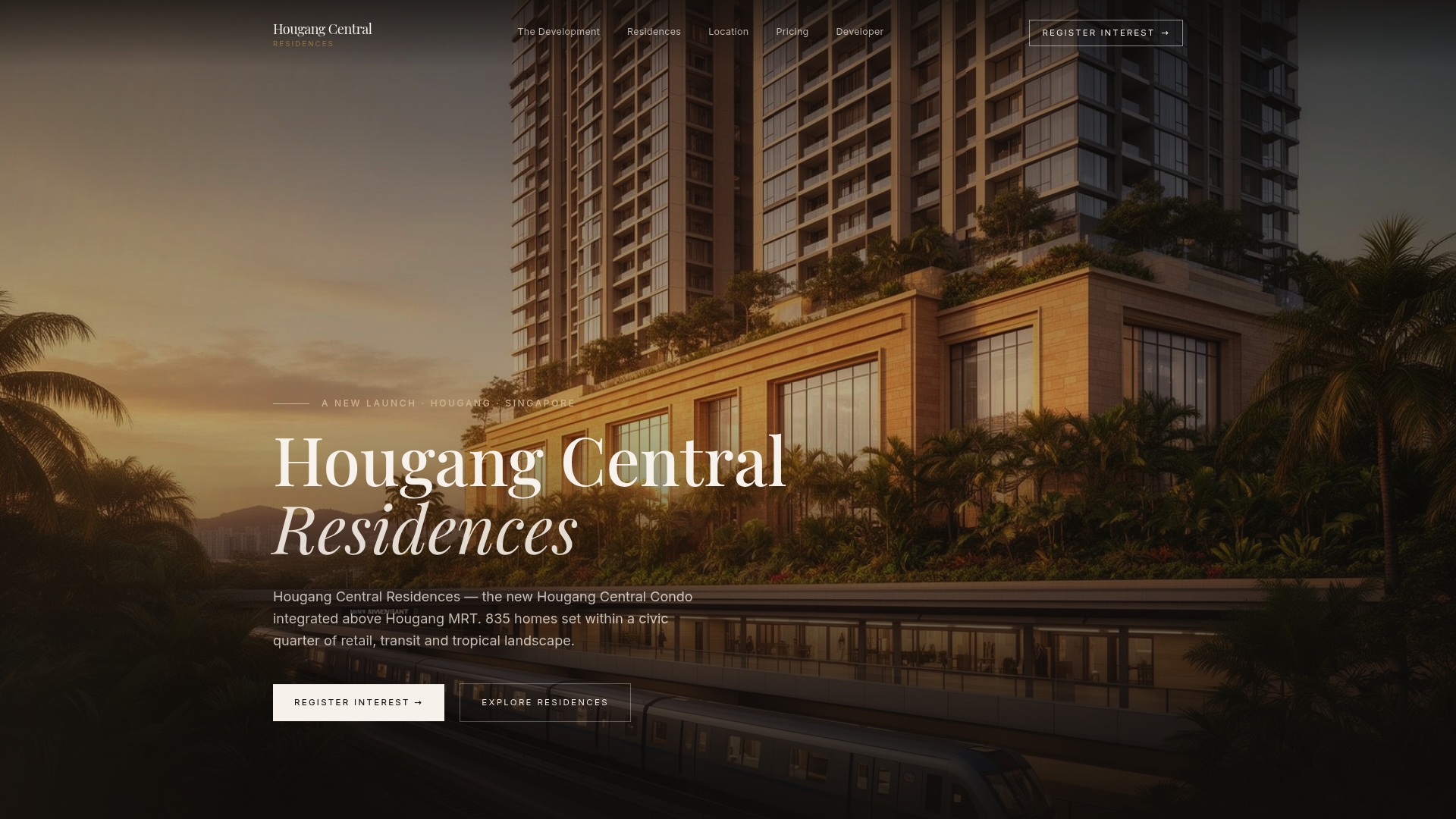
The development's tropical landscaped grounds and wellness facilities also give families a reason to stay local on weekends instead of traveling elsewhere for downtime. If you're comparing childcare centres in Hougang and want to see how a home directly above the MRT could simplify your family's daily routine, register your interest in Hougang Central Residences and request the e-brochure to see unit layouts and estimated availability.
FAQ
Which childcare is best in Singapore?
There's no single best centre nationwide since fit depends on curriculum style, fees, and commute, but in Hougang specifically, Star Learners stands out for combining ECDA fee-cap affordability with SPARK certification and MRT proximity.
How much does daycare cost in Singapore?
Full-day fees before subsidy vary widely by operator type and centre; Star Learners' POP fee is S$650 while Kinderland Hougang lists fees for childcare and infant care separately, all before government subsidies are applied.
What are the top preschools in Singapore?
Preschool quality is often judged through ECDA licensing and SPARK certification rather than a single ranked list, and in Hougang, Star Learners, Kinderland, Blossom Educare Centre, and E-Bridge Pre-School are the most consistently mentioned options.
What are the cheapest childcare options in Singapore?
Partner Operator and Anchor Operator centres tend to offer the lowest full fees because they operate under ECDA fee caps; Star Learners' S$650 rate in Hougang is a direct example of this pricing model in action.
Is Star Learners in Hougang a good choice for infant care?
Star Learners serves children from 18 months, so for infants younger than that, families in Hougang would need to check availability with centres like Kinderland that publish separate infant care fees and programs.