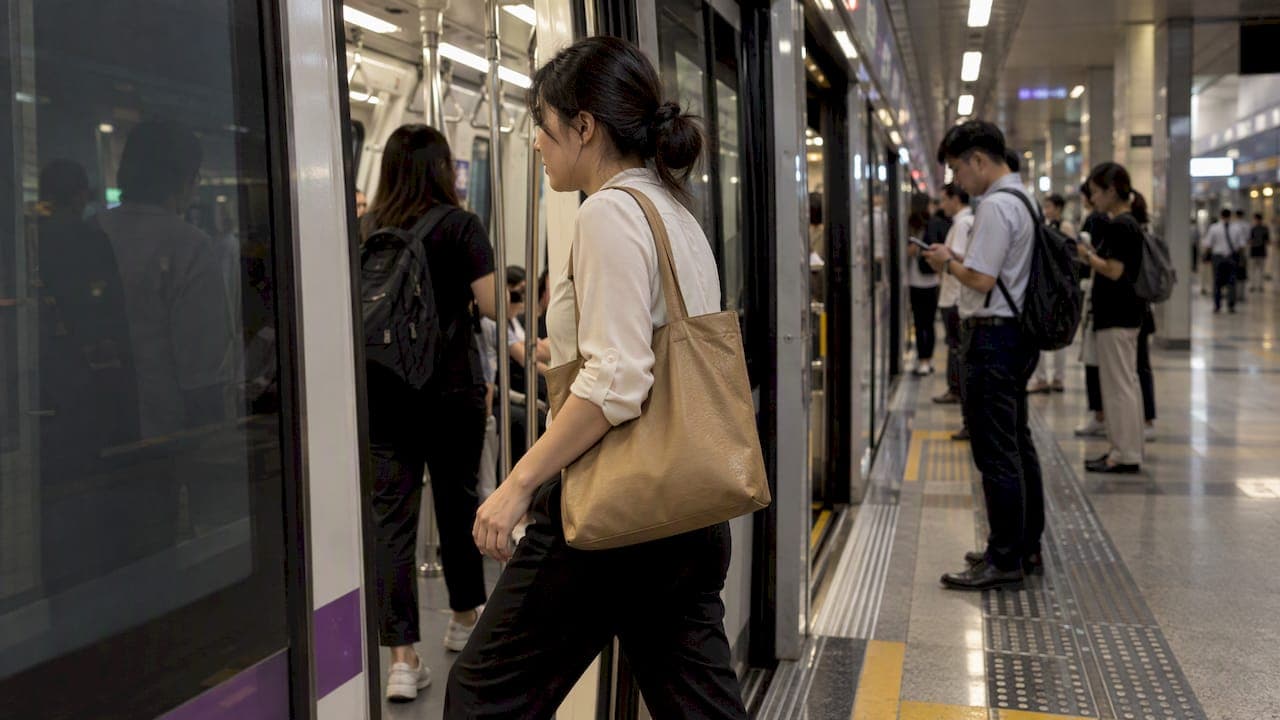
The fastest reliable way from Hougang to the Central Business District is a North East Line ride to Dhoby Ghaut, which puts you in the heart of the CBD without a transfer. At weekday peak, City Direct express buses (CDS 660, 675 through 678) are often faster and more comfortable if you live near the right boarding stop. Check live times before you leave, since both options shift with traffic and train spacing.
TL;DR:
- Hougang to Dhoby Ghaut takes 20 to 25 minutes by train, with nearby CBD offices typically 30 to 40 minutes away door to desk.
- City Direct routes 660 and 675 through 678 serve Anson Road and Suntec only during weekday peaks, with no service on public holidays.
- Allow at least five minutes after a feeder bus is due; missing a City Direct departure means waiting for its next peak trip.
- For late night trips, heavy luggage, or groups sharing the fare, taxis or app rides fill gaps, but evening surcharges can roughly double midday fares.
Table of Contents
- At a Glance: Which Route Should You Take This Morning?
- Taking the North East Line From Hougang to Dhoby Ghaut
- City Direct Buses: Services 660, 675, 676, 677, and 678
- Combining Feeder Buses With MRT or City Direct Boarding Points
- When Taxi or Ride-Hail Makes Sense
- Checking Live Times Before You Leave
- Accessibility and Walking Considerations
- How Living Above Hougang MRT Changes the Equation
- Peak Versus Off-Peak: What Your Commute Actually Looks Like
- Cycling, Park-and-Ride, and Other Alternatives
- Smart Timing Tips for a Smoother Commute
- Practical Takeaways: Pick the Commute That Fits Your Morning
- Another Option: Living Above Hougang MRT at Hougang Central Residences
- FAQ
- Sources
At a Glance: Which Route Should You Take This Morning?
Most commutes from Hougang come down to four real choices, and the right one depends on your schedule and how much you value a seat over speed.
- Simplest and most consistent: a single North East Line ride from Hougang MRT straight to Dhoby Ghaut, no transfer required.
- Most comfortable during peak hours: a City Direct express bus (CDS 660, 675, 676, 677 or 678) if you live near one of their Hougang boarding stops, since you get a seat and a direct run into the CBD.
- Fastest right now, this specific morning: whichever option has the shorter wait according to live departure data, which is why checking the LTA journey planner before leaving home matters more than any fixed rule.
- Best for odd hours or heavy luggage: taxi or ride-hail, especially after the last train or before the first City Direct trip of the day.
None of these options is wrong. The MRT wins on reliability and frequency, the City Direct buses win on comfort during the two peak windows, and knowing your nearest boarding point for each is what actually saves you time.
Taking the North East Line From Hougang to Dhoby Ghaut
Hougang MRT sits on the North East Line, and Dhoby Ghaut is one of its direct stops, meaning you board once and get off in the CBD without switching trains. This is the backbone route for most Hougang residents heading to work, and it runs on one of the most frequent lines in the network.
In-train travel time between Hougang and Dhoby Ghaut typically runs in the range of 20 to 25 minutes depending on the time of day, with a door-to-desk estimate (including the walk to the platform and the walk from Dhoby Ghaut to a nearby office) usually landing somewhere between 30 and 40 minutes for most CBD addresses. Trains on most lines, including the North East Line, generally operate from around 5:30 a.m. to midnight, so early starts and late finishes are both well covered, though you should confirm the exact first and last train times for Hougang station on the MyTransport app since timing varies by station.
Dhoby Ghaut is one of the few stations in Singapore with three lines converging, which makes it a genuine interchange hub rather than just a stop. From there, you can transfer to the North South Line for Orchard Road and points south, or to the Circle Line for the Downtown area and a loop toward Suntec and Promenade. If your office sits closer to Suntec or Temasek Boulevard, staying on past Dhoby Ghaut and transferring once more, or switching to a City Direct bus entirely, often shaves a few minutes off the walk.
Which exit you use at Hougang MRT matters more than most commuters realize. The exits closest to the bus interchange also put you nearest several feeder and City Direct boarding stops, so if you are debating between rail and bus on a given morning, starting from the same general area keeps both options open until the last minute.
City Direct Buses: Services 660, 675, 676, 677, and 678
City Direct services are peak-only express buses designed to take residents straight into the CBD without the stops of a regular bus route or the walk-and-transfer pattern of rail. For Hougang, several services matter: CDS 660, 675, 676, 677, and 678.
- CDS 660 is the longest-running of the group, connecting Hougang and Buangkok areas to Shenton Way and Anson Road with multiple morning and evening weekday trips, as documented by Land Transport Guru.
- CDS 675, 676, and 677 launched on January 2, 2025, specifically to connect Hougang and Sengkang residents to the CBD, stopping at Anson Road and Temasek Boulevard, according to the SBS Transit service announcement.
- CDS 678 rounds out the group, reported by The Straits Times as running two morning and two evening weekday trips, also terminating near Suntec and Temasek Boulevard.
All of these routes run weekday peak trips only, with limited departures in the morning push toward the city and the evening push back out, excluding public holidays. The city-side stops cluster around Anson Road for the Shenton Way financial district and around Temasek Boulevard and Suntec for the convention and office cluster near Marina Bay.
The practical rule of thumb: if your home or your usual walking route puts you within a few minutes of a City Direct boarding stop, and your office is near Anson Road or Suntec, the bus usually beats the MRT-plus-walk combination because you skip both a transfer and a second walk. If you live closer to the MRT entrance itself, or your office sits near Orchard or the Downtown cluster, the train is usually the simpler call.
Combining Feeder Buses With MRT or City Direct Boarding Points
Many residents in the estate pockets around Hougang do not live within easy walking distance of the MRT station or a City Direct stop, which is where short feeder bus hops come in. Services that loop through Hougang Avenue and Hougang Street blocks typically drop you at the MRT station or near the bus interchange in under ten minutes, making a feeder-to-rail or feeder-to-CDS transfer a normal part of the morning for a lot of commuters.
The key to making this work is buffer time. Give yourself at least five extra minutes beyond the feeder bus's scheduled arrival, since local bus timing can shift with traffic lights and school-hour congestion, and a missed City Direct departure means waiting for the next peak-window trip rather than just the next train.
A few common morning combinations look like this:
- Walk or take a short feeder bus to Hougang MRT, then ride the North East Line direct to Dhoby Ghaut.
- Take a feeder bus to a City Direct boarding stop near the interchange, then ride CDS 660 or one of the 675 to 678 group straight to Anson Road or Suntec.
- Walk to the MRT, ride one stop if needed, then transfer at Dhoby Ghaut for Orchard or the Downtown Line toward Marina Bay.
Each of these shaves different minutes depending on where you start, so testing your own combination once or twice in the first weeks of a new commute is worth the time.
When Taxi or Ride-Hail Makes Sense
Taxi or ride-hail is the right call when you are traveling off-peak and want door-to-door speed, carrying luggage that makes a bus transfer awkward, traveling as a group where splitting the fare beats several train tickets, or you have missed the last train and need to get into or out of the CBD late at night.
Fares in Singapore are metered, with additional surcharges that apply during peak hours, midnight hours, and for trips into the designated city area, so a short Hougang-to-CBD ride can cost noticeably more during the evening peak than the same trip at 10 a.m., per the LTA's public transport fare guide.
Pro Tip: Check the fare estimate in your ride-hail app before confirming, since surcharge stacking during evening peak can roughly double a quiet midday fare for the same route.
Always ask for or save a digital receipt, especially for work travel claims, since surcharges can make the final fare different from the initial meter estimate.
Checking Live Times Before You Leave
The single best habit for this commute is checking live data before you walk out the door, rather than relying on a fixed schedule you memorized months ago.
- Open the LTA journey planner or the MyTransport app to confirm the next train departure and your intended exit at Dhoby Ghaut.
- Compare that wait time against the next scheduled City Direct departure for your boarding stop, since CDS trips run on a limited peak schedule rather than continuous frequency.
- Factor in a buffer of a few minutes if you are combining a feeder bus with either option, since local bus arrival times can shift.
Pro Tip: If your commute window falls right at the edge of the morning peak, check both the MRT and City Direct options side by side; a five-minute difference in when you leave home can change which one is actually faster that day.
Some fare incentive programs exist for eligible commuters using feeder and express connections during specific windows. If you want to check whether your travel pattern qualifies, the LTA's journey planning page links out to the relevant SimplyGo and travel incentive details.
Accessibility and Walking Considerations
Hougang MRT has multiple exits, and the ones nearest the bus interchange and retail podium generally offer sheltered, step-free walkways, which matters if you are managing a stroller, a wheelchair, or simply do not want to get soaked in a sudden downpour.
On the CBD side, alighting near Anson Road or Temasek Boulevard from a City Direct bus often means a shorter final walk to a specific office tower than taking the MRT to Dhoby Ghaut and then walking or transferring again. If you are commuting with heavy items or during a mobility-sensitive period, favoring whichever option drops you closest to your building door, even if it takes a few extra minutes overall, is usually worth it.
During peak crowd surges, standing slightly back from the platform edge and letting one full train pass before boarding can mean the difference between a cramped ride and a comfortable one.
How Living Above Hougang MRT Changes the Equation
Being able to walk from your front door straight into a station changes the math on almost every option above. Living directly above an MRT station reduces the walk-to-platform time that adds minutes to most commuters' mornings to just going downstairs.
The development is also positioned near the planned Cross Island Line interchange, expected to serve Hougang by 2030, which would add a second rail line directly beneath residents' feet and open more direct routes across the island without needing to transfer through Dhoby Ghaut first. For a deeper look at how interchange access tends to affect door-to-destination time, our guide to evaluating MRT interchange connectivity walks through the practical benefits.
In practice, this kind of integration means fewer transfers to reach the CBD today, multiple exit points into the station and bus interchange below, and a future second line that complements rather than replaces the City Direct and North East Line options covered above. It does not eliminate the need to check live timings, but it does shrink the part of the commute most people cannot control: getting to the platform in the first place.
Peak Versus Off-Peak: What Your Commute Actually Looks Like
During the morning peak, roughly 7:30 to 9 a.m. peak time, North East Line trains run at their highest frequency, but platforms and carriages at Hougang are often crowded, and the in-train time to Dhoby Ghaut can feel longer due to dwell times at busy intermediate stations like Serangoon and Little India. City Direct buses during this same window tend to offer a calmer, seated ride, though they are limited to their scheduled peak trips rather than continuous departures.
Off-peak, generally mid-morning through early afternoon, the North East Line runs with more breathing room, and the Hougang-to-Dhoby-Ghaut trip itself tends to feel faster simply because fewer people are getting on and off at each stop. City Direct services are not available off-peak at all, since they only operate during the two defined weekday peak windows, so off-peak travelers default to the MRT or a taxi.

Evening peak mirrors the morning in reverse: City Direct buses running from Anson Road and Suntec back toward Hougang fill up quickly, and the North East Line sees its second daily crowd surge. Travelers who can shift their departure by even fifteen or twenty minutes outside the sharpest part of either peak window often notice a real difference in comfort, even if the total door-to-desk time only changes slightly.
Cycling, Park-and-Ride, and Other Alternatives
Cycling from parts of Hougang into the MRT station or nearby bus stops is a realistic option for residents within a short riding distance, and several park-connector routes link residential blocks to the Hougang town center, cutting down on the need for a feeder bus for that first leg.

For those who drive part of the way, parking near Hougang MRT and switching to rail for the CBD portion of the trip avoids the cost and stress of driving into the city area, where parking is limited and pricier. This kind of park-and-ride pattern works best for residents coming from slightly farther out who want to avoid a full car commute into town but do not live close enough to walk or cycle directly to the station.
Neither cycling nor park-and-ride replaces the MRT or City Direct buses for the CBD leg itself, since neither service runs express lanes into the city center. They work best as a way to shorten or simplify the first mile of the journey, getting you to Hougang MRT or a bus boarding point faster than walking would, which then lets you choose whichever onward option, rail or City Direct, fits your schedule that day.
Smart Timing Tips for a Smoother Commute
Small adjustments to when and where you start your commute tend to matter more than which specific service you choose. Leaving ten to fifteen minutes before the sharpest part of the morning peak, generally before 7:30 a.m., often means a less crowded platform and a more comfortable ride on either the MRT or a City Direct bus.
If you have any flexibility in your start time, checking live departure data the night before or first thing in the morning lets you pick whichever option, rail or City Direct, has the shorter wait that specific day rather than defaulting to habit. Walking to a slightly farther boarding stop for a City Direct service that is about to depart can sometimes beat waiting for a nearer one that just left.
On the return leg, the same logic applies in reverse: City Direct buses departing from Anson Road or Suntec in the evening tend to fill quickly right at the start of the peak window, so arriving at the boarding stop a few minutes early secures a seat rather than a stand.
Practical Takeaways: Pick the Commute That Fits Your Morning
If you have to pick one rule, make it this: default to the North East Line for reliability, and switch to a City Direct bus only when you are genuinely close to one of its Hougang stops and your office sits near Anson Road or Suntec. Every other choice, feeder combinations, cycling, taxis, is a variation on filling the gap between your front door and one of those two main routes.
Treat live departure data as part of your morning routine rather than a backup plan. Peak-day variances are real, and the five minutes you spend checking before leaving almost always pays for itself.
— Simon
Another Option: Living Above Hougang MRT at Hougang Central Residences
Everything covered above assumes you are traveling to Hougang MRT or a nearby bus stop first. The development removes the first leg entirely by placing homes directly above the station and its integrated bus interchange and retail mall.
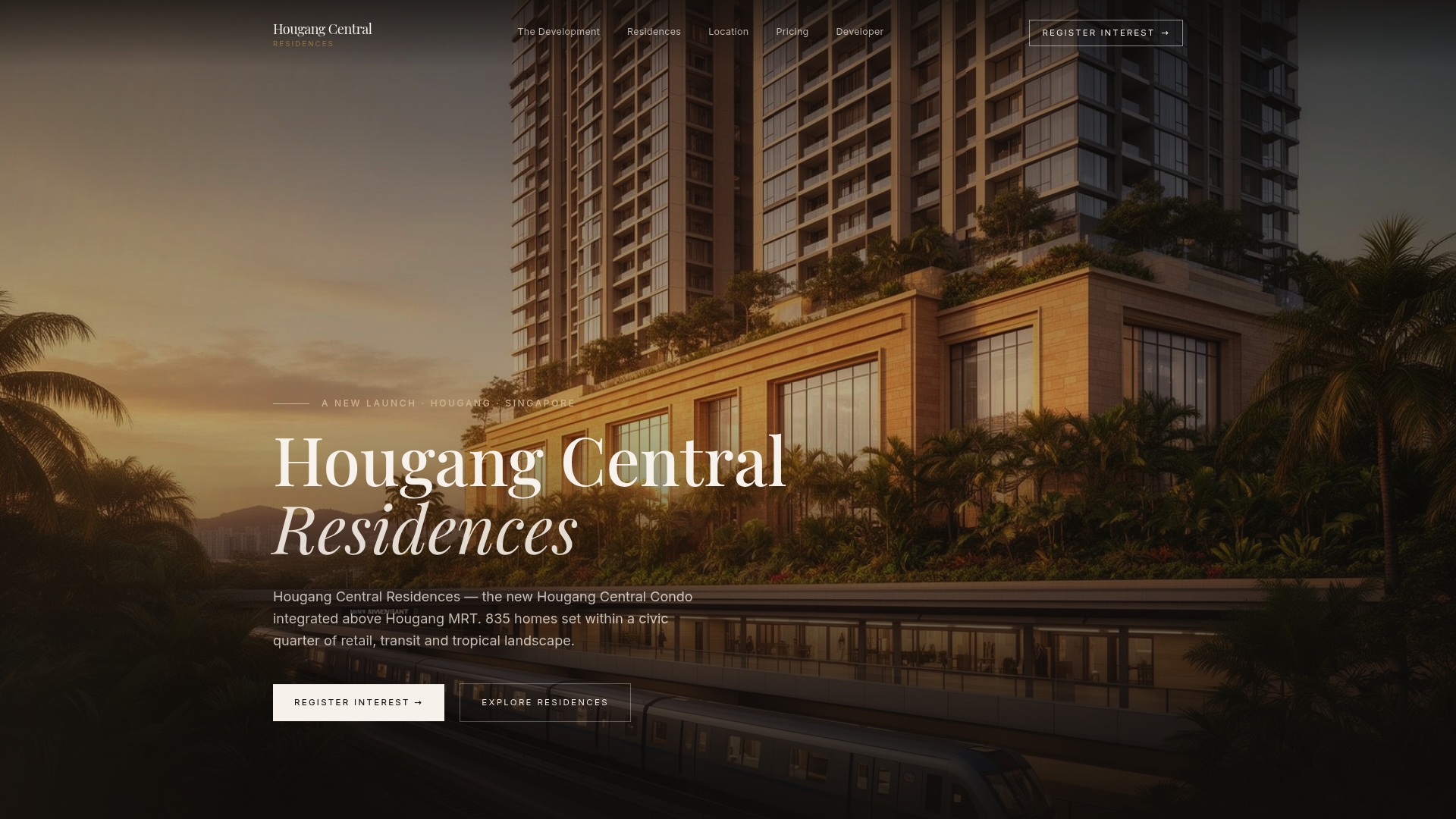
Residents can step down from their unit straight into the MRT concourse, with the planned Cross Island Line interchange arriving by 2030 adding a second line on top of today's North East Line access. For commuters who have weighed every route in this guide and want to skip the walking and transfer planning altogether, this kind of integration is worth a closer look.
- See current pricing per square foot across the development.
- Browse unit layouts, from 1-bedroom plus study to 5-bedroom penthouse.
- Check the site plan to see MRT exits and retail placement relative to each block.
FAQ
Is Singapore's MRT open 24 hours a day?
No, most Singapore train lines, including the North East Line serving Hougang, generally operate from around 5:30 a.m. to midnight rather than around the clock. You should confirm the exact first and last train times for your specific station on the LTA's rail network page, since timing can vary slightly by line and station.
How far is a typical walk to a bus stop in Hougang?
Walking distance varies by block, but residents closest to the MRT and bus interchange generally reach boarding points within a few minutes on foot. A partner guide on walking distance to MRT stations breaks down typical thresholds used across Singapore developments when assessing how close is close enough.
How do I get to Gardens by the Bay from the CBD by MRT?
From Dhoby Ghaut, the most common route is transferring onto the Circle Line toward Bayfront, which sits a short walk from Gardens by the Bay. If you are coming from Hougang, ride the North East Line to Dhoby Ghaut first, then make that Circle Line transfer rather than exiting into the CBD streets.
How do I use the MRT system in Singapore as a new rider?
Tap in and out using a SimplyGo-linked card or your contactless bank card at the station gates, and use the LTA journey planner to confirm your route and any transfers before you travel. Platform signage at each station shows the next train's destination and estimated arrival, which makes it straightforward to confirm you are heading the right direction.
Are City Direct buses cheaper than taking the MRT?
City Direct services charge express-distance fares that are typically higher than a standard MRT fare for the same distance, reflecting their direct, peak-only routing. The trade-off is comfort and a direct run into the CBD without a transfer, which many commuters find worth the difference during the morning and evening peaks.
Sources
- SBS Transit — Introduction Of City Direct Services 675, 676 And 677
- Straits Times — 4 new City Direct buses to connect Hougang, Sengkang, Punggol residents to CBD from Jan 2
- Land Transport Guru — SBS Transit City Direct Bus Service 660