Yes, condo function rooms in Singapore can be booked for private and community events, but every use falls under your MCST's by-laws under the BMSMA. Low-key, non-commercial gatherings are almost always fine. Anything louder, bigger, or vendor-heavy usually needs sign-off first. Start by pulling your condo's current by-laws and calling the management office to check the booking calendar.
TL;DR:
- Most condo function rooms in Singapore are primarily suitable for small, low-noise activities like family birthdays, community meetings, and casual gatherings, with louder or commercial events needing prior approval.
- Booking requires owners or tenants to verify eligibility, check availability via online portals or logs, submit detailed forms, pay deposits, and conduct a pre-event walkthrough with management.
- The condo's MCST by-laws govern every aspect of booking and use, including noise restrictions, maximum guest counts, vendor access, and activity limitations, which can change with new committees.
- Vendors must use designated freight lifts during specified hours and provide advance notice, while costs involve nonrefundable fees, security deposits, and possible cleaning charges subject to inspection.
- Guest parking is limited and often requires prior registration, making transit options and nearby public car parks important considerations for host planning.
Table of Contents
- Suitable Activities by Audience and Room Size
- How to Book a Condo Function Room in Singapore
- What Gives MCSTs Authority Over Function Room Rules?
- Coordinating Vendors, Deliveries, and On-the-Day Access
- Costs, Deposits, and Who Pays for Cleaning
- Capacity, Furniture, and Safety Basics
- Planning Timeline for a Condo Event
- Parking for Event Guests
- What Integrated Condo Design Means for Resident Events
- Hougang Central Residences and Event-Friendly Amenity Design
- Where to Verify These Rules and Find More Event Ideas
- Sources
- FAQ
Suitable Activities by Audience and Room Size
Most function rooms in Singapore condos vary in size, typically sized to accommodate a mix of dining tables, a small pantry, and sometimes a projector screen. That footprint dictates what actually works, and management tends to approve activities that match the room's original design intent rather than fight it.
For kids and families, birthday parties with cake tables, balloon setups, and simple games are the most commonly approved use. Craft sessions, tuition group meetups, and small playdates rarely raise flags because noise stays low and cleanup is minimal.
For adult social events, dinner gatherings, potlucks, board game nights, and small farewell parties fit comfortably. Wine and cheese nights work too, as long as the guest count stays within the room's stated capacity.
For community and resident groups, committee meetings, festive celebrations tied to Chinese New Year or Deepavali, and neighborhood welfare sessions are usually pre-approved categories since they serve the building's collective interest.
A few activities almost always trigger extra scrutiny or a separate approval form:
- Live music, DJ setups, or amplified sound systems, since these directly conflict with noise by-laws.
- Portable BBQ pavilion equipment brought into an indoor function room rather than used at a designated outdoor BBQ pit.
- Commercial activities such as paid workshops, product sales, or ticketed events.
- Events involving open flames, candles, or cooking stations beyond a simple buffet warmer.
Match your guest list to the furniture on hand. A room seating 40 at dining tables might legally cap out well below that for a standing cocktail-style event, so confirm the number before sending invites.
How to Book a Condo Function Room in Singapore
Booking a condominium event space is straightforward once you know the sequence most MCSTs follow. Skipping a step is what causes last-minute rejections.
- Confirm eligibility. Only registered owners or tenants with a valid unit account can usually book. Bring your NRIC and unit number to the management office.
- Check the booking calendar. Most condos use an online portal or a physical logbook at the management office, often released 60 to 90 days ahead for popular weekend slots.
- Submit the booking form. This typically asks for the event date, expected headcount, event type, and whether outside vendors will enter the building.
- Pay the booking fee and deposit. Payment is often required within a set window (commonly 48 to 72 hours) to hold the slot.
- Declare your guest list. Many MCSTs require a name list submitted a few days before the event for security clearance at the lobby.
- Confirm vendor details. If you're bringing a caterer, photographer, or entertainment setup, list their company name and arrival time.
- Schedule a site walkthrough. Walking the room with a management staff member a day or two before the event lets you confirm furniture layout, existing damage, and access points.
Pro Tip: Ask the management office directly whether your booking includes use of the pantry, AV equipment, and adjoining balcony or garden area. Many bookings quietly exclude these unless you ask.
What Gives MCSTs Authority Over Function Room Rules?
Every condo's by-laws exist because the BMSMA gives Management Corporation Strata Titles the legal power to govern common property, and a function room counts as common property owned collectively by all residents. That means the MCST council, not any individual resident, decides how the space gets used, booked, and enforced.
Redbrick's explainer on MCST roles breaks down how these councils translate the law into daily house rules, and the pattern across most Singapore condos looks similar. Look for by-law clauses covering:
- Noise cutoff times, often 10:00 PM or 10:30 PM on weeknights and slightly later on weekends.
- Maximum guest counts tied to fire-safety capacity, not just table seating.
- Restrictions on amplified sound, alcohol service, or smoking within the room.
- Vendor and contractor access windows, especially for deliveries involving trolleys or large equipment.
By-laws also change. A new MCST committee elected at the annual general meeting can amend rules, so always request the current approved version rather than relying on what a neighbor told you last year, per BCA's condo living guidance. If you disagree with how a by-law was applied to your booking, the formal escalation path is the Strata Titles Boards, which handle disputes between residents and their MCST.
Coordinating Vendors, Deliveries, and On-the-Day Access
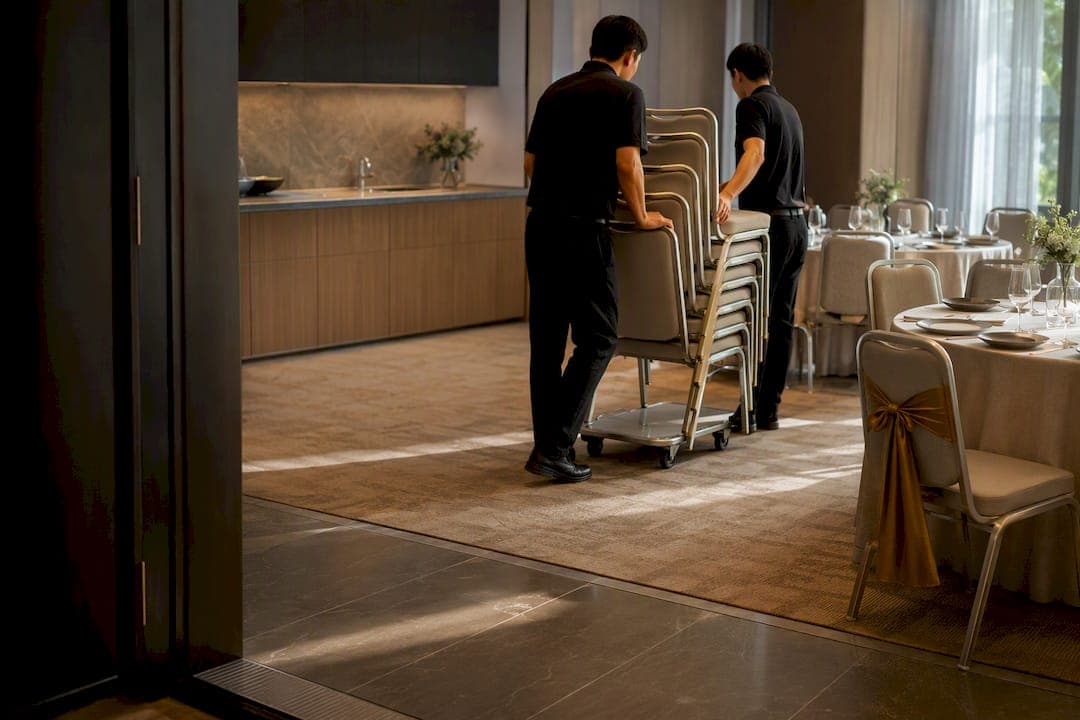
Vendors are usually the biggest source of friction on event day, mostly because loading logistics get overlooked until someone's stuck at the lobby with a trolley full of chairs.
Most condos restrict freight lift use to specific windows, commonly outside peak resident traffic hours like early morning or midafternoon. Bulky deliveries, folding tables, or catering equipment almost always need to go through the service lift, not the passenger lift, and management usually wants advance notice of vendor names and arrival times.
Before the event, confirm these details in writing with both your vendor and the management office:
- Exact loading bay or lobby entry point vendors should use.
- Freight lift booking window and any deposit required to reserve it.
- Photos or measurements of doorways and lift dimensions if you're bringing large furniture or a photo booth.
- Written confirmation of setup and teardown times so vendors aren't caught mid-breakdown after the room reverts to "closed."
Pro Tip: Reserve the freight lift for both drop-off and pickup in the same booking. A surprising number of disputes happen not during setup, but when a caterer tries to leave two hours late without a reserved slot.
Costs, Deposits, and Who Pays for Cleaning
Most condo function room bookings involve three separate charges: a nonrefundable booking fee, a refundable security deposit, and sometimes a separate cleaning charge if you don't use an approved cleaner.
- Booking fee. Usually a flat rate covering administrative processing, non-refundable regardless of how the event goes.
- Security deposit. Refundable after inspection, typically returned within one to two weeks if no damage or excess mess is found.
- Cleaning charge. Some condos include basic cleaning in the booking fee; others deduct it from your deposit if the room isn't left in move-in condition.
Deposit deductions are a frequent pain point industry observers flag repeatedly, mostly because "clean enough" is subjective. Protect yourself by taking timestamped photos of the room immediately before and after your event, and ask management whether they have a list of pre-approved external cleaners you're allowed to hire instead of doing it yourself. Any dispute over what got deducted and why should be documented in writing, ideally referencing the handover photos and the original booking form's stated condition.
Capacity, Furniture, and Safety Basics
Confirm the room's official capacity with management rather than estimating by eye. Capacity numbers are usually set by fire-safety codes and can differ for seated versus standing events.
- Check which furniture is fixed versus movable, since some rooms restrict rearranging built-in shelving or AV consoles.
- Ask before bringing temporary structures like bounce castles, tall balloon arches, or portable stages.
- Locate emergency exits and confirm they stay unblocked throughout your event.
- Keep noise and foot traffic considerate of neighboring units. Quiet enjoyment cuts both ways, and the resident booking the room today may be the one filing a noise complaint next month.
Planning Timeline for a Condo Event
A condo renovation and MCST checklist mindset applies well here: work backward from the event date and lock in approvals early.
- 6 to 8 weeks out: Check the booking calendar, confirm your date, and review current by-laws for guest and noise limits.
- 4 to 6 weeks out: Submit your booking form, pay the fee and deposit, and start locking in vendors.
- 2 to 3 weeks out: Send vendor names and arrival windows to management for freight lift and lobby clearance.
- 1 week out: Submit your final guest list and confirm the site walkthrough time.
- 1 to 2 days before: Walk through the room with management, photograph existing condition, and reconfirm setup times.
- Event day: Handle handover, check in vendors at the lobby, and keep the walkthrough photos accessible in case questions come up.
- Within 48 hours after: Request a post-event inspection, review any proposed deductions, and confirm your deposit refund timeline.
Bring copies of your guest list, any vendor insurance documents requested, and payment receipts to every MCST interaction. Paperwork gaps are the single most common reason bookings stall.
Parking for Event Guests
Visitor parking is where a lot of well-planned events run into trouble, mostly because condo guest lots are smaller than hosts expect. Most Singapore condos allocate a limited number of visitor lots relative to total units, and those lots run on a first-come basis unless your MCST offers pre-booking for larger events.
Check with management whether your booking includes reserved visitor parking or coupons, since some condos require guests to register vehicle numbers in advance for security clearance at the barrier gantry. Street parking near the condo is often metered or restricted during peak hours, so it's worth telling guests upfront rather than leaving them to circle the block.
For events expecting more than a handful of cars, ask management directly whether nearby public car parks or the condo's own overflow arrangements exist. Some developments near transit hubs make this less of a headache. A condo built directly above an MRT interchange, for instance, gives guests a car-free option that sidesteps the parking crunch entirely, which is worth factoring in if your guest list includes people without vehicles.

What Integrated Condo Design Means for Resident Events
Amenity spaces work best when they're designed with real usage in mind, not just as a checkbox in the sales brochure. A function room tucked beside a transit-connected lobby, with clear sightlines and sensible acoustic separation from residential floors, cuts down on the noise disputes that plague poorly placed function rooms elsewhere.
Residents running their own gatherings do better when they treat the room as a shared privilege rather than an extension of their own unit. Confirm the booking early, respect the handover condition, and your neighbors will keep saying yes to your next event.
— Simon
Hougang Central Residences and Event-Friendly Amenity Design
Buyers who actually use their condo's shared spaces tend to care about layout more than glossy renders suggest. Hougang Central Residences sits directly above Hougang MRT, with an integrated mall and bus interchange steps from the lobby, which matters on event day when guests are relying on transit instead of hunting for parking.
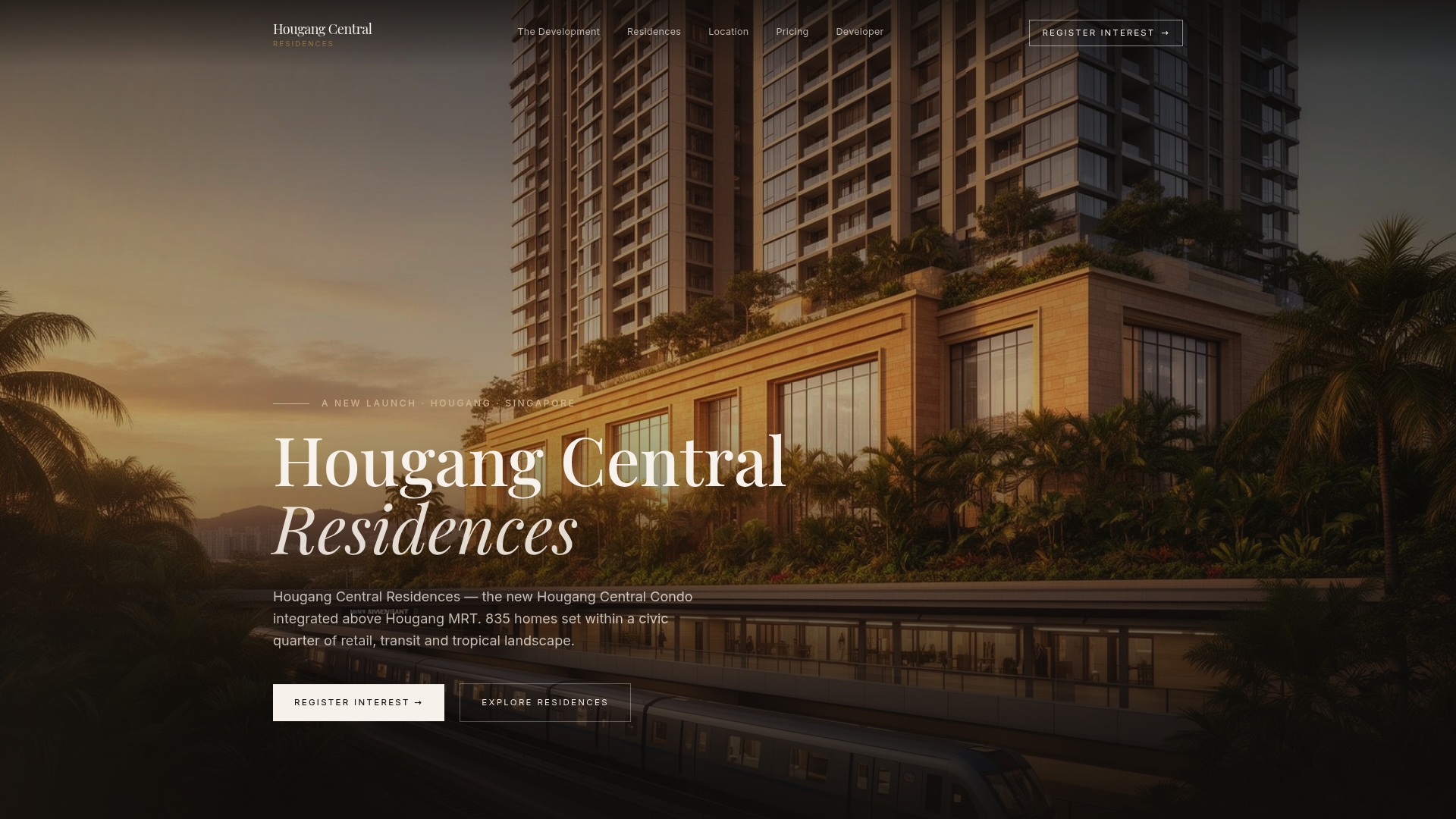
The development's landscaped communal areas and wellness and social facilities are intended to support resident gatherings, from family celebrations to small community meetups. Combined with smart-home systems and premium European fittings across the full range of residences, from 1-bedroom-plus-study layouts to 5-bedroom penthouses, it's a development designed for people who actually plan to use their building, not just live in it quietly.
Unit pricing starts from $2,800 SGD per square foot, listed on the Hougang Central Residences pricing page. If the amenity setup here matches how you'd want to host, registering for showflat access is the next step worth taking.

Where to Verify These Rules and Find More Event Ideas
For the legal basics, check BCA's condo living guidance and Redbrick's MCST explainer. For low-cost venue ideas beyond your own condo, browse Venuerific's function room listings or Cvent's community event ideas.
Sources
- BCA: Condo living — be condo savvy
- Cheap function rooms Singapore - Venuerific
- Community event ideas - Cvent
FAQ
What Is a Function Room in a Condominium?
A function room is a shared common-property space within a condo, typically used for private and community events like birthdays, dinners, and committee meetings. It's governed by the MCST's by-laws under the BMSMA, which means usage rules, capacity, and booking procedures vary by building.
How Much Does It Cost to Book a Function Room in Singapore?
Costs vary by condo and typically include a nonrefundable booking fee plus a refundable security deposit, with cleaning sometimes charged separately. There's no single fixed rate across Singapore condos, so check your own MCST's fee schedule or, for external venues, browse Venuerific's cheap function room listings for comparison.
How Many People Can Stay in a 3-Room Condo?
Occupancy for a residential unit depends on the unit's size and the building's fire-safety guidelines, and it's a separate question from function room event capacity, which is set independently by the MCST based on the room's floor area and exits. If you're hosting an event, always confirm the function room's specific guest cap with management rather than assuming it matches your unit's living capacity.
How Do I Book a Condo Function Room?
Confirm your eligibility as an owner or tenant, check the booking calendar at the management office, then submit the booking form with your event details and pay the deposit. Most condos also require a guest list and vendor details before the event, and a short site walkthrough beforehand catches layout or access issues early.